A great meeting can feel like a huge win, but the real work starts the moment everyone leaves the room. The follow-up you send is your most powerful tool for turning all that talk into tangible action.
It's more than just a polite recap. A strategic follow-up clarifies decisions, assigns ownership, and makes sure the momentum you just built doesn't fizzle out. It's the document that holds everyone accountable for what comes next.
Why Your Follow-Up After a Meeting Is Crucial
Let's be real—how many times have you left a meeting with a fuzzy idea of what to do next? The energy is high, ideas are flowing, but within an hour, everyone’s back in their inbox, and that clarity starts to fade.
A sharp, timely follow-up email is the bridge between that fleeting momentum and actual progress. Without it, you’re inviting ambiguity, missed deadlines, and projects that quietly stall out.

This simple step is all about accountability. When action items are written down with names and deadlines attached, they stop being vague suggestions and become concrete responsibilities. That clarity is everything for keeping projects moving and making sure the whole team is on the same page. If you want to get serious about this, we have a complete guide to tracking action items so you never lose momentum again.
The Real Cost of a Missed Follow-Up
Skipping the follow-up has bigger consequences than you might think, especially when the stakes are high.
In sales, for example, speed is everything. Research consistently shows that 35-50% of sales go to the vendor that responds first after a prospect meeting. That number alone shows how a quick, professional follow-up can directly fatten your pipeline.
And this isn't just a sales problem. Internally, a missing follow-up causes "meeting recovery syndrome"—that frustrating feeling when you spend the first 15 minutes of the next meeting trying to remember what you decided in the last one. It's a massive drain on time, energy, and morale.
Thankfully, modern tools are making this easier. AI meeting summarizers can now capture the key takeaways and draft a summary for you, turning what used to be a chore into a quick, strategic move. By creating a solid follow-up process, you ensure every single meeting pushes you closer to your goals.
The Anatomy of a Powerful Follow-Up Email
Let's be honest: writing a follow-up that people actually read and act on is an art. A good one does more than just say "nice to meet you"—it's the engine that keeps things moving forward after the meeting ends. Every part of it has a job to do, turning a conversation into real results.
A forgettable follow-up gets buried in a crowded inbox. A great one stands out because it's clear, concise, and genuinely useful. You want to make it dead simple for everyone to see what was decided and what they need to do next.
Start with a Subject Line That Cuts Through the Noise
Your subject line is your first impression. Vague titles like "Meeting Follow-Up" are practically invisible. Get specific. Be benefit-oriented. You need to spark recognition and a little bit of urgency.
Think of it as the headline for your email. It should instantly tell them what it's about and jog their memory of the meeting.
- Instead of: "Quick follow-up"
- Try: "Next Steps from Our Content Strategy Call"
- Instead of: "Checking In"
- Try: "Action Items: Q3 Project Kickoff (June 12 Meeting)"
That one small tweak can make a huge difference in whether your email even gets opened. It signals that what's inside is important and actionable.
Craft a Clear Opening and Summary
The first two sentences are prime real estate. Don't leave them guessing who you are or why you’re in their inbox. A quick, personal nod to the conversation is all it takes to re-establish context. Something like, "It was great mapping out the new onboarding workflow with you earlier."
Right after that, drop in a high-level summary of the main decisions. This isn't a meeting transcript; it’s a quick confirmation of the big takeaways.
For instance: "We agreed to move forward with the Alpha platform and aim for a pilot launch in early August." That single sentence solidifies the plan and perfectly sets up the action items to come.
Define Action Items with Military Precision
This is where the magic happens. Vague tasks are where momentum goes to die. To get things done, every action item needs three non-negotiable components:
- The Task: What, exactly, needs to be done?
- The Owner: Who is the single person responsible for it?
- The Deadline: When does it need to be finished?
This simple framework eliminates any and all confusion. If you're looking for great examples of how this looks in practice, checking out some powerful follow-up email templates can show you how to structure your message for maximum impact.
Here's how that looks in the real world:
- Action Item: Finalize budget proposal for the Q4 marketing campaign.
- Owner: Sarah Jenkins
- Due Date: EOD Friday, June 21st
With this level of detail, everyone knows exactly what they're on the hook for, no clarification needed. For more inspiration, check out our guide on powerful meeting follow-up email examples to see these principles in action.
How to Tailor Your Follow Up for Any Situation
A generic follow-up is a wasted opportunity. You wouldn't talk to a new sales lead the same way you talk to your boss, right? The same logic applies to your emails. Sending the wrong message to the right person can kill momentum, create confusion, or even hurt a relationship.
The trick is to adapt your communication style to fit your audience and what you're trying to achieve. This isn't about being fake; it's about being effective. A great follow up from meeting anticipates exactly what the other person needs to know and presents it in a way that makes their next step obvious.
Nurturing a Potential Client
When you're following up with a potential client, your main job is to build trust and keep the conversation moving forward. Your tone should be helpful, confident, and completely focused on their needs and goals. This is your chance to prove you understand their world and can make their life easier.
Start by mentioning something specific and positive from your chat. It immediately shows you were paying attention and makes the email feel less like a template. Instead of just summarizing what you talked about, frame it around the outcomes that matter most to them.
Here's what to focus on:
- A quick recap of their biggest challenges as you heard them.
- A clear, simple line connecting your solution to those specific problems.
- A valuable resource—maybe a relevant case study or an insightful article—that helps them out, even if they don't buy.
Keep your call to action light and clear. Suggesting a brief call to review a proposal or answer a few more questions works perfectly. The whole message should scream "I'm here to help you succeed," not "I'm here to make a sale."
Briefing a Busy Executive
Got to update an executive or your boss? Get straight to the point. They are slammed with messages and need to know the score in seconds. Your goal is to give them a high-level summary and tell them exactly what you need from them.
Formatting is your friend here. Use bullet points, bold text for key figures, and a clear "Action Required" section to make the email scannable on a phone. Skip the long-winded intros.
Lead with the most important decision or takeaway. Then, add just enough background to support it. If you need their approval, frame it as a simple choice and give your recommendation. This shows you've already done the heavy lifting and are making their job easier.
This infographic breaks down the essential parts of any well-structured follow-up email.
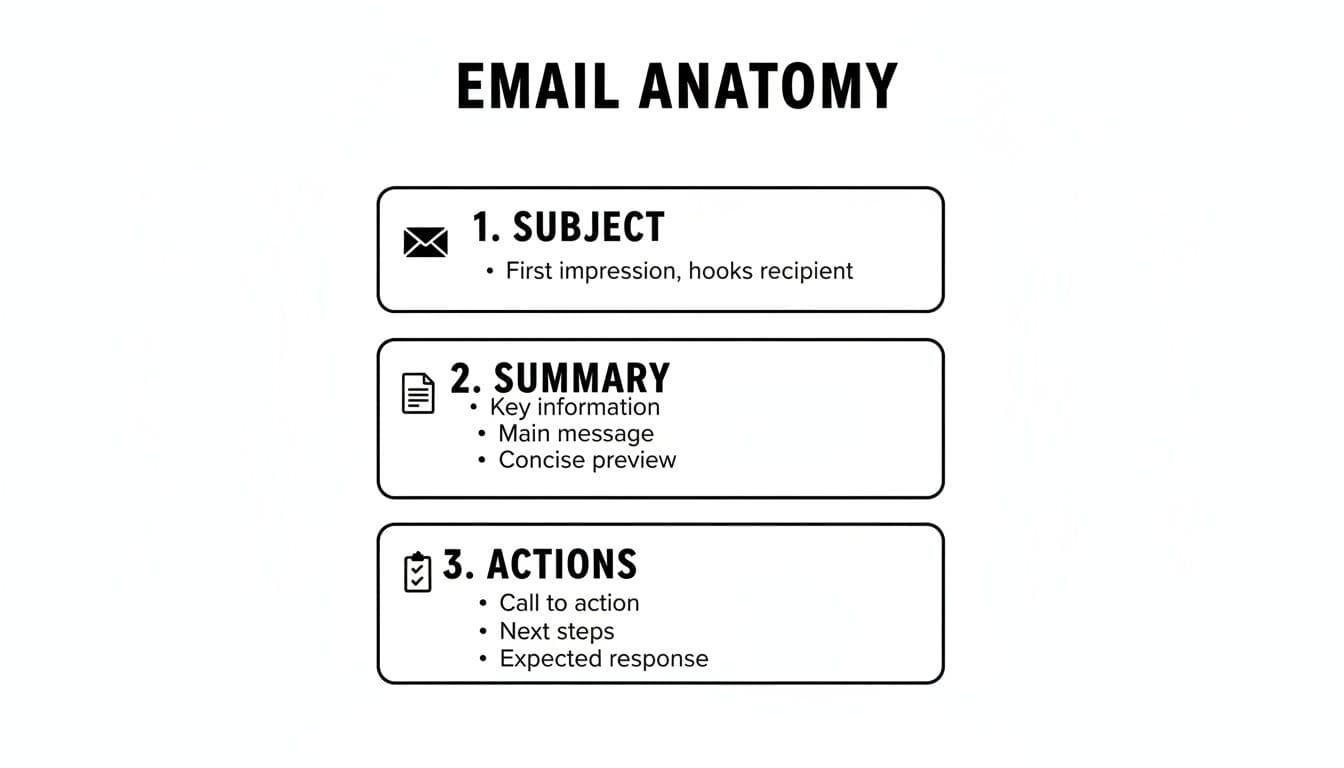
Each piece—the subject, the summary, and the action items—is crucial for making your message clear and effective, no matter who you're writing to.
Aligning Your Internal Team
For your own team, the follow-up is the official record. The goal here is total alignment and clear accountability. You can be more direct and collaborative, but you have to be precise with the details to avoid any mix-ups later.
The action item list is everything. Every single task needs to have one person's name next to it and a firm due date. This simple structure eliminates any "I thought you were doing that" confusion and makes it crystal clear who is responsible for what.
Don't underestimate the power of this. Research shows that companies with tightly aligned teams see real results, achieving 36% higher customer retention rates and 38% higher sales win rates. A sharp, tailored follow up from meeting is what keeps that alignment strong and drives projects forward.
Reconnecting with a New Contact
Met someone new at an event? The follow-up is all about building a genuine relationship. Keep the tone warm and personal, not transactional. Think of it as planting a seed for a future connection, not trying to close a deal on the spot.
Reference something specific from your conversation to help them remember you. Mentioning a topic you both enjoyed discussing makes the message feel much more authentic. Your call to action should be low-key, like suggesting a coffee or connecting on LinkedIn.
Of course, sometimes you do everything right and still hear crickets. If you've sent a follow-up and gotten no reply, there are smart ways to proceed without being annoying. For a deep dive, check out The Ultimate Guide to a Follow Up Email No Response for some advanced strategies.
This handy table breaks down how to tweak your follow-up based on who you're talking to. Think of it as your cheat sheet for sending the perfect message every time.
Follow Up Template Customization Guide
| Audience | Primary Goal | Key Content Focus | Recommended Tone |
|---|---|---|---|
| Potential Client | Build trust & momentum | Their challenges, your solutions, added value | Helpful, confident, consultative |
| Executive/Boss | Get decision/inform | Key outcomes, action required, recommendation | Brief, direct, respectful |
| Internal Team | Create alignment & accountability | Action items, owners, deadlines | Collaborative, clear, direct |
| New Contact | Build a relationship | Shared interests, personal connection | Warm, genuine, low-pressure |
By making these small adjustments, you're not just sending an email—you're strategically communicating to get the result you want. It's a small effort that makes a huge difference in how effectively you move things forward after any meeting.
Getting the Follow-Up Timing Just Right

Sending a follow-up is easy. Sending it at the right time is what separates the pros from the amateurs. A brilliant email sent a week late has already lost most of its impact. The trick is to be persistent enough to stay top-of-mind, but not so often that you become background noise.
This isn't just about being polite; it’s about capitalizing on momentum. People are most bought-in right after a good conversation. In fact, sending a recap within 24 hours can improve task recall by as much as 80%. It keeps the energy high and shows you mean business.
The 24-Hour Rule: Your First and Most Important Move
Always send your first follow-up within one business day. No exceptions. This is your power move. It doesn’t need to be a novel—just a quick, sharp summary that locks in the important details while the meeting is still fresh for everyone.
This initial email has three simple jobs:
- Thank everyone for their time.
- Recap the big decisions and outcomes.
- List the immediate action items with clear owners and due dates.
Think of it as the official record of the meeting. It cuts through any potential confusion and gets everyone on the same page about what happens next. If you wait, you risk details getting fuzzy and your project getting buried under a pile of other priorities.
Building a Smart Follow-Up Cadence
After that first email, your timing depends entirely on the situation and the deadlines you’ve all agreed to. A huge mistake I see people make is sending vague check-ins like, "Any updates?" These messages are annoying because they don't add any value. Every single touchpoint should have a clear purpose.
Here’s a practical, value-driven approach you can adapt for a project or sales cycle:
- Day 1: Send the initial meeting summary and action items.
- Day 3-5: If you haven't heard from a key person, send a polite nudge. Don't just ask for an update; offer something useful, like a relevant article or a helpful case study.
- 1 Week Before Deadline: Touch base with anyone who owns an action item. Frame it as offering support, not chasing them down. For example, "Just checking in on the budget draft—let me know if you need any data from my end to help get it done."
- Post-Deadline: The moment a deadline is missed, follow up. But focus on solutions, not blame. Try something like, "Hi Mark, just following up on the design mockups. Is there a new ETA we can work with?"
This kind of structure turns guesswork into a clear plan. It ensures every follow up from meeting is timely, relevant, and professional, helping you drive real results without burning bridges.
Using AI to Perfect Your Follow Up Process
Ever left a meeting and had a perfectly drafted summary, complete with action items, sitting in your inbox just minutes later? It’s not science fiction. This is exactly what AI meeting summarizers are making possible for teams right now. Let's be honest, manual note-taking is a recipe for disaster—it’s slow, often inaccurate, and rarely captures the real nuance of a conversation.
Artificial intelligence tools like Notta, Fireflies.ai, and Otter.ai have completely changed the game for anyone who takes their follow up from meeting seriously. Think of them as a dedicated assistant that joins your calls, automatically transcribes everything, figures out who said what, and pinpoints the most important takeaways.
This tech lifts the administrative weight off your shoulders. Instead of scrambling to type notes, you can actually engage in the discussion. The result? A far more accurate and objective record of what everyone agreed to.
From Chaotic Notes to Clear Actions
The difference between a manual and an AI-assisted follow-up is like night and day. We’ve all been in the "before" scenario: a project team wraps up a great brainstorming session. The energy is high, but the notes are a mess, scattered across three different notebooks with conflicting ideas about what’s next. The follow-up email takes days, and by the time it lands, all that great momentum is gone.
Now, picture the same meeting with an AI tool running quietly in the background.