Daily stand-up meetings are a cornerstone of modern team collaboration, designed to be quick, insightful, and a catalyst for progress. Yet, many teams find their stand-ups devolving into long, unfocused status reports that drain energy instead of creating it. The root cause is almost always a weak or nonexistent agenda. A well-structured agenda for a stand up meeting transforms it from a routine chore into a high-value strategic huddle. It ensures every minute is spent on what truly matters: identifying blockers, celebrating wins, and aligning on priorities.
This guide provides seven distinct, actionable agenda items you can mix and match to build the perfect stand-up for your team's specific needs. Whether you're in engineering, sales, or leading a distributed workforce, these frameworks bring much-needed focus. For teams operating in distributed environments, an optimized stand-up agenda is fundamental to learning how to manage remote teams effectively.
We'll explore how to implement each agenda item, highlight common pitfalls to avoid, and show how modern tools can automate the follow-up, ensuring your discussions turn into documented actions. Let's get started.
1. Daily Progress Updates & Blockers
The cornerstone of any effective agenda for a stand up meeting is the classic three-question format: What did I accomplish yesterday? What will I do today? What blockers are impeding my progress? This foundational item provides a predictable, efficient structure for teams to synchronize daily, ensuring everyone has a clear view of project momentum and immediate challenges. It promotes accountability and fosters a culture of transparency by making progress visible to the entire team.
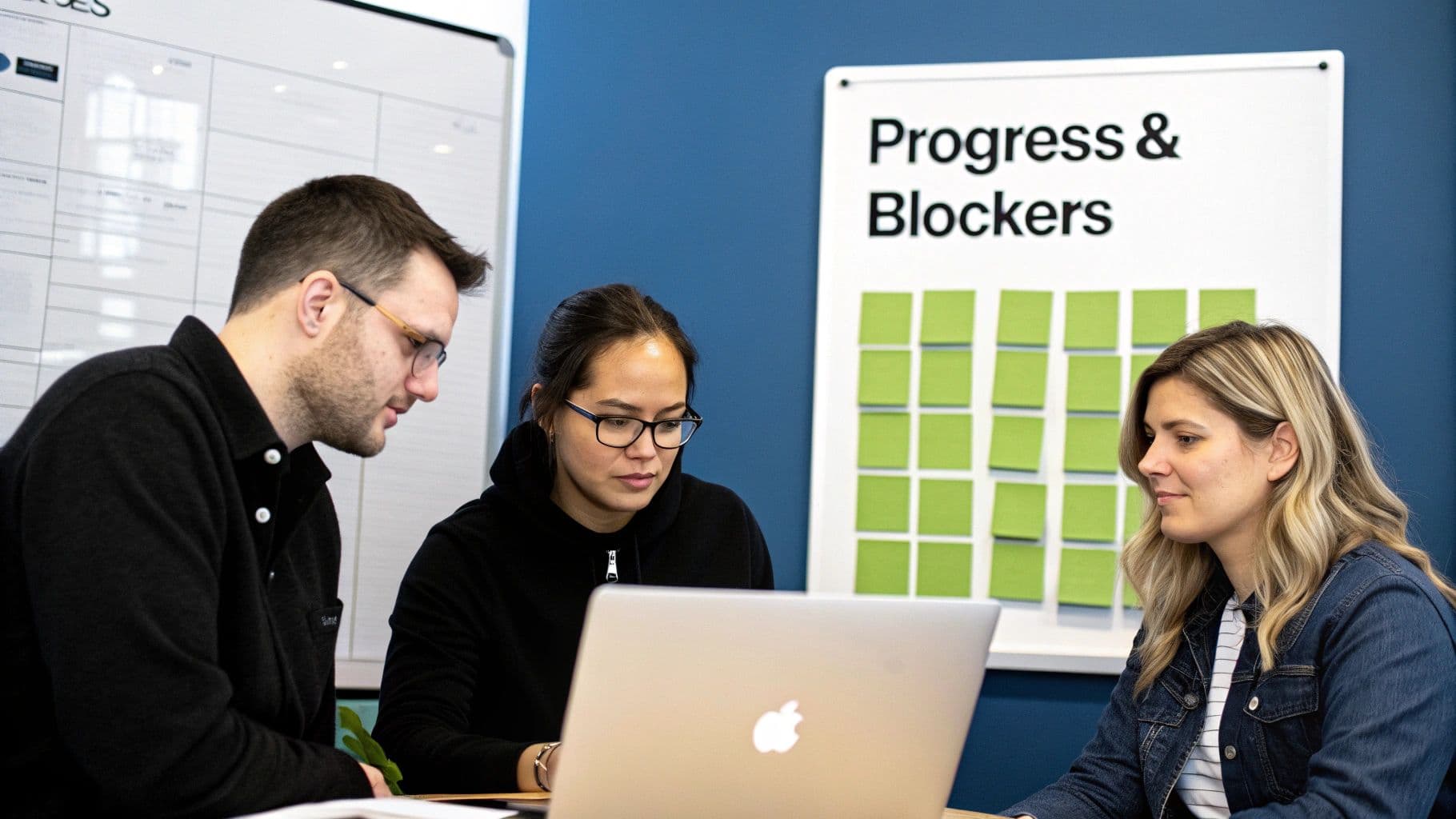
This method isn’t just for engineering teams. Salesforce revenue teams use it to track daily quota progress and surface sales blockers, while remote-first companies like GitLab depend on it to maintain asynchronous efficiency across global time zones. The goal is to identify dependencies and resource conflicts early, preventing small issues from escalating into major delays.
How to Implement This Agenda Item
To get the most out of this format, focus on clarity and brevity. Each team member's update should be a concise summary, not a detailed report. Encourage participants to come prepared with their three points to keep the meeting moving.
For a deeper dive into structuring these conversations, explore these 50 morning meeting questions for your daily standups.
Actionable Tips for Success
- Establish a "Blocker Priority Matrix": Create a simple system to categorize blockers. For instance, Level 1 blockers halt all progress and require immediate leadership escalation, while Level 2 blockers are manageable challenges the team can solve collaboratively after the stand-up.
- Keep Updates Time-Boxed: Strictly limit each person’s update to 2-3 minutes. Designate a timekeeper or use a visible timer to maintain pace and respect everyone's time.
- Leverage AI for Insights: Use meeting summary tools like Fireflies.ai or Otter.ai to automatically transcribe the meeting. These tools can highlight recurring blockers, providing valuable data for process improvement and flagging critical issues for follow-up without manual effort.
2. Team Wins & Recognition
Beyond just tracking progress, a powerful agenda for a stand up meeting should also intentionally cultivate a positive team culture. Dedicating a specific portion of the meeting to celebrate team wins, completed milestones, and individual contributions does exactly that. This item boosts morale, reinforces desired behaviors, and builds psychological safety, which is especially crucial for distributed teams missing informal office kudos.
This practice is widely adopted by top-performing companies. HubSpot's stand-ups famously include "shout-outs" as a formal agenda point to foster peer recognition. Similarly, customer success teams at fast-growing startups use this time to share positive client feedback, providing a necessary counterbalance to the daily pressures of customer support and retention. The goal is to create a virtuous cycle where recognized efforts inspire continued excellence.
How to Implement This Agenda Item
Integrate a dedicated 2-3 minute segment at the beginning or end of your stand-up for "wins" or "shout-outs." Encourage everyone to come prepared to share a recent accomplishment, whether it's their own or a colleague's. This simple addition can dramatically shift the meeting's tone from purely tactical to both motivational and strategic.
For more strategies on fostering this kind of open dialogue, explore these tips on how to improve team communication for success.
Actionable Tips for Success
- Rotate the Recognition Facilitator: Appoint a different team member each week to lead the "wins" section. This ensures diverse voices are heard and prevents the same individuals from being recognized repeatedly, promoting a more inclusive culture.
- Create a "Wins" Dashboard: Use a tool that pulls recognized achievements directly from meeting summaries or transcript highlights into a shared dashboard. This creates a real-time, visible record of team morale and accomplishments.
- Archive Wins for Performance Reviews: Leverage meeting summary tools to automatically capture and archive all instances of recognition. This creates a searchable database of contributions that can be easily referenced during performance reviews and career development discussions.
3. Priority & Strategic Alignment
Beyond individual task updates, a critical agenda for a stand up meeting involves dedicating time to ensure the team is strategically aligned. This item connects daily work to larger company goals, answering the crucial question: "Is what we're doing today the most important thing we could be doing?" It prevents wasted effort on low-impact tasks and keeps everyone focused on the initiatives that truly drive the business forward, which is especially vital for startups and SMBs where resource allocation is key.
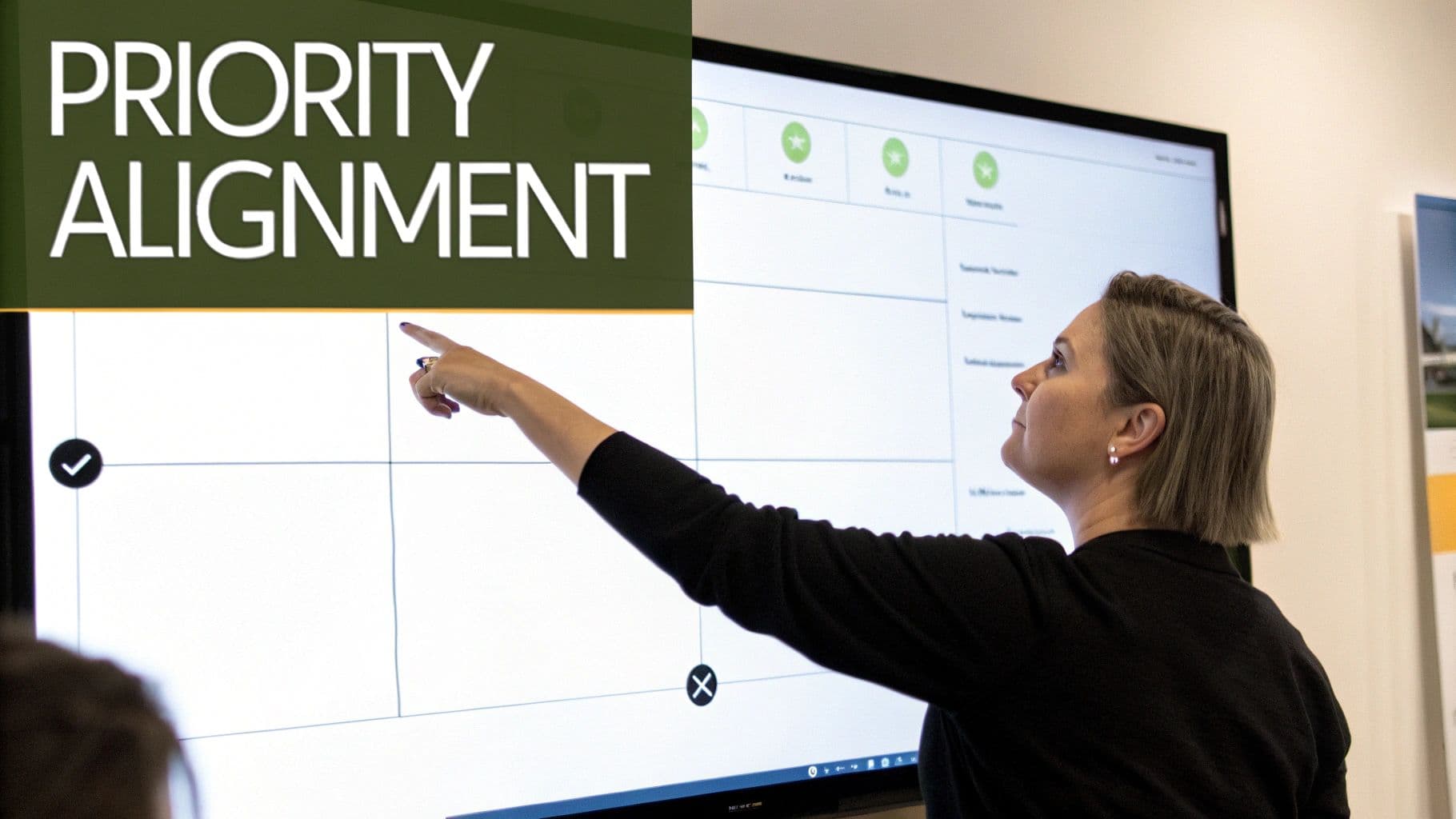
This focus on alignment is a core practice for high-performing teams. Netflix's OKR-driven stand-ups ensure engineering efforts directly support content strategy, while remote product companies like Figma use priority alignment as a centerpiece to keep distributed teams synchronized on feature development. The goal is to create a shared understanding of what matters most, empowering team members to make autonomous decisions that align with the company's strategic direction.
How to Implement This Agenda Item
Integrate a simple, recurring question into the stand-up, such as "How does your top task for today move our main quarterly objective forward?" The team lead or product owner can kick off the meeting with a 1-minute reminder of the current sprint or company goal to frame the conversation. This keeps the bigger picture top-of-mind.
For a clearer understanding of setting impactful targets, learn more about the key differences between an objective and a goal for better planning.
Actionable Tips for Success
- Create a Visual Priority Dashboard: Use a simple tool like Trello or a shared document to display the top 1-3 company or team priorities. Reference this dashboard at the beginning of every stand-up to anchor the team.
- Generate a Weekly 'Priority Changelog': Use a meeting summary tool to create a log of any shifts in priority mentioned during the week. This document helps explain why priorities changed, providing valuable context and reducing confusion.
- Use Transcripts to Spot Misalignment: Automatically transcribe stand-ups and scan for instances where an individual's stated priorities conflict with the team's goals. This allows managers to identify and correct misalignment early before it impacts a sprint.
4. Cross-Functional Dependencies & Handoffs
A critical component of a modern agenda for a stand up meeting is a dedicated focus on cross-functional dependencies and handoffs. This item explicitly creates space for teams to surface and coordinate work that relies on other departments or individuals, preventing tasks from falling through the cracks. It’s a proactive way to manage the flow of work, ensuring smooth transitions and clear ownership at every stage.
This approach is vital in environments where collaboration is complex, especially for distributed or asynchronous teams where informal coordination is less frequent. By making dependencies a formal agenda point, teams can systematically identify potential bottlenecks and align timelines before they become critical issues. It transforms the stand-up from a simple status update into a strategic coordination session.
For example, Stripe’s engineering stand-ups often include explicit dependency reviews between infrastructure and product teams to ensure alignment on releases. Similarly, revenue operations teams use this model to track handoffs between sales and customer success, guaranteeing new clients have a seamless onboarding experience. This clarity prevents dropped handoffs and maintains project velocity.
How to Implement This Agenda Item
Integrate a specific question into your stand-up rotation: "Are there any dependencies or handoffs we need to coordinate today?" This prompts team members to think beyond their individual tasks and consider the broader project ecosystem. The goal is to make these conversations a regular, expected part of the daily sync.
For a deeper look at managing these types of complex interactions, consider how project management methodologies like Agile and Scrum formalize dependency tracking.
Actionable Tips for Success
- Create a Dependency Matrix: Use a simple shared document or project management tool to create a matrix that tracks "Who needs what by when." Update this document directly from the stand-up notes, creating a single source of truth for all cross-team commitments.
- Assign a 'Dependency Owner': Designate a rotating role for a team member to act as the "dependency owner" for the week. Their responsibility is to listen for coordination gaps during the stand-up and ensure all identified handoffs are documented and assigned.
- Automate Handoff Alerts with AI: Leverage meeting summary tools to automatically extract action items related to dependencies. Configure these tools to send alerts or create tasks in your project management software when a handoff is mentioned, ensuring nothing is missed and creating a clear audit trail.
5. Risk & Issue Escalation
A dedicated segment for raising risks and issues is a critical component of a mature agenda for a stand up meeting. This item creates a formal, safe channel for team members to surface potential problems, compliance concerns, or project threats that require management or executive attention. It ensures decision-makers stay informed in real-time and prevents critical issues from being overlooked until it's too late.
This practice is indispensable in high-stakes environments. For instance, fintech and healthcare companies use stand-up escalations to immediately flag compliance or data security risks. Similarly, DevOps and infrastructure teams use this time to escalate security vulnerabilities or system stability threats, while remote-first leaders can identify and address early signs of team burnout and unsustainable workloads.
How to Implement This Agenda Item
Establish a clear protocol for what constitutes an escalation-worthy risk. The goal isn't to discuss every minor hiccup but to flag significant threats to timelines, budget, or quality. The discussion during the stand-up should be limited to identifying the risk and assigning an owner for follow-up, with deeper analysis happening outside the meeting.
For more on creating a culture where teams feel safe to raise concerns, consider the principles of psychological safety outlined by Google's Project Aristotle.
Actionable Tips for Success
- Create a Risk Register: Maintain a simple, shared document or project management tool section to log all escalated risks. This register should track the risk, its potential impact, its owner, and the mitigation plan, providing a clear audit trail.
- Define Escalation Pathways: Clearly define who owns different types of risks. A technical security risk might go to the CTO, while a potential budget overrun is escalated to the project manager or finance lead.
- Leverage AI for Documentation: Use meeting summarization tools to automatically flag risk-related keywords like "concern," "security," "compliance," or "delay" in meeting transcripts. These tools can auto-populate your risk register, alert leaders when the same risk is mentioned repeatedly, and create an archive for post-mortem analysis.
6. Metrics, KPIs & Performance Tracking
Integrating a review of key metrics and KPIs into your agenda for a stand up meeting transforms it from a simple status update into a strategic checkpoint. This data-driven item focuses the team on quantifiable progress toward their goals, ensuring that daily activities directly contribute to business outcomes. It provides objective clarity, removes ambiguity, and keeps everyone aligned on what truly matters for success.
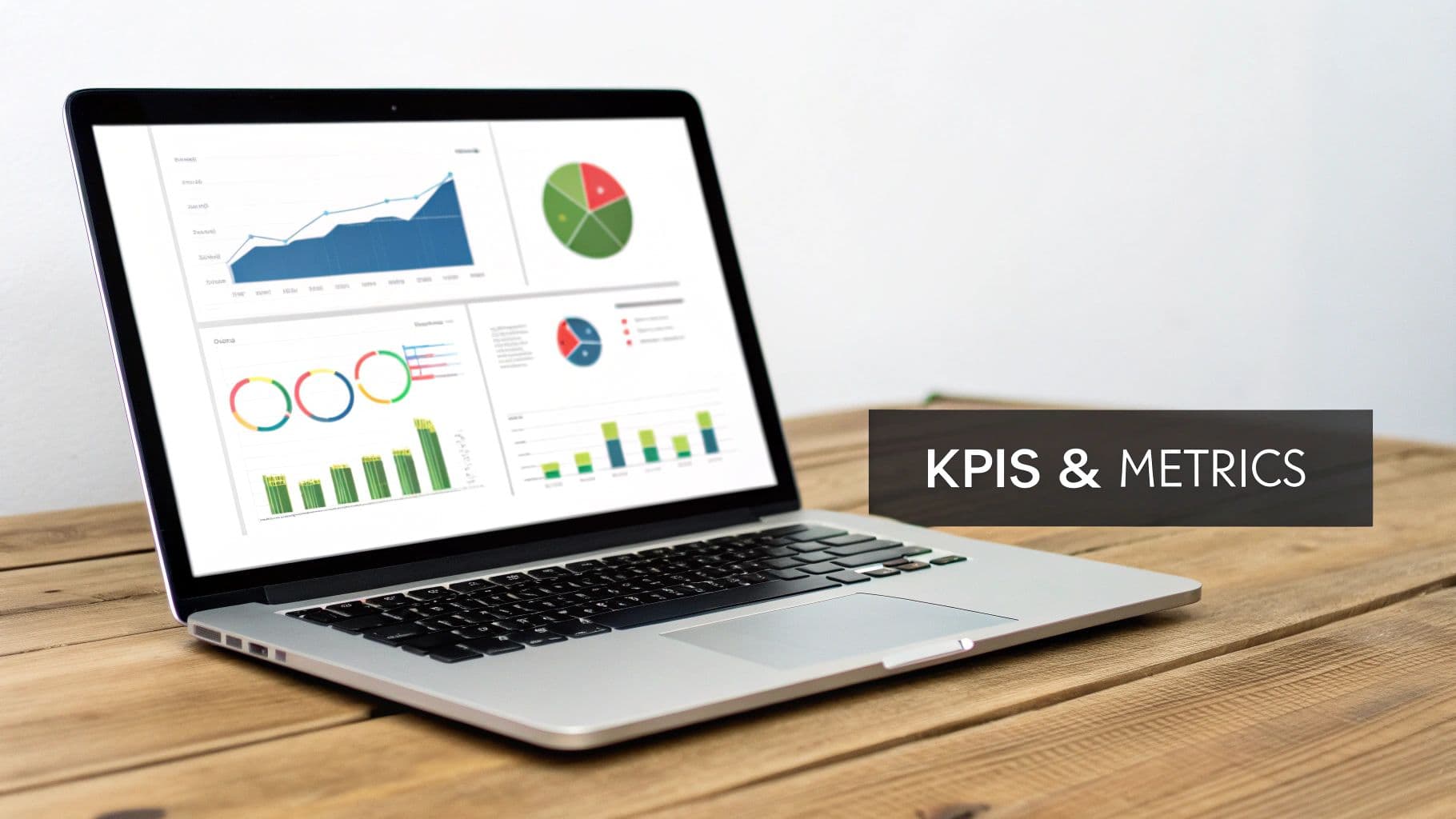
This approach is indispensable for teams whose performance is directly measured by numbers. For example, SaaS companies review metrics like monthly recurring revenue (MRR) and customer churn to make informed product decisions. Sales teams use their daily stand-up to track pipeline velocity and conversion rates, while customer success teams monitor Net Promoter Score (NPS) and retention figures to proactively address customer health.
How to Implement This Agenda Item
Dedicate a specific, time-boxed segment of the meeting to reviewing a shared metrics dashboard. The discussion should focus on significant changes, emerging trends, or numbers that are off-track. The goal is not to analyze every data point but to quickly identify areas needing attention, celebrate wins, and course-correct as a team.
For guidance on selecting the right metrics for your team, you can explore resources that detail how to set effective team KPIs.
Actionable Tips for Success
- Focus on Red/Orange Indicators: To keep the review swift (under 5 minutes), concentrate only on metrics that are in the red (critical) or orange (at risk). This prevents the meeting from turning into a lengthy data analysis session.
- Automate Metric Tracking: Use AI-powered meeting summary tools to automatically transcribe the stand-up. These tools can extract any mentioned metrics, track them over time, and even flag when a KPI shifts significantly from one meeting to the next.
- Correlate Metrics to Actions: Leverage meeting transcripts to connect changes in KPIs with specific actions or decisions discussed by the team. This creates a historical record that helps you understand the "why" behind performance trends and replicate successful strategies.
7. Learning, Feedback & Continuous Improvement
Transforming your stand-up from a simple status report into a catalyst for growth is a powerful move. This item dedicates a specific part of your agenda for stand up meeting to team learning, sharing lessons, and refining processes. It builds a culture where continuous improvement isn't just a goal but a daily practice, turning every meeting into an opportunity for collective development.
This approach is crucial for high-performing teams committed to excellence. Agile teams use it to discuss and commit to improvements identified in sprint retrospectives, ensuring those learnings are activated immediately. Similarly, remote-first companies like Automattic leverage this format in stand-ups to share asynchronous learnings across global time zones, strengthening the entire organization's knowledge base.
How to Implement This Agenda Item
To integrate this effectively, set aside a dedicated time slot, perhaps at the end of the stand-up, for this specific purpose. The focus should be on practical, actionable insights that benefit the entire team. Frame it as a safe space for sharing what worked, what didn't, and what could be done better next time.
For those seeking to build a stronger culture of improvement in their meeting practices and a deeper dive into effective strategies, explore additional insights on improving team meetings.
Actionable Tips for Success
- Implement "Learning of the Day": Dedicate the final 3-5 minutes of each stand-up for one team member to share a recent key learning, a useful trick they discovered, or a solution to a problem they solved. Rotate this responsibility daily.
- Create a "Lessons Learned" Knowledge Base: Use AI summarization tools to automatically extract key insights and lessons discussed during the stand-up. These can auto-populate a shared document or wiki, creating a searchable repository of team knowledge for new hires and future reference.
- Track Improvement Implementation: Use meeting summaries to create a running list of suggested process improvements. At the start of each week, briefly review which suggestions were implemented and their impact, fostering accountability and demonstrating that feedback is valued.
7-Point Stand-Up Agenda Comparison
| Agenda Item | Implementation Complexity 🔄 | Resource Requirements ⚡ | Expected Outcomes ⭐📊 | Ideal Use Cases 💡 | Key Advantages ⭐ |
|---|---|---|---|---|---|
| Daily Progress Updates & Blockers | Medium — regular facilitation and strict timeboxing | Medium — daily meeting time + transcription/summarization tools | Clear visibility, early blocker detection, measurable velocity | Distributed teams, engineering sprints, dependency-heavy work | Rapid unblocking; dependency mapping; accountability |
| Team Wins & Recognition | Low — simple agenda slot, light facilitation | Low — few minutes + recording for archives | Improved morale, retention, reinforced culture | Remote teams, weekly syncs, HR-driven engagement programs | Boosts morale; highlights high performers; positive meeting tone |
| Priority & Strategic Alignment | Medium–High — requires executive clarity and cadence | Medium — leadership time, OKR/dashboard integration, transcripts | Reduced wasted effort, stronger focus, strategic coherence | Startups, product teams, cross-functional initiatives | Prevents low-priority work; improves decision-making; reduces context-switching |
| Cross-Functional Dependencies & Handoffs | High — tracking ownership across teams and updates | High — dependency matrix, coordination tools, diligent upkeep | Fewer dropped handoffs, clearer ownership, predictable delivery | Multi-team projects, launches, operations where handoffs are frequent | Prevents delays; clarifies owners; reduces cross-team confusion |
| Risk & Issue Escalation | Medium — needs framework, psychological safety, severity rules | Medium — escalation paths, audit-trail capture, exec attention | Early crisis detection, documented escalations, proactive mitigation | Regulated industries, infra/security teams, high-stakes projects | Early warnings; compliance/audit record; organizational learning |
| Metrics, KPIs & Performance Tracking | Medium — requires data accuracy and focused review | Medium–High — dashboards, data pipelines, review time | Data-driven decisions, early performance gap detection, forecasting | Revenue/ops/customer success, SaaS metrics reviews | Accountability to results; better forecasting; measurable outcomes |
| Learning, Feedback & Continuous Improvement | Medium — facilitation and safe sharing culture needed | Low–Medium — time, knowledge base, summarization for archives | Improved processes, reduced repeat mistakes, knowledge diffusion | High-performing teams, engineering, onboarding and training | Builds organizational learning; reduces onboarding time; continuous growth |
From Agenda to Action: Automating Your Stand-Up Follow-Through
Crafting the perfect agenda for a stand-up meeting is the foundational step toward transforming it from a routine check-in into a strategic powerhouse. We've explored a variety of agendas tailored for different teams, from engineering and sales to remote and executive groups. Each template emphasizes clarity, focus, and actionable outcomes, moving beyond the traditional "what did you do yesterday" script.
The common thread weaving through every effective agenda is the commitment to purpose. Whether your priority is tracking KPIs, celebrating team wins, or escalating critical risks, a structured format ensures every minute is spent driving progress. By defining a clear purpose, you empower your team to share concise, relevant updates that directly contribute to collective goals. This intentional approach prevents stand-ups from devolving into status reports and instead elevates them into dynamic problem-solving sessions.
Turning Conversation into Concrete Action
However, a great agenda is only half the battle. The true value is unlocked in the follow-through. What happens to the blockers that are raised? How are action items assigned and tracked? Relying on manual note-taking is often inefficient and prone to human error, letting crucial details slip through the cracks. This is where modern technology provides a significant advantage.
By implementing the right systems and tools, you can automate the administrative burden of your stand-up meetings. Key takeaways from the article include:
- Customization is Crucial: A one-size-fits-all agenda doesn't work. Tailor your meeting structure to your team's specific function, goals, and workflow.
- Focus on Blockers: The single most important function of a stand-up is to identify and remove obstacles. Make this a non-negotiable part of your agenda.
- Time is a Feature: Strict timeboxing for each agenda item maintains momentum and respects everyone's schedule, reinforcing a culture of efficiency.
- Technology Amplifies Effectiveness: Using tools to capture and summarize discussions ensures that no action item is forgotten and accountability is clear.
Ultimately, mastering your stand-up meeting is about building a reliable engine for continuous progress. It's about creating a daily touchpoint that aligns your team, accelerates decision-making, and fosters a culture of transparency and mutual support. The right agenda for your stand-up meeting is your blueprint; consistent execution and diligent follow-through are what build the final structure. When done right, this brief daily huddle becomes the most valuable fifteen minutes of your day, setting the tone for focused, collaborative, and impactful work.
Ready to ensure every action item from your stand-up is captured and tracked? Summarize Meeting helps you compare the best AI meeting summarization tools to find the perfect fit for your team. Stop letting valuable insights disappear and start turning your meeting conversations into measurable results by visiting Summarize Meeting today.