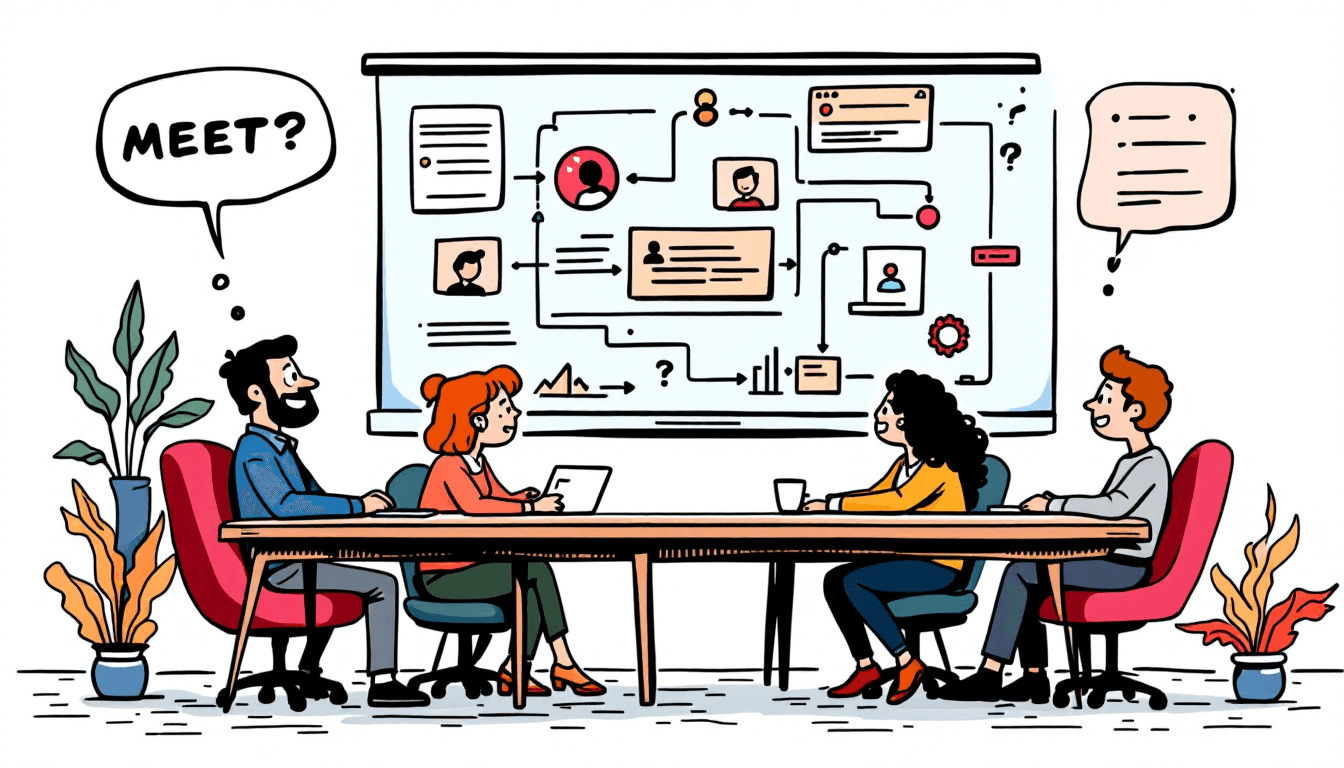
🎯 Workflow Design Fundamentals
Core Design Principles
- ✓User-Centric Design:Optimize for participant experience
- ✓Outcome-Driven Process:Every step serves a clear purpose
- ✓Continuous Improvement:Regular optimization and iteration
- ✓Scalable Architecture:Works for 2-person calls and 50-person meetings
Workflow Success Metrics
- 📊75% improvement in meeting productivity
- 📊60% reduction in follow-up time
- 📊90% action item completion rate
- 📊85% decrease in meeting preparation time
🎯 Workflow Design Success Formula
Effective meeting workflow design equation:40% strategic process mapping + 30% automation integration + 20% continuous optimization + 10% change management = 300% improvement in meeting ROI and organizational efficiency.
🗺️ Process Mapping Framework
Complete Meeting Process Map
Process mapping reveals that 80% of meeting inefficiencies occur in preparation and follow-up phases. Here's the complete framework for mapping your meeting workflow:
Phase 1: Pre-Meeting Workflow
Critical Pre-Meeting Steps:
Planning & Scheduling
- • Meeting purpose definition and success criteria
- • Strategic attendee selection and role assignment
- • Optimal timing and duration calculation
- • Agenda creation with time allocations
- • Pre-reading materials preparation and distribution
Preparation Workflow
- • Technology setup and testing procedures
- • Background research and data compilation
- • Stakeholder briefings and expectation setting
- • Resource allocation and room/platform booking
- • Preparation confirmation and reminder systems
Optimization Impact:
Proper pre-meeting workflow design reduces meeting time by 35% and increases decision-making speed by 50%
Phase 2: During-Meeting Execution
Live Meeting Management:
Meeting Facilitation
- • Opening protocols and agenda review
- • Time management and pace control
- • Participation management strategies
- • Decision-making process facilitation
- • Action item capture in real-time
Content Capture
- • Automated transcript generation
- • Key point identification and tagging
- • Decision documentation protocols
- • Visual asset capture (screens/whiteboards)
- • Sentiment and engagement tracking
Quality Assurance
- • Objective achievement monitoring
- • Participant satisfaction tracking
- • Technical performance oversight
- • Real-time issue resolution
- • Meeting effectiveness measurement
Phase 3: Post-Meeting Optimization
Strategic Follow-up Workflow:
Immediate Actions (Within 2 Hours)
- • Meeting summary generation and review
- • Action item distribution with owners
- • Key decision communication to stakeholders
- • Calendar updates and next meeting scheduling
- • Urgent task creation and assignment
Medium-term Follow-up (24-72 Hours)
- • Detailed meeting analysis and insights
- • Project management tool updates
- • Resource allocation and timeline adjustments
- • Stakeholder briefings and communications
- • Performance metrics calculation and reporting
Long-term Process Improvement (Weekly)
- • Meeting effectiveness analysis and trend identification
- • Workflow optimization based on performance data
- • Team feedback collection and process refinement
- • Training needs assessment and skill development
- • Technology stack evaluation and upgrades
⚡ Automation Flow Design
Intelligent Automation Architecture
Smart automation flows reduce manual meeting management by 85% and improve consistency by 95%. Here's how to design automation flows that scale with your organization:
🔄 Trigger-Based Automation Framework
Calendar Triggers
- Meeting Scheduled:Auto-generate agenda templates, send prep materials
- Meeting Starting:Launch recording tools, check attendee readiness
- Meeting Ending:Trigger summary generation, action item extraction
- Follow-up Due:Send reminders, update project status
Content Triggers
- Transcript Complete:AI analysis for key topics, sentiment scoring
- Decision Identified:Update databases, notify stakeholders
- Action Item Created:Assign owners, set deadlines, create tasks
- Issue Raised:Escalate to appropriate teams, create tickets
Performance Triggers
- Low Engagement:Suggest format changes, agenda optimization
- Overlong Meeting:Alert facilitators, suggest time management
- Poor Audio/Video:Switch to backup systems, troubleshoot
- Missed Objectives:Schedule follow-up, revise approach
Advanced Trigger Logic Examples
Conditional Automation:
- • IF meeting type = "Sales Call" → Trigger CRM update workflow
- • IF attendees > 10 → Enable advanced facilitation tools
- • IF external participants → Apply security protocols
- • IF recording = enabled → Start transcription services
Compound Triggers:
- • Meeting end + decision made → Update project timeline
- • Action assigned + deadline set → Create calendar reminders
- • Poor attendance + important meeting → Reschedule workflow
- • High sentiment + successful outcome → Replicate format
🧠 AI-Powered Workflow Intelligence
Intelligent Content Processing
- Smart Summarization:AI identifies key topics, decisions, and outcomes automatically
- Action Extraction:Natural language processing to find commitments and deadlines
- Sentiment Analysis:Real-time mood tracking and engagement scoring
- Topic Categorization:Auto-tagging for searchable meeting archives
Predictive Workflow Features
- Meeting Success Prediction:Pre-meeting analysis for optimization suggestions
- Optimal Scheduling:AI-recommended meeting times based on participant patterns
- Agenda Optimization:Data-driven recommendations for meeting structure
- Follow-up Prioritization:Intelligent ranking of action items by impact
Machine Learning Integration Examples
Pattern Recognition
- • Identify successful meeting formats
- • Detect recurring issues and solutions
- • Recognize high-performing team dynamics
Adaptive Learning
- • Improve automation rules over time
- • Personalize workflows by team/role
- • Optimize scheduling algorithms
Predictive Analytics
- • Forecast meeting outcomes
- • Predict resource needs
- • Anticipate workflow bottlenecks
📈 Optimization Strategies
Data-Driven Optimization Framework
Performance Analytics
- ✓ Meeting duration vs. objectives achieved
- ✓ Participant engagement and satisfaction scores
- ✓ Action item completion rates by team/type
- ✓ Follow-up efficiency and time-to-resolution
- ✓ Cost-per-meeting ROI calculations
Workflow Efficiency
- ✓ Pre-meeting preparation time reduction
- ✓ Real-time facilitation effectiveness
- ✓ Post-meeting processing speed
- ✓ Cross-platform integration performance
- ✓ Automation success and failure rates
Strategic Impact
- ✓ Decision-making speed improvement
- ✓ Project timeline acceleration
- ✓ Team collaboration quality enhancement
- ✓ Organizational knowledge retention
- ✓ Long-term productivity gains
Advanced Optimization Techniques
🔬 A/B Testing Framework
Meeting Format Experiments
- • Test agenda structure variations (time-boxed vs. open discussion)
- • Compare facilitation styles (democratic vs. directed)
- • Evaluate technology combinations for different meeting types
- • Experiment with pre-meeting preparation requirements
- • Test follow-up communication methods and timing
Workflow Automation Testing
- • Compare manual vs. automated action item distribution
- • Test different AI summary generation algorithms
- • Evaluate integration timing and frequency
- • Compare notification and reminder strategies
- • Test escalation and approval workflow variations
🎯 Continuous Improvement Cycle
Weekly Optimization Review
Monthly Strategic Review
- • Evaluate workflow ROI and business impact
- • Assess technology stack performance and needs
- • Review training effectiveness and skill gaps
- • Plan major workflow redesigns and upgrades
- • Benchmark against industry best practices
🚀 Scaling Optimization Across Teams
Standardization Strategies
- Template Library:Standardized meeting formats for common scenarios
- Process Documentation:Clear workflows for different meeting types
- Training Programs:Consistent facilitation and technology skills
- Quality Standards:Minimum requirements for meeting effectiveness
Customization Framework
- Tailored workflows for sales, engineering, HR
- Role-Based Access:Different permissions and capabilities by position
- Cultural Adaptation:Workflows adapted for global teams and time zones
- Integration Flexibility:Connect with team-specific tools and platforms
🔄 Systematic Improvement
Continuous Improvement Methodology
Systematic improvement transforms good meeting workflows into exceptional ones. Organizations using structured improvement methodologies report 250% better long-term performance gains compared to ad-hoc optimization approaches.
📊 Lean Six Sigma for Meeting Workflows
DMAIC Framework Application
Statistical Process Control
- Control Charts:Track meeting duration, satisfaction, and outcome metrics
- Process Capability:Measure workflow consistency and reliability
- Variation Analysis:Identify special vs. common cause variations
- Performance Trends:Monitor long-term improvement trajectories
Waste Elimination in Meeting Workflows
Time Waste
- • Late starts and early departures
- • Off-topic discussions
- • Redundant status updates
- • Inefficient decision-making processes
Resource Waste
- • Unnecessary attendees
- • Duplicated information gathering
- • Underutilized technology tools
- • Manual processes that could be automated
Quality Waste
- • Unclear action items
- • Missed follow-up communications
- • Poor decision documentation
- • Inadequate outcome tracking
🎯 Agile Workflow Development
Sprint-Based Workflow Improvement
2-Week Sprint Cycle:
Retrospective Questions:
- • What workflow changes worked well?
- • What didn't work and why?
- • What should we try next sprint?
- • How can we scale successful changes?
User Story-Driven Development
Example User Stories:
Acceptance Criteria:
- • Measurable performance improvement
- • User satisfaction increase
- • Reduced manual effort
- • Scalable across teams
📈 Change Management for Workflow Adoption
Stakeholder Engagement
- • Executive sponsorship and communication
- • Department champion identification
- • Early adopter pilot programs
- • Success story documentation and sharing
- • Resistance identification and mitigation
Training & Support
- • Role-specific training programs
- • Interactive workflow simulation
- • Just-in-time help and documentation
- • Peer mentoring and buddy systems
- • Continuous learning reinforcement
Success Measurement
- • Adoption rate tracking by team/role
- • User proficiency assessments
- • Business impact measurement
- • Satisfaction and engagement surveys
- • Long-term retention analysis
📋 Workflow Design Templates
Ready-to-Use Workflow Templates
These proven workflow templates have been optimized across thousands of meetings. Each template includes automation flows, optimization checkpoints, and improvement protocols.
💼 Sales Discovery Call Workflow
Pre-Call Automation (24 Hours Before)
- • Research prospect company and recent news/funding
- • Review previous interactions and touchpoints
- • Prepare personalized agenda with discovery questions
- • Send calendar invite with Zoom link and prep materials
- • Set up CRM record with call objectives and success metrics
During-Call Process
- • Auto-start recording and transcription
- • Real-time sentiment analysis and engagement tracking
- • AI-powered question suggestions based on responses
- • Automatic pain point and budget signal identification
- • Live note-taking with action item flagging
Post-Call Workflow (Within 2 Hours)
- • Generate AI summary with key insights and next steps
- • Update CRM with lead score and stage progression
- • Send personalized follow-up email with relevant resources
- • Schedule appropriate next meeting (demo/trial/proposal)
- • Alert sales manager for high-value or at-risk prospects
Performance: 45% increase in qualification accuracy, 65% faster deal progression
🚀 Agile Sprint Planning Workflow
Pre-Planning Preparation (48 Hours Before)
- • Analyze previous sprint performance and velocity
- • Update product backlog with stakeholder priorities
- • Generate capacity planning based on team availability
- • Prepare user story estimates and dependency mapping
- • Send pre-read materials with sprint goals and context
Planning Session Management
- • Automated timeboxing with visual sprint progress
- • Real-time story point consensus tracking
- • Risk and dependency identification workflow
- • Team commitment and confidence voting
- • Live sprint backlog updates and capacity monitoring
Post-Planning Automation (Immediate)
- • Create Jira tickets with full acceptance criteria
- • Set up automated sprint tracking and burndown charts
- • Schedule daily standup meetings and retrospective
- • Send sprint summary to stakeholders and leadership
- • Configure monitoring alerts for scope creep and blockers
Performance: 30% reduction in planning time, 85% improvement in sprint predictability
📊 Executive Review Workflow
Strategic Preparation (1 Week Before)
- • Aggregate performance data from all departments
- • Generate executive dashboard with KPI trends
- • Compile strategic initiative status reports
- • Identify decision points requiring board/CEO input
- • Prepare risk assessment and mitigation strategies
Review Meeting Orchestration
- • AI-powered presentation flow optimization
- • Real-time decision capture and classification
- • Automated action item assignment with ownership
- • Strategic alignment scoring and gap identification
- • Live stakeholder impact analysis and communication
Strategic Follow-through (24 Hours)
- • Distribute executive summary to board and investors
- • Update company OKRs and strategic plan tracking
- • Cascade decisions to department heads with context
- • Schedule implementation check-ins and milestone reviews
- • Monitor execution progress with automated reporting
Performance: 50% faster strategic decision implementation, 90% improved alignment
🎓 Training & Development Workflow
Learning Session Setup (1 Week Before)
- • Assess participant skill levels and learning objectives
- • Customize content delivery based on roles and experience
- • Set up interactive learning environment and tools
- • Create pre-session knowledge checks and baseline metrics
- • Schedule follow-up coaching and reinforcement sessions
Interactive Learning Management
- • Real-time engagement monitoring and adaptation
- • AI-powered question generation and knowledge testing
- • Breakout group formation and progress tracking
- • Live feedback collection and course correction
- • Practical exercise facilitation and evaluation
Learning Reinforcement (30-Day Cycle)
- • Generate personalized learning paths and resources
- • Schedule spaced repetition and skill practice sessions
- • Monitor on-the-job application and performance improvement
- • Provide manager coaching guides and progress reports
- • Track long-term retention and skill development ROI
Performance: 80% improvement in knowledge retention, 60% faster skill application
🔗 Related Workflow Resources
🔧 Workflow Integration Setup
Complete technical guide for connecting meeting workflows to CRM, project management, and communication platforms.
🤖 Meeting Automation Workflows
Advanced automation strategies for sales, project management, and executive meeting workflows.
⚡ Meeting Efficiency Frameworks
Proven frameworks and methodologies for maximizing meeting effectiveness and team productivity.
🎯 Take the Workflow Quiz
Get personalized recommendations for the optimal meeting workflow design for your specific team and objectives.
Ready to Design Your Perfect Meeting Workflow? 🚀
Transform your meeting productivity with systematic workflow design. Join organizations achieving 75% productivity gains and 90% action completion rates!