A good meeting agenda outline is the difference between a productive, focused session and a chaotic waste of time. It’s your game plan. It lays out the purpose, carves out specific time for each topic, and assigns owners to keep everyone accountable. Simply put, it's the best tool you have to make sure your meetings actually get somewhere.
Why Your Meetings Need a Strong Agenda Outline
Let’s be real for a second. How many meetings have you walked out of feeling like you just wasted an hour of your life? We’ve all been there. Meetings without a plan are a huge source of frustration and kill productivity, often wandering off-topic or ending without any clear next steps. This is where a solid agenda outline completely changes the game.
It's not just a to-do list; it's a powerful communication tool.
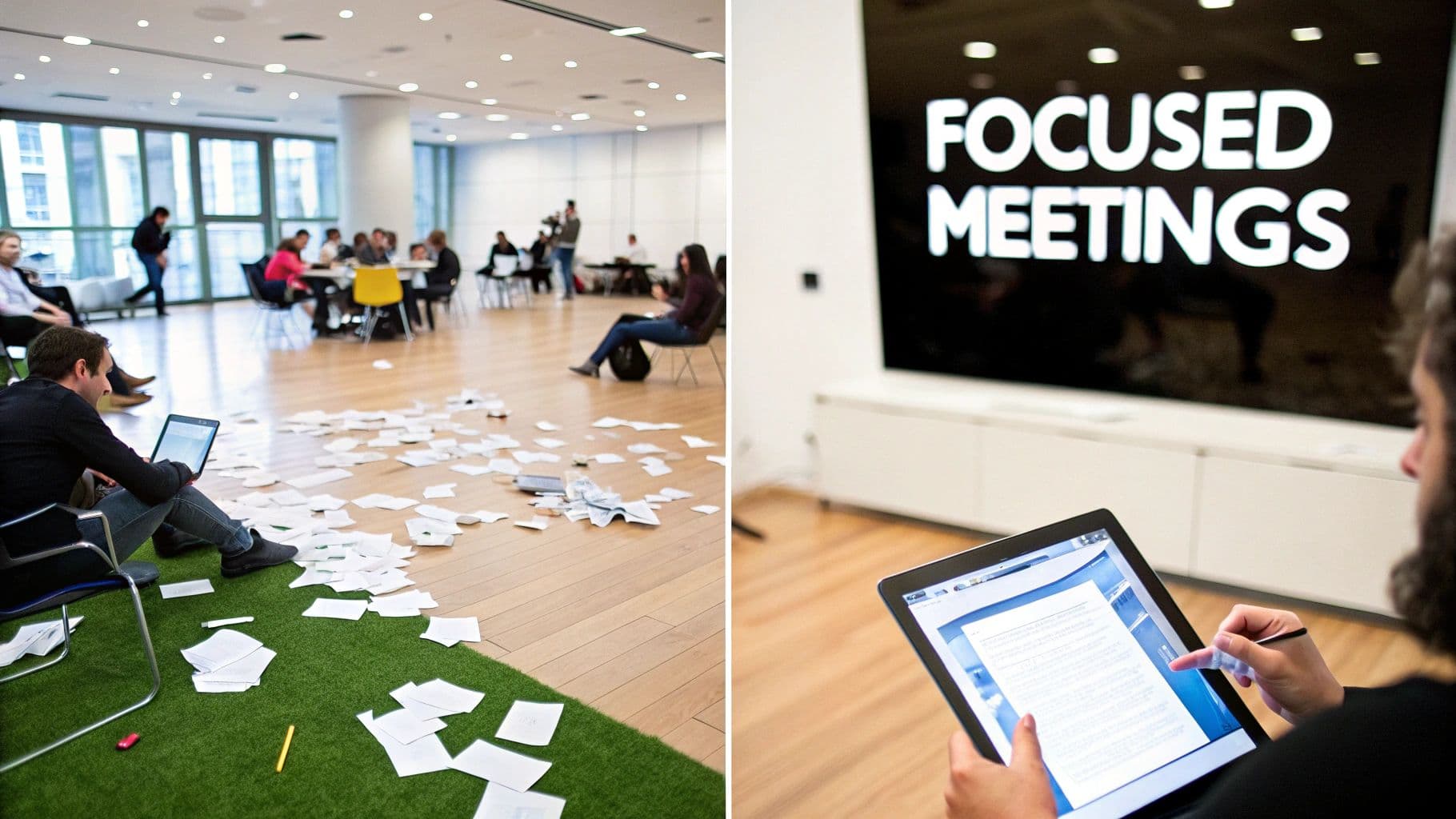
Without this roadmap, people show up cold, the goals are fuzzy, and conversations drift aimlessly. The result? Longer meetings that accomplish less. A well-thought-out outline fixes this by setting clear expectations before anyone even clicks the "Join" button.
The True Cost of Unplanned Meetings
The fallout from poorly planned meetings is more than just a little irritation. It hits team morale, project timelines, and your company's bottom line—hard. When people are constantly stuck in pointless discussions, they check out. They start to feel like their time isn't valued, which creates a culture where people just show up instead of participating. This is exactly why learning how to run effective team meetings that drive results is such a vital skill for any leader.
Think about the real-world impact:
- Wasted Time: A one-hour meeting with 10 attendees isn't one hour of lost time; it's 10 full hours of company time down the drain. Without an agenda, a huge chunk of that is pure waste.
- Lack of Accountability: If action items aren't clearly defined and assigned, critical tasks simply get forgotten.
- Poor Decision-Making: Without the right information and a clear objective, teams either make rushed, bad decisions or, even worse, no decision at all.
From Chaos to Clarity
A meeting agenda outline instantly brings order to the chaos. It makes you think through the why of the meeting before you schedule it, helping you trim the fat and focus only on what will get you closer to your goal. This need for structure becomes crystal clear for recurring meetings, as detailed in this helpful guide to a better daily standup agenda. This isn't about being rigid; it's about creating a smart framework for collaboration.
At the end of the day, sending out a detailed outline is a sign of respect for everyone's time. It shows the meeting has a purpose, the goals are clear, and you value what each person brings to the table. It’s the first, most important step in turning painful meetings into the powerful, decision-making sessions they're supposed to be.
The Core Components of a Powerful Agenda
Before you start plugging in topics and time slots, let's talk about the foundation. A truly great agenda is built on three key pillars. Get these right, and you're not just making a list; you're building a roadmap for a productive meeting. Trying to run a meeting without them is like trying to build a house without a blueprint—it’s probably not going to end well.
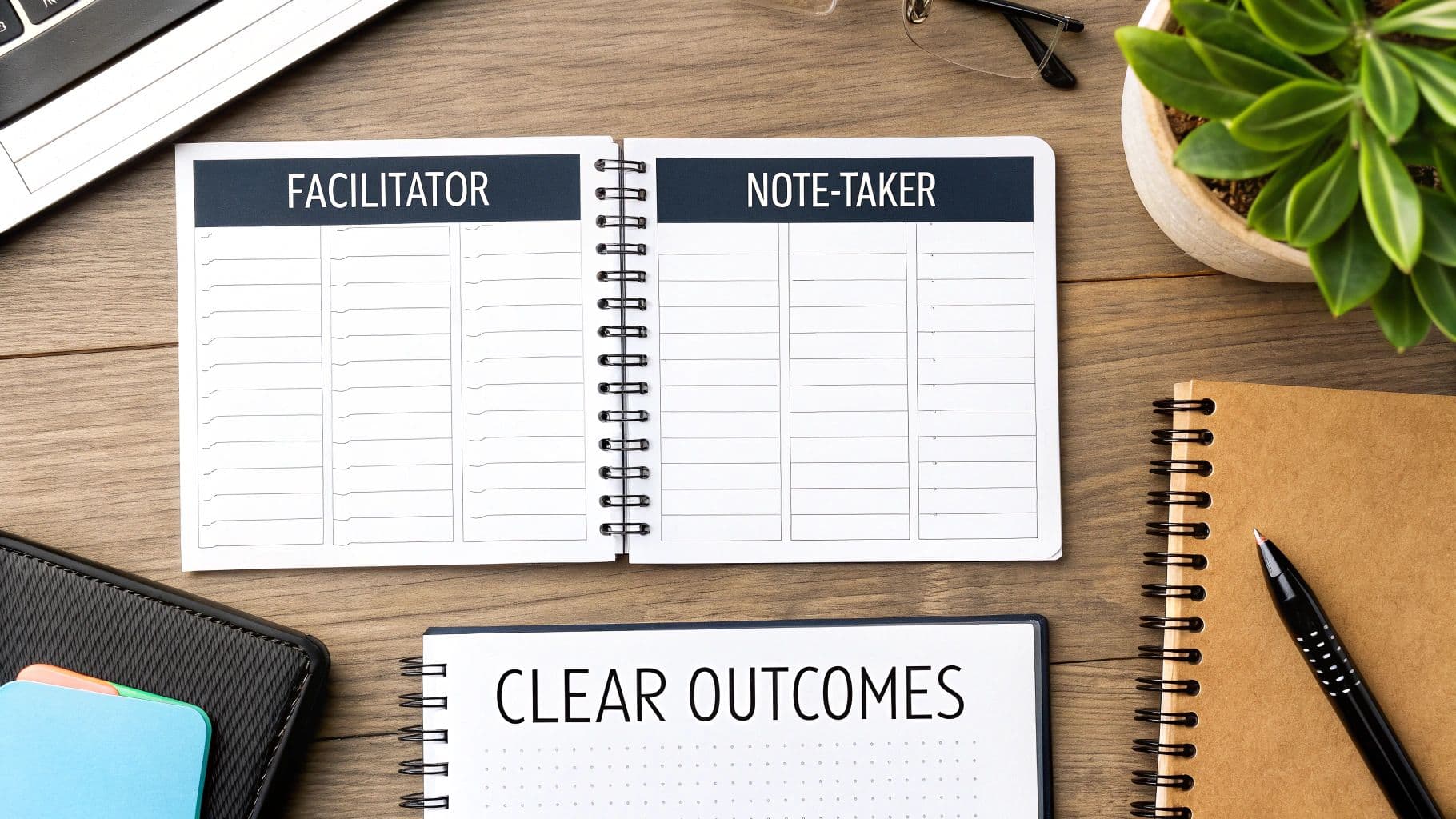
Think of these components as the prep work that guarantees your meeting will actually accomplish something. They ensure everyone shows up on the same page, ready to jump in and contribute from the first minute.
First, Define a Clear Meeting Objective
This is, without a doubt, the most critical part of your agenda. Your objective isn't the topic; it's the specific, tangible outcome you need by the time the meeting ends. This is where most meetings go off the rails—the goal is just too fuzzy.
For example, an objective like "Discuss Q3 marketing" is an invitation for a rambling, pointless conversation.
A strong objective, on the other hand, is sharp and action-oriented. It answers one simple question: "What will we have when this meeting is over that we don't have right now?"
Let's look at the difference:
- Vague: "Review project status."
- Clear: "Identify the top 3 roadblocks for the Alpha Project and assign owners to solve them by Friday."
- Vague: "Talk about the new website."
- Clear: "Decide on the final design mockup for the new homepage and approve the content wireframe."
A crystal-clear objective keeps every single agenda item focused on the finish line. It’s also your best filter for deciding if a meeting is even necessary. If you can’t nail down a concrete outcome, you should probably just send an email.
Next, Get the Right People in the Room (and Give Them Jobs)
The second pillar is all about your invite list. An overcrowded meeting packed with passive observers is a huge waste of company time and money. Every single person on that invite needs a clear reason to be there. They should be a key decision-maker, a subject matter expert, or someone directly affected by the outcome.
When you're putting together the attendee list, ask yourself these questions:
- Who has to be there to make the final call? These are your non-negotiables.
- Who has critical information we can't move forward without? These are your essential contributors.
- Who just needs to be kept in the loop? Maybe they can get the meeting summary afterward instead of sitting through the whole thing.
Once you know who's coming, assigning roles ahead of time adds a layer of structure that keeps things moving. This is a great way to prevent one person from having to juggle leading the discussion, taking notes, and watching the clock all at once.
Defining these roles beforehand sets clear expectations and gets more people invested in the meeting's success.
Finally, Send Out All Relevant Info Beforehand
Your agenda should be more than a list of topics; it should be a complete meeting package. The goal is for people to walk in ready to contribute, not spend the first 20 minutes getting up to speed. That means you need to share all the necessary documents well in advance.
This "pre-read" material could be anything from a performance dashboard or a project brief to customer feedback or a few design mockups. The easiest way to do this is to link directly to the documents in the calendar invite. It’s a small step that makes a huge difference in the quality of the discussion.
When everyone has done their homework, the meeting can dive straight into meaningful conversation and decision-making. You're respecting their time and setting the stage for a session that's about strategy, not just status updates.
Building Your Meeting Agenda Outline
Once you’ve nailed down the "why" and "who," it’s time to build the actual structure of your meeting. This is where you move from a broad goal to a concrete, step-by-step roadmap for the conversation. Think of it as choreographing the discussion to get from point A to your desired outcome.
This isn't just about jotting down a list of topics. A truly effective agenda is carefully designed to guide the flow, keep everyone engaged, and drive the team toward a clear decision or action.
Frame Agenda Items as Questions or Problems
Here’s a simple trick that completely changes the energy in a room: stop using vague topics. Instead, frame every single agenda item as a question that needs an answer or a problem that needs a solution.
"Q4 Budget" is a snooze-fest. It invites people to either tune out or ramble. But what if you phrase it as, "How can we reallocate $15,000 from our Q4 budget to fund the new marketing initiative?" Suddenly, everyone has a clear problem to solve. They know what's expected of them.
Let’s look at a couple more examples:
- Instead of: "Website Redesign Update"
- Try: "Which of these three homepage mockups should we move forward with?"
- Instead of: "Client Feedback"
- Try: "What are the top three actionable steps we can take based on this month's client feedback?"
This one small shift turns passive attendees into active participants. It gives every part of your meeting a laser-focused purpose.
Assign Realistic Time Blocks for Each Item
We've all been in meetings that spiral out of control because of bad time management. The temptation to cram too much into one hour is real, but it almost always backfires, leading to rushed discussions and half-baked decisions.
Be ruthless and realistic here. Look at your list of questions and assign a time block to each one. If you have a meaty topic, give it the space it deserves. It’s far better to cover three things well than to skim over ten and achieve nothing.
I always recommend adding a small buffer—even just five minutes—at the end. It's a lifesaver when a critical discussion needs just a little more time to reach a resolution.
Strategically Sequence Your Topics
The order of your agenda items is more important than you think. A smart sequence can build momentum, help you navigate tough conversations, and ensure you end on a productive note. There's no single magic formula, but here are a few strategies I've seen work wonders.
- Start with Quick Wins: Kick things off with something simple that you can resolve in a few minutes. It gets everyone engaged and creates a feeling of accomplishment right away.
- Tackle the Big Decisions First: Put your most important or challenging item right after the opener. This is when people have the most energy and mental bandwidth. Don't save the heavy lifting for the end when everyone's already checked out.
- End with a Call to Action: Always wrap up by clearly summarizing action items, owners, and deadlines. Everyone should walk out knowing exactly what they need to do next.
This kind of intentional flow makes the meeting feel organized and purposeful. It’s shocking, but while 79% of workers agree a clear agenda is key to productivity, only 37% of meetings actually have one. Just by thinking about the sequence, you're putting yourself miles ahead. You can dig into more stats about the impact of agendas on meeting productivity.
Assign an Owner to Every Single Item
For an agenda to really work, it needs to be tied to accountability. The simplest way to do this is to assign an "owner" to every item on the list. This is the person who will lead that specific part of the conversation.
The owner’s job isn’t to have all the answers. Their role is to:
- Introduce the question or problem.
- Share any quick, essential context.
- Steer the discussion toward a decision.
- Keep an eye on the clock.
When you assign owners, you distribute the responsibility and encourage more people to speak up. It prevents the meeting from being dominated by one or two voices and ensures every topic gets the attention it deserves. The whole conversation just runs better when people know what’s expected of them.
Agenda Outline Templates for Any Situation
Knowing what goes into a good agenda is one thing, but actually building one for different kinds of meetings is where the real skill comes in. Let's be honest, not all meetings are created equal. A daily huddle needs a completely different playbook than a deep-dive strategic review.
The trick is to match your agenda's structure to the meeting's purpose. I've pulled together four practical, field-tested templates for some of the most common meetings you'll run. Think of them less as rigid rules and more as solid starting points you can tweak for your own needs.
Before we dive into specifics, this visual perfectly captures the core of a well-structured agenda item.
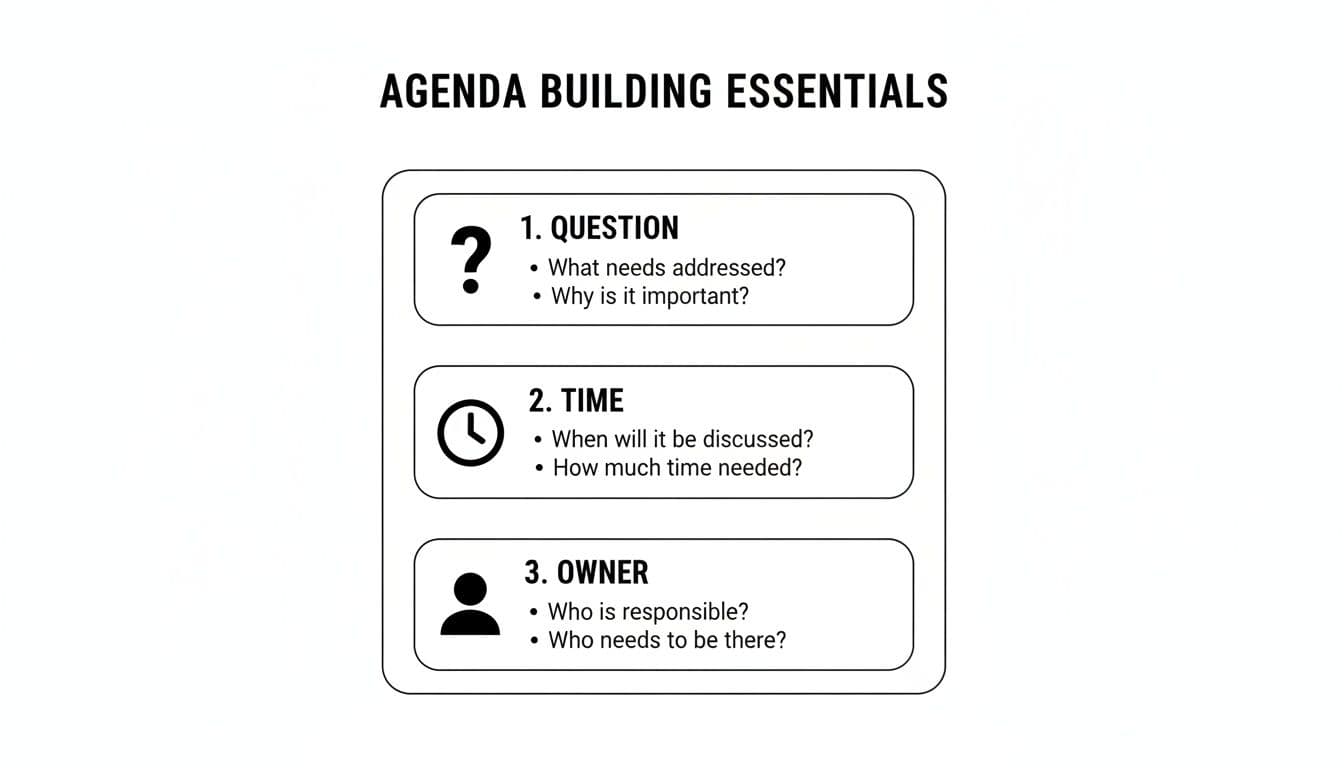
It’s a simple but powerful reminder: every topic needs a guiding question to answer, a strict time limit to respect, and a clear owner to drive it forward.
The Daily Standup Agenda Outline
Speed and clarity are the names of the game here. The goal is to get everyone aligned and unblock any issues—that's it. The classic 15-minute standup is meant to be a quick sync, not a long-winded problem-solving session. Your agenda has to be ruthlessly efficient.
- Round-Robin Updates (10 mins): Each person gives a rapid-fire update by answering three simple questions:
- What did I get done yesterday?
- What am I focusing on today?
- What's standing in my way?
- Identify Blockers (3 mins): The meeting lead jots down any roadblocks that came up. This is purely for identification, not for solving on the spot.
- Parking Lot & Next Steps (2 mins): The lead confirms who needs to sync up after the meeting to tackle those blockers. Then, meeting over.
This tight structure is your best defense against the standup dragging on and turning into a time-wasting discussion.
The Weekly Sales Review Outline
This meeting is all about the numbers—performance, pipeline, and planning. The agenda has to be data-driven, helping the team review what happened last week and set a clear course for the next one.
Here's how you can structure it:
- Weekly Wins (5 mins): Kick things off on a positive note. Have each rep share one great call, closed deal, or breakthrough. It’s a great morale booster.
- Performance vs. Goals (15 mins): The manager quickly walks through the dashboard, comparing the team's key metrics (calls, demos, deals) against the week's targets.
- Pipeline Deep Dive (15 mins): Zero in on a few critical deals. This is the time to strategize, discuss next steps, and figure out what’s needed to get them across the finish line.
- Action Plan for Next Week (10 mins): Solidify everyone's top priorities for the coming week. End the meeting with total clarity on who owns what.
The Project Retrospective Outline
When a project ends, a retrospective is your best tool for getting better next time. The agenda needs to create a safe environment for honest feedback that focuses on the process, not on pointing fingers. For teams working in sprints, a specialized agenda like a sprint planning meeting agenda is another essential tool in the toolkit.
The Goal: Figure out what went well, what didn't, and what we'll change for the next project. Time Allotted: 60 Minutes
- Set the Stage (5 mins): The facilitator kicks things off by reinforcing the prime directive: we're here to learn and improve, not to assign blame.