A solid employee onboarding checklist is more than just a to-do list; it’s your secret weapon for making new hires feel welcome, prepared, and ready to make an impact. It's what turns a potentially awkward first few days into a smooth, structured experience that sets the tone for their entire career with you.
This simple document can be the difference between a new team member feeling lost and overwhelmed, or feeling confident and connected from the get-go.
Why a Great Onboarding Checklist Matters
Ever started a new job where your laptop wasn't ready? Or you had no idea who to ask for help, let alone who to have lunch with? It's an awful feeling. You end up feeling more like an afterthought than a valuable new addition. That first impression sticks.
A chaotic start can quickly lead to disengagement, while a welcoming, organized process builds immediate loyalty and trust. It's not just about making someone feel comfortable—it's a smart business decision with real, measurable returns.
Boosting Retention and Productivity
When new hires have a clear roadmap, they feel supported and are far less likely to start second-guessing their decision to join your team. The data backs this up. Organizations with a strong, standardized onboarding process see up to an 82% improvement in new-hire retention. Think about that. It’s a huge impact, driven by simple things like handling paperwork before day one and setting clear 30-60-90 day goals.
A good checklist also dramatically shortens the time it takes for a new person to become a productive contributor. Instead of spending weeks hunting down login credentials or figuring out who holds the keys to a critical project, they have a guide. They can start adding real value almost immediately, which is a massive win for their confidence and your team's momentum.
To really see the payoff, let's look at the core benefits.
Core Benefits of a Standardized Onboarding Checklist
A quick summary of the primary advantages organizations gain by implementing a structured employee onboarding checklist.
| Benefit Area | Impact on the Business | Example Metric |
|---|---|---|
| Employee Retention | Reduces costly turnover by making new hires feel supported and integrated from the start. | Decrease in first-year employee turnover rate. |
| Time-to-Productivity | Accelerates how quickly a new hire can contribute meaningfully to their role and team. | Shorter time to complete first major project or hit first performance milestone. |
| Cultural Integration | Ensures a consistent, positive introduction to company values, mission, and team dynamics. | Higher scores on new hire engagement surveys. |
| Managerial Efficiency | Frees up managers from having to reinvent the onboarding process for every new team member. | Reduction in time managers spend on administrative onboarding tasks. |
Ultimately, a standardized checklist ensures everyone gets the same high-quality, welcoming experience.
Building a Strong Company Culture
Every little thing you do during onboarding sends a message about your company's culture. A checklist makes sure that message is deliberate, consistent, and positive.
It formalizes the human touches that matter most, like scheduling a team welcome lunch, assigning an onboarding buddy, or making sure the new person meets key leaders in their first week. These small actions show that you're a company that prioritizes people and connection, not just processes.
For anyone looking to master these kinds of foundational HR practices, this guide to becoming an HR Manager offers some fantastic insights into the bigger strategic picture.
In the end, a great checklist isn't about ticking boxes. It’s about intentionally designing an experience that makes every new hire feel like they’ve absolutely made the right choice. And a huge part of that first impression comes down to what you say, which is why having great team onboarding welcome messages is the perfect companion to a well-structured plan.
Breaking Down the Onboarding Checklist Template
A great employee onboarding checklist isn't just a to-do list. It’s a strategic roadmap that transforms a promising new hire into a fully integrated, confident member of your team. To get it right, you need to break the journey down into distinct, manageable phases. Each stage builds on the last, creating a supportive experience from the moment they say "yes."
Let's walk through the essential phases of our customizable template. We'll cover everything from what to do before they arrive, how to make their first week count, and what it takes to guide them through their crucial first 90 days. This is about more than just paperwork; it's about crafting an experience that makes them feel they made the right choice.
A well-structured process has a ripple effect across the entire organization, directly influencing your culture, speeding up productivity, and improving long-term retention.
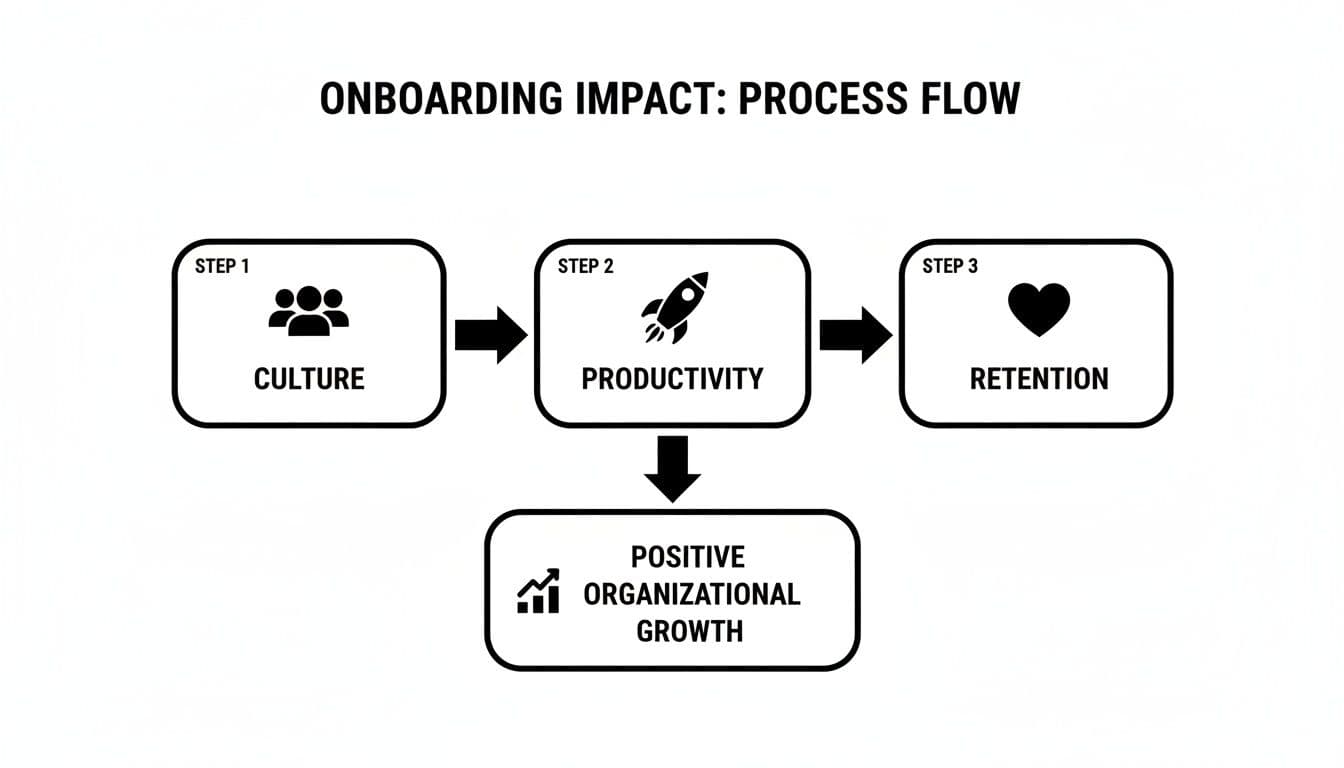
As you can see, it's a cycle of positive growth. A welcoming culture gets people up to speed faster, and productive, happy employees are far more likely to stick around.
Phase 1: Pre-Boarding—The Crucial First Impression
Onboarding starts the second a candidate accepts your offer, not on their first day. This pre-boarding phase is your golden opportunity to make an incredible first impression, dial down those day-one nerves, and get the administrative stuff out of the way.
Think of it as clearing the runway for a smooth takeoff. The goal here is to build genuine excitement and make your new hire feel like they're already part of the team.
Key Pre-Boarding Actions:
- Send a Welcome Package: Go beyond the standard email. A box with some company swag, a handwritten note from their manager, and maybe a guide to the team's favorite lunch spots sends a powerful message.
- Handle Paperwork Digitally: Get all the W-4s and I-9s out of the way online. This frees up their first day for what really matters: connection and learning.
- Share a First-Week Agenda: A simple schedule of what to expect can do wonders for first-day jitters. Knowing who they’ll meet and what they’ll be doing makes a huge difference.
- Set Up All Tech and Tools: Make sure their laptop, email, and software accounts are ready to go before they are. Nothing screams "we weren't ready for you" like spending a day waiting on IT.
Phase 2: Day One—Making a Memorable Welcome
The first day should be all about connection, not confusion. Your main goal is to welcome them warmly, get them acquainted with their team and workspace, and give them a feel for the company culture. It’s less about diving into deep work and more about making them feel comfortable and oriented.
A common mistake is to either overwhelm new hires with a firehose of information or leave them stranded at their desk. A well-planned first day shows you're organized and that you value their time.
A Successful First Day Checklist Includes:
- A personal welcome from their manager.
- An office tour (or a virtual walkthrough of key digital tools for remote folks).
- A fully set-up workspace with all equipment working.
- A scheduled team lunch to build rapport.
- A one-on-one with their manager to walk through their 30-day plan.
This is also the perfect time to assign an onboarding buddy—a friendly peer who can answer all the "silly" questions they might be afraid to ask their manager.
Phase 3: The First Week—Building Momentum
With the initial welcome out of the way, the first week is all about building momentum. The focus shifts from general orientation to role-specific training and their first real tasks.
This is where you start to immerse them in the team's actual workflow. The goal is for them to end the week feeling confident, connected, and clear on what's expected of them. For a deep dive into building out your plan, resources like the Open Onboarding Cookbook offer fantastic, practical guidance.
First Week Priorities:
- Role-Specific Training: Start training on the tools and processes they'll use every day. This could mean shadowing a colleague or working through some one-on-one sessions.
- Assign a Small First Project: Give them a manageable task with a clear, achievable outcome. An early win is a huge confidence booster.
- Schedule Key Introductions: Set up brief meet-and-greets with key collaborators in other departments. This helps them build their internal network from day one.
- Daily Manager Check-ins: A quick, 15-minute chat at the end of each day goes a long way. It's a chance to answer questions, offer support, and just see how they're doing.
Having these early processes documented is the secret to consistency. If you're not sure where to start, learning what is process documentation done right can make your whole system more effective and easier to scale.
Phase 4: The First 30 Days—Gaining Competence
By the end of the first month, your new hire should be shifting from learning to contributing. They should have a solid handle on their main responsibilities and feel comfortable with the team's core processes.
This phase is all about reinforcing what they've learned, providing consistent feedback, and setting clear short-term goals. The manager's role is to act as a guide, helping them navigate challenges and removing any roadblocks.
Checklist Items for the First Month:
- Hold a 30-day check-in to discuss progress, celebrate wins, and see where they might need more support.
- Review and adjust their 30-60-90 day plan to make sure it's still on track.
- Offer access to more advanced training or resources now that they have the basics down.
- Ask for their feedback on the onboarding experience so far. What’s working? What isn’t?
Phase 5: The First 90 Days—Driving Integration
The 90-day mark is typically when a new hire is considered fully ramped up. They should be working with a good deal of autonomy, contributing consistently, and have a real sense of belonging within the company culture.
Sadly, this is where many onboarding programs drop the ball. Research shows 52% of employees say their onboarding lasted less than a month. It’s a huge missed opportunity, as true integration takes time and continued support.
The focus here shifts to long-term growth, performance, and cementing their place in the organization.
Key 90-Day Milestones:
- Conduct a formal 90-day review: This is a deeper conversation about their performance against the goals you set together.
- Discuss career goals: Start talking about what their future at the company could look like. Show them there’s a path for growth.
- Encourage cross-functional work: Task them with a small project that requires them to collaborate with other teams.
- Solicit final onboarding feedback: Get their thoughts on the entire 90-day process to help you make it even better for the next hire.
By following this phased approach, you create a structured and supportive experience that sets every single new hire up for success from day one.
Customizing Your Checklist for Any Role
A generic onboarding checklist is a great place to start, but let's be honest—its real value comes from tailoring it. A one-size-fits-all approach just doesn't cut it in the real world. Think about it: what a new software developer needs in their first month is completely different from what a sales executive or a customer support specialist requires to succeed.
If you don't customize the experience, you risk leaving new hires feeling adrift, disconnected from the work they were actually hired to do. A tailored checklist, on the other hand, sends a powerful message: "We've thought specifically about you and your role. We're setting you up to win." That small shift turns a routine process into a personalized roadmap.

Adapting for Technical Roles
When you bring a technical person on board—like a software engineer or data analyst—their world revolves around tools, systems, and codebases from day one. Their path to being productive is paved with getting the right access and understanding the tech stack. A generic checklist might just say "Set up computer," but a developer's checklist needs to go much deeper.
Key Customizations for Technical Teams:
- Environment Setup: Break down "setup" into specific, actionable steps. Think: setting up their local development environment, installing specific IDEs, and cloning the right code repositories.
- Access to Services: Get granular. List out every single service they'll need access to, whether it's AWS, GitHub, Jira, or internal databases and API gateways. This one step can prevent days of frustrating delays.
- Architecture Overview: Nothing beats context. Schedule a dedicated session with a senior engineer to walk through the system architecture. It helps them see how their piece of the puzzle fits into the bigger picture.
- First "Good First Issue": Assign a small, well-documented bug fix or a minor feature improvement as their very first task. This gives them a low-stakes way to learn the entire contribution process, from writing code to getting it reviewed and deployed.
Fine-Tuning for Sales Roles
For a new sales executive, the first 90 days are less about code and all about product knowledge, customer personas, and building relationships. Their checklist should fast-track them into activities that get them familiar with the product and in front of customers.
Essential Modifications for Sales Teams:
- Product Deep Dive: Plan intensive training sessions on your product. Focus on the key features, the unique value propositions, and how you stack up against the competition.
- Shadowing Sessions: Get them in the room (or on the Zoom). Arrange for them to shadow your top-performing account executives on discovery calls, demos, and even tough negotiation meetings.
- CRM and Sales Tech Training: Don't just give them a login. Provide hands-on training for your specific CRM setup, sales engagement platforms like Outreach or Salesloft, and any lead tracking software you use.
- Territory and Lead Introduction: A dedicated meeting is a must. Use it to review their assigned territory, introduce them to key accounts, and walk through the current pipeline of leads.
Supporting Remote Employees
Onboarding remote employees requires an extra layer of intention. You have to consciously build the connections and camaraderie that happen more organically in an office. A remote-specific checklist has to replicate those informal interactions that make someone feel like they're truly part of the team.
This means being deliberate about communication, introductions, and social check-ins. Without these planned touchpoints, a remote hire can quickly feel isolated, which is a huge risk for engagement and retention. A big piece of this is making sure all team knowledge is easily accessible online. This is where understanding the key strategies and benefits of knowledge management can make or break your remote onboarding.
Crucial Checklist Items for Remote Hires:
- Virtual Coffee Chats: Be proactive and schedule these! Set up informal 15-minute video calls with team members and key contacts in other departments. Make it clear there's no work agenda—it's purely social.
- Digital Tool Walkthrough: Access isn't enough. Schedule a screen-share session to show them how your team actually uses communication tools like Slack and project management software like Asana. Explain channel etiquette and unspoken rules.
- Manager and Buddy Check-ins: Up the frequency in the first few weeks. A daily 10-minute video call can make an enormous difference in helping a remote employee feel supported and connected.
- Welcome Package Delivery: Make sure their welcome package—with all their equipment and some company swag—arrives before their first day. It’s a small touch that builds excitement and makes them feel ready to go.
By thoughtfully modifying your master checklist, you create a relevant, impactful experience that sets every new hire up for success, no matter their role or where they're working from.


