Think of a conversation intelligence platform as your company's own "game tape" analysis tool, specifically for teams that talk to customers. It uses AI to record, transcribe, and break down every single conversation—whether it’s a video conference or a quick phone call. The whole point is to turn spoken words into hard data you can actually use.
Unlocking The Voice Of Your Customer At Scale
Imagine trying to coach a basketball team without watching any game footage. You'd be stuck relying on gut feelings and what players told you happened. For years, that's exactly how most businesses managed their sales and customer service teams. We all knew great conversations were happening, but there was no real way to bottle that magic and learn from it consistently.
A conversation intelligence platform completely flips that script. It’s like having an analyst meticulously reviewing every interaction to find out what's working, where people need a bit of coaching, and what customers really think. This isn't about big brother watching over your shoulder; it's about building a feedback loop that helps everyone on the team improve.
From Raw Audio To Actionable Insights
So, how does it all work? The engine running under the hood is a technology called Natural Language Processing (NLP). You can think of NLP as a sophisticated translator that gets not just the words being said, but the meaning, emotion, and intent behind them.
This technology is what allows the platform to do some pretty amazing things:
- Records and Transcribes: It automatically captures your calls and meetings, creating a perfect, searchable transcript for every conversation. No more frantic note-taking.
- Analyzes Key Moments: The system can automatically flag important parts of a call—like when a competitor is mentioned, pricing comes up, or a customer raises a key objection.
- Reveals Patterns: By looking at data from thousands of calls, it starts to show you which talking points and behaviors are actually closing deals or solving problems.
You can learn more about what conversation intelligence is and how it unlocks insights in our in-depth guide on the topic.
It’s no surprise that demand for this kind of insight is exploding. The conversation intelligence market was already valued at USD 6.3 billion in 2023 and is expected to skyrocket to USD 26.5 billion by 2033. This isn't just hype; companies are seeing real results, boosting sales by as much as 20-30% and drastically cutting down the time it takes to get new hires up to speed.
At the end of the day, this technology gives you a solid foundation for boosting performance everywhere, from the sales floor and customer success teams to marketing and even product development.
Unlocking What Your Platform Can Really Do
Think of a conversation intelligence platform as more than just a fancy call recorder. It's really an analysis engine, built to turn raw conversations into a goldmine of structured data. Each feature works to uncover patterns and critical moments that you'd otherwise completely miss. Let's break down how the technology goes from just listening in to shaping your business strategy.
It All Starts with a Perfect Transcript
The bedrock of any great platform is its AI-powered transcription. This is lightyears beyond the voice-to-text on your phone. We're talking about incredibly accurate, time-stamped transcripts that know who is speaking at any given moment. This simple distinction—knowing who said what and when—is a game-changer for understanding the flow of a conversation.
With this level of accuracy, your reps can stop scrambling to take notes and just focus on the customer. Every word is captured, creating a flawless record of every single interaction.
Turning Words Into Winning Metrics
Once a conversation is transcribed, the real magic begins with analytics. This is where a conversation intelligence platform truly shines. The system doesn't just see a wall of text; it measures specific behaviors and spots trends that are directly tied to successful outcomes.
This gives managers objective data to work with, transforming coaching from "I think you should..." to "Here's what the data shows..."
- Talk-to-Listen Ratio: A brilliantly simple metric. It shows you exactly how much your rep is talking versus listening. A balanced ratio usually means the rep is asking smart questions and absorbing the customer's needs. If their talk time is through the roof, it might be time to coach them on discovery skills.
- Competitor Mentions: The platform instantly flags every time a competitor's name comes up. This gives you a live feed of market intelligence, showing you who you're up against and why they're entering the conversation.
- Keyword and Topic Tracking: You can set the system to track mentions of key topics like "pricing," "timeline," or specific product features. This helps you grasp what customers care about most and confirms your team is hitting all the right talking points.
These metrics act like a health dashboard for your team's calls, letting managers see exactly where to focus their coaching efforts without listening to hours of audio.
Understanding the Feeling Behind the Words
Let's be honest, how something is said is often more revealing than what is said. This is where sentiment and intent analysis comes in. Using sophisticated algorithms, the platform picks up on subtle emotional cues in a person's tone and word choice.
It can identify frustration, excitement, confusion, or hesitation—from both your rep and the customer. Think about it: a long pause after you mention the price is a huge red flag that a simple transcript would never catch. This emotional context gives you a much deeper read on buyer intent and helps you coach your team on crucial soft skills like empathy.
Find Any Moment in an Instant
When you have thousands of hours of recorded calls, finding one specific moment feels like searching for a needle in a haystack. That's why a powerful AI-powered search is a non-negotiable feature for any top-tier conversation intelligence platform.
This isn't just a basic keyword search. You can instantly sift through every conversation your team has ever had, filtering by rep, customer, or even deal stage. More importantly, you can search for specific phrases to find every time a particular objection was raised last quarter. In seconds, you can create a "greatest hits" playlist for training. This also makes it easy to pull out key takeaways from every call. You can learn more about how AI helps with the action item extraction process to make sure no follow-ups fall through the cracks.
This turns your call history from a dusty archive into a living, searchable library of insights—an absolute goldmine for coaching, marketing, and product feedback.
How Conversation Intelligence Actually Helps a Business Grow
Think of a conversation intelligence (CI) platform as the brain of your company's customer-facing operations. It doesn't just record calls; it listens, understands, and translates thousands of raw customer interactions into clear, actionable insights. This isn't just a tool for one department. It becomes a shared source of truth that gets everyone—from sales to marketing to product—on the same page, listening to the unfiltered voice of the customer.
By moving beyond gut feelings and old anecdotes, businesses can finally make smarter, faster decisions that have a real impact on revenue. Nowhere is this more obvious than in the sales department, where the little details in a conversation can mean the difference between a closed-won deal and a missed opportunity.
Rebuild Your Sales Playbook From What Actually Works
For a sales leader, a CI platform is like cloning your top performer. The software digs into the calls of your best reps and pinpoints the exact talk tracks, objection-handling techniques, and questions that consistently win deals. Suddenly, you can build a dynamic sales playbook based on what’s proven to work in the real world, not just what a consultant thinks is a good idea.
Instead of generic training sessions, you can create a library of "greatest hits" from actual calls. Imagine giving new hires a playlist of "perfect discovery calls" or "how to navigate pricing conversations." It's an incredibly effective way to shorten their ramp-up time and ensure everyone on the team is operating from the same high-performing script.
It also makes forecasting way more accurate. By analyzing deal conversations for red flags—like fuzzy next steps or a prospect who seems disengaged—managers get an objective, real-time look at their pipeline. That kind of data is a lot more reliable than a rep's optimistic CRM update.
Give Customer Success and Support Teams a Heads-Up
While sales is busy winning new customers, your customer success and support teams are fighting to keep them. A CI platform acts as their early-warning system for potential churn. By tracking customer sentiment and flagging keywords related to frustration or dissatisfaction, your team can jump on problems before they blow up.
For example, what if a customer keeps mentioning a competitor or sounds confused about a new feature? The platform can automatically flag those interactions and alert the account manager, who can then step in with the right support or training.
This technology is also a goldmine for product feedback. Customer success managers can instantly search for every conversation where a user asked for a specific feature or reported a bug. This gives the product team direct, unfiltered customer evidence to help them decide what to build next.
This is where the core features of a CI platform—transcription, analytics, and search—really come together to deliver value across the entire company.
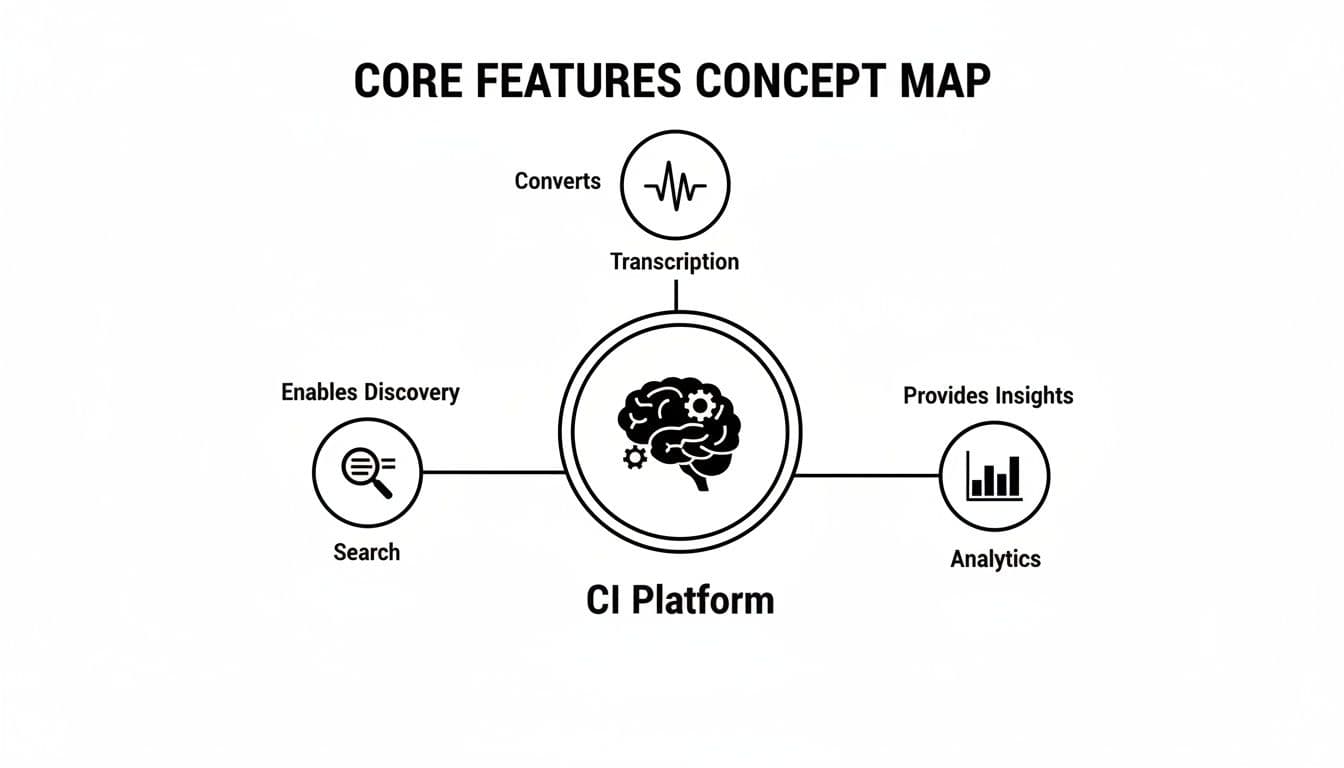
As you can see, the platform takes all this messy, unstructured conversation data and turns it into organized intelligence that anyone can use to make better decisions.
Fine-Tune Your Marketing Message
Marketing teams spend a fortune trying to speak their customers' language. A CI platform gives them the ultimate cheat sheet. By analyzing thousands of calls, marketers can hear the exact words, phrases, and pain points that resonate with their target audience. This is pure gold for writing better website copy, ad campaigns, and blog posts.
If customers consistently describe their problem using a specific term, the marketing team can adopt that language. The result is messaging that feels authentic and connects instantly. It’s about validating ideas with real data, not just guessing what customers want to hear.
This alignment has a huge impact. Large enterprises are already seeing the benefits, making up 55.6% of the conversation intelligence market share in 2025. They’re not just buying software; they’re getting results. Sales conversion rates are climbing by 15-25% after bringing in automated call insights. And with 70% of these systems being cloud-based, they plug right into major CRMs, creating a seamless flow of customer data.
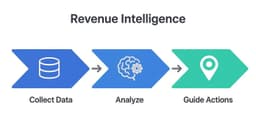
This strategy is a key part of the bigger picture of revenue operations. You can learn more about how all the pieces fit together in our guide on what revenue intelligence is and how it provides a holistic view of the customer journey: https://summarizemeeting.com/blog/what-is-revenue-intelligence-a-practical-guide.
Ultimately, by centralizing all this customer data, you create a single source of truth that helps every team. For instance, by efficiently leveraging voice-to-text for CRM notes, you capture richer data upfront, which then feeds the intelligence platform and leads to better strategic decisions across the board.
Measuring the ROI of Conversation Intelligence
So, you're thinking about bringing a conversation intelligence platform into your company. While the potential benefits might seem obvious, getting leadership to sign off on the investment means you need to talk their language—and that language is all about the numbers. It’s not enough to say it will “improve things.” You have to show exactly how it will impact the metrics your business already lives and dies by.
Think of it less as a new software expense and more as a revenue engine. For your sales team, this means drawing a straight line from using the platform to higher win rates and bigger deals. For your customer service folks, it’s about proving it can lower customer churn and boost satisfaction scores.
When you connect the dots between the tool and real financial outcomes, the conversation shifts. Suddenly, it’s not just a nice-to-have piece of tech; it becomes a strategic investment with a clear, undeniable return.
Calculating the Hard ROI for Sales Teams
Nowhere is the return on investment (ROI) clearer than with the sales team. Here, you can directly measure how better coaching and smarter insights translate into more money in the bank.
Here’s where you’ll see the most direct financial impact:
- Higher Win Rates: Imagine being able to figure out what your top reps do differently and then teaching everyone else to do the same. That’s what this software does. Even a small 2% bump in your win rate on a 10 million** pipeline means an extra **200,000 in new revenue.
- Bigger Average Deal Size: When your reps get better at handling objections and asking the right discovery questions, they get much better at upselling and cross-selling. You can track this by watching your average contract value (ACV) climb.
- Shorter Sales Cycles: Deals close faster when reps know exactly how to address a customer's concerns and lay out the next steps. Shaving even a few days off the average sales cycle lets your team jump on new opportunities sooner, which really boosts overall productivity.
- Faster Onboarding for New Hires: Getting new salespeople up to speed is a huge time and money sink. By giving them a library of real-world call recordings to learn from, you can slash their ramp-up time and get them selling months earlier.
Quantifying the Impact on Customer Success and Support
While the sales ROI is all about bringing in new cash, the value for customer success and support teams is about keeping the customers you already have happy and loyal. And we all know it costs way more to find a new customer than to keep an existing one.
For your customer-facing teams, focus on these metrics:
- Lower Customer Churn: The platform can flag at-risk accounts by analyzing conversation sentiment and keywords, letting your team step in before it's too late. A tiny 1% reduction in monthly churn can have a massive compounding effect on your annual recurring revenue (ARR).
- Better Customer Satisfaction (CSAT/NPS): By analyzing thousands of conversations, you can pinpoint the most common frustrations in your customer journey. Fixing those issues leads directly to higher satisfaction scores, which are tightly linked to loyalty and referrals.
- More Efficient Agents: Think about how much time your support agents spend on admin tasks like taking notes. With automated summaries, they can spend less time typing and more time actually helping people. That means you can handle a higher volume of support tickets without having to hire more staff.
To make this even clearer, here’s a breakdown of how to track the ROI across different parts of your business.
Key Metrics to Track for CI Platform ROI
This table outlines the key performance indicators (KPIs) that organizations should monitor to measure the financial and operational impact of their conversation intelligence tool.
| Department | Metric to Improve | How CI Helps |
|---|---|---|
| Sales | Win Rate | Identifies winning talk tracks and objection-handling techniques from top performers. |
| Sales | Sales Cycle Length | Pinpoints where deals stall, enabling managers to coach reps on moving them forward. |
| Sales | New Hire Ramp Time | Provides a library of real calls for faster, more effective training. |
| Customer Success | Customer Churn Rate | Flags at-risk customers based on sentiment and negative keyword mentions. |
| Customer Success | Net Promoter Score (NPS) | Uncovers common customer complaints and friction points to improve the experience. |
| Support | First Call Resolution (FCR) | Analyzes successful support calls to create best-practice guides for the team. |
| Operations | CRM Data Hygiene | Automatically populates CRM fields with accurate call data, ensuring a reliable source of truth. |
| Product | Feature Adoption | Tracks customer requests and feedback to inform the product roadmap. |
Ultimately, tracking these specific metrics transforms the conversation about a CI platform. It's no longer a discussion about features and functions, but a data-backed case for how the tool directly drives revenue, retention, and efficiency across the entire organization.
Choosing the Right Conversation Intelligence Partner
Picking a conversation intelligence platform isn't like buying off-the-shelf software. It's more like bringing on a new business partner—one that will fundamentally shape how your sales and service teams talk to customers. With a flood of vendors all promising to change the game, it’s easy to get bogged down. The real trick is to look past the marketing hype and focus on what your business actually needs to succeed.
Think about it this way: you wouldn't hire a key employee just from their resume. You'd want to see them in action, talk to their references, and make sure they fit your company culture. You need to apply that same level of care here. A powerful tool is useless if nobody uses it, which makes your choice of partner incredibly important.

Evaluate the Core Technology First
Everything starts with how well the platform can understand what’s being said. If the transcription is garbage, every single insight pulled from it will be, too. This is the very first thing you need to check.
Drill down on transcription accuracy. Don't just accept a vendor's claims. Give them a few of your own call recordings to test—especially the tricky ones with industry jargon, heavy accents, or noisy backgrounds. A solid platform should handle these curveballs without breaking a sweat.
The technology behind these tools, driven mostly by deep learning, is moving at a breakneck speed. Today’s top systems can hit 95% transcription accuracy in over 50 languages, making it possible to truly understand customer conversations everywhere. Some can even offer predictive analytics that forecast deal outcomes with 85% precision, a capability now used by 60% of leading companies. You can discover more insights about conversation intelligence platform market trends to get a sense of where the industry is going.
Examine Integration and Usability
A powerful platform that’s a pain to use is a worthless platform. It needs to feel intuitive for both managers and the reps on the front lines. If it's clunky or requires a week of training just to find a call, your team will fall back on their old habits in a heartbeat. Look for a clean interface that makes it easy to search for calls, create coaching playlists, and spot trends.
Just as critical is the depth of its CRM integration. The platform can't just be linked to your CRM; it needs to be woven into it, with data flowing seamlessly both ways.
- Automated Data Entry: Does it automatically log call summaries and action items into the right contact or deal record?
- Data Enrichment: Can it push insights back into your CRM, like updating a deal stage or flagging a risk based on what was said?
- Workflow Integration: Does it fit into your team's existing process without adding extra, annoying steps?
A tight integration means your team spends less time on busywork and your CRM remains the definitive source of truth.
Verify Security and Support
Let's be clear: you're handing over your most sensitive customer data to a third party. Security and compliance aren't just details; they're non-negotiable. Make sure the platform has the enterprise-grade security credentials to back up its promises.
Here’s a quick checklist of what to look for:
- SOC 2 Type II Certification: This is the gold standard. It proves a vendor has strong internal controls to keep your data safe.