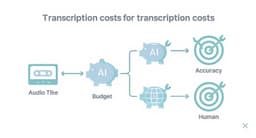
When you start looking at transcription services, you'll see prices all over the map, from as low as 0.10 per audio minute** to **5.00 or more. What gives? The biggest factor is whether you're using a machine or a human. Automated AI services sit at the low end, while human-powered transcription costs more but delivers much higher accuracy.
How Transcription Pricing Models Actually Work
Let's cut through the confusion of transcription pricing. There isn’t a one-size-fits-all price tag, but most services build their costs around a handful of common models. Getting a handle on these is the first step to finding a plan that fits your needs and your budget.
Think of it like picking a cell phone plan. You could go for a predictable monthly subscription or a more flexible pay-as-you-go option. Transcription services work in a very similar way.
A Quick Look at Transcription Pricing Models
Here’s a side-by-side comparison of the most common pricing structures to help you quickly understand your options.
| Pricing Model | How It Works | Best For | Average Price Range |
|---|---|---|---|
| Per Audio Minute | The industry standard. You pay a set rate for every single minute of audio you upload. | Most projects, especially interviews, meetings, and podcasts. | 0.10 - 3.00+ |
| Subscription | A fixed monthly or annual fee gets you a certain number of transcription minutes or hours. | Teams and individuals with consistent, ongoing transcription needs. | Varies widely; often offers bulk discounts. |
| Per Word | You pay for each word transcribed. It's less common but can be a good deal for certain audio types. | Very dense, fast-paced audio where a single minute is packed with speech. | 0.01 - 0.05+ |
| Flat-Rate / Per Project | You get a custom quote for the entire project upfront. | Large-scale or highly specialized projects with unique requirements. | Custom-quoted based on scope. |
Each of these models offers a different way to pay, so the best one really depends on how you plan to use the service.
Comparing Common Pricing Structures
The two models you'll run into most often are per-audio-minute and subscriptions. Paying by the minute is incredibly straightforward—you pay a flat rate for every minute of audio you submit, no matter how fast or slow the speakers are.
Subscriptions are perfect for businesses or creators who have a steady stream of audio to transcribe. If you're comparing the ongoing costs of these services, it's also worth looking into how much AI meeting tools cost to see how they stack up.
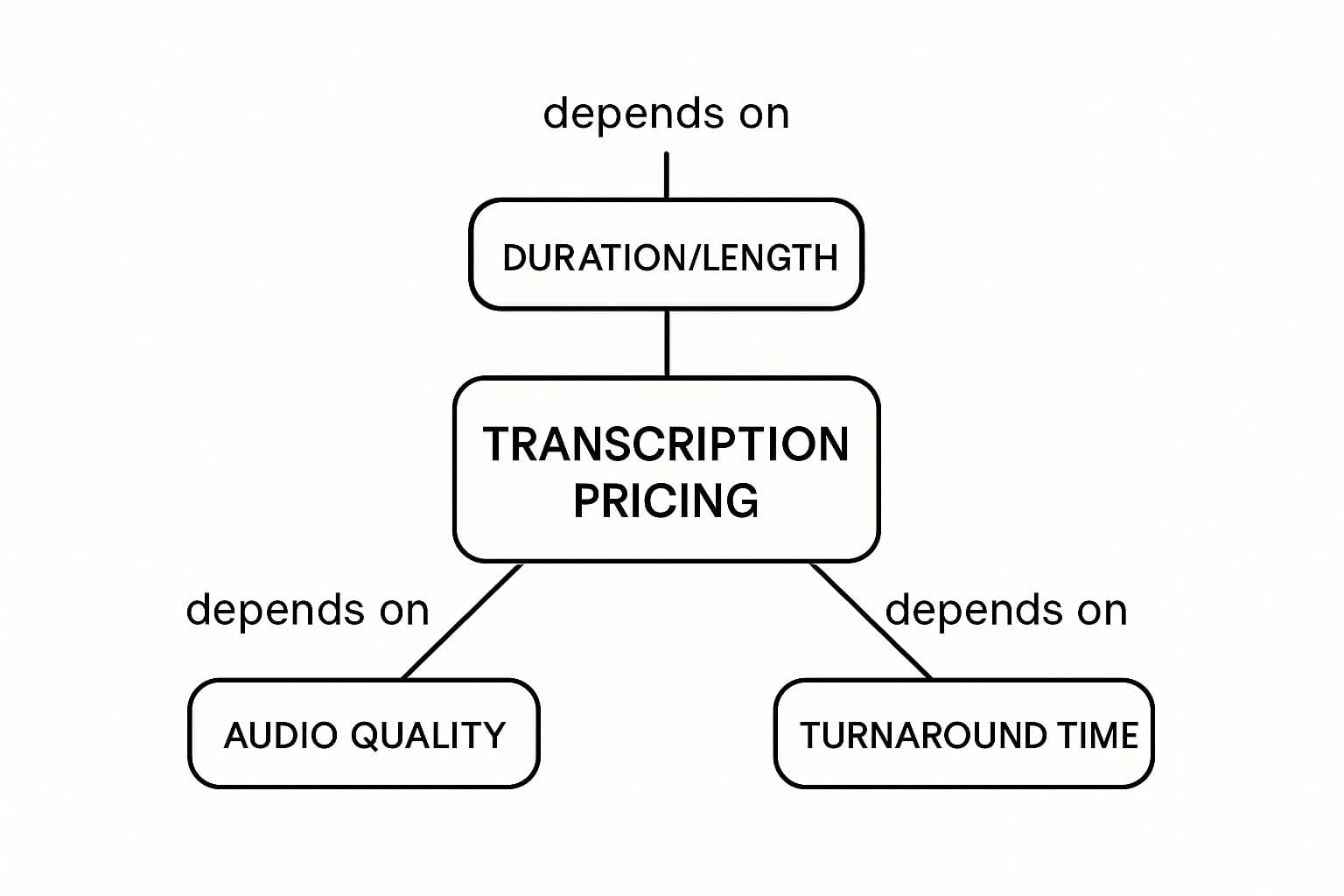
As you can see, it always comes down to a trade-off. The final price tag is a balance between the audio's length and quality versus how fast you need the transcript back.
In the end, choosing the right model comes down to your specific project. A short, crystal-clear interview is a great fit for a simple per-minute rate. On the other hand, a massive research project with dozens of hours of audio might be better suited for a custom flat-rate quote.
What Really Drives Up Your Transcription Bill?
Ever gotten a transcription quote back and thought, "Wait, why is it that high?" It’s a common experience. The sticker price isn't just about the per-minute rate; a few key variables can sneak in and significantly inflate the final cost. Knowing what they are ahead of time can help you manage your budget and even find ways to save a little cash before you even upload a file.
Think of it like getting a room painted. An empty room with smooth, clean walls is a simple, predictable job. But if the painter has to first patch holes, move furniture, and carefully tape around crown molding, the price is going to climb. Transcription is no different—the more obstacles in the audio, the more it costs.
How Good (or Bad) is Your Audio?
After the length of your file, the single biggest factor influencing the price is audio quality. A crystal-clear recording where everyone is speaking into a decent mic is a dream for both AI and human transcribers. Messy audio, on the other hand, is a nightmare that takes a lot more time and effort to sort out, and that extra work gets passed on to you.
Here are the usual suspects that make an audio file a headache to work with:
- Background Noise: That coffee shop chatter, the hum of an air conditioner, or passing street traffic can easily drown out what's being said.
- Muffled Speakers: When people are too far from the mic or just mumble, their words turn into a jumble that's tough to decipher.
- Low Volume: If the recording is too quiet, the transcriber has to crank up the volume and strain to hear, which leads to more errors and takes much longer.
The Chaos Factor: Speakers and Subject Matter
Beyond the technical side of things, what’s in the recording matters just as much. A straightforward, one-on-one interview is a walk in the park compared to a rowdy focus group where everyone is talking at once.
Here’s what adds complexity—and cost—to the content itself:
- Multiple Speakers: The more people in the conversation, the harder it is to keep track of who’s talking. Once you hit three or more speakers, most services will add a surcharge because of the extra work needed to identify and label each person.
- Strong Accents: Professional transcribers are pros at handling different accents, but a particularly thick or unfamiliar dialect can slow things down. In some cases, it might even require a specialist, bumping up the price.
- Crosstalk: This is the big one. When people talk over each other, it’s incredibly difficult to capture what everyone said accurately. Untangling that mess adds a ton of time to the job.
Your Timeline and Special Requests
Finally, your own project requirements can add a premium to the base rate. How fast you need it and how much detail you want are the two most common things that will push your bill higher.
Keep these final factors in mind when you're setting your budget:
- Rush Delivery: Need that transcript back by the end of the day instead of the end of the week? Most services can do it, but you'll pay for the priority. Expect to see fees ranging from 25% to 100% more for a quick turnaround.
- Verbatim Transcription: A standard transcript is usually "cleaned up," meaning filler words like "um," "uh," and "like" are removed. A true verbatim transcript, however, captures everything—every stutter, false start, and pause. It’s a meticulous process that takes a lot more work and costs more.
- Timestamps: If you need timestamps added every few minutes or every time a new person speaks, that’s another manual step that will add a bit more to your final invoice.
Comparing AI and Human Transcription Prices

When you're sorting through transcription pricing, the first big decision you'll make is whether to go with a machine or a person. This single choice dramatically influences your cost, how quickly you get your files back, and the final quality of the transcript.
Think of AI transcription as your quick and dirty first draft. It's incredibly fast, spitting out text almost instantly, and it's remarkably cheap. This makes it a great fit when speed is the priority and you just need a functional, "good enough" transcript for things like personal meeting notes or getting the gist of a long video.
But here's the catch: AI is still a student, not a master. It can easily get tripped up by background noise, multiple people talking at once, thick accents, or technical jargon. This means you'll almost always need to spend some time cleaning up the text and fixing errors.
The Cost of Speed vs The Value of Precision
On the other hand, human transcription is like hiring a seasoned professional. It costs more and takes longer, but the final product is a polished, highly accurate document ready for immediate use. A human transcriber navigates all the things that confuse an AI with ease, like identifying who is speaking, understanding overlapping dialogue, and correctly spelling industry-specific terms.
For certain projects, this level of precision isn't just nice to have—it's essential. Think about legal depositions, medical reports, or academic research. In these fields, one wrong word can have serious consequences. The higher price of human transcription is really an investment in accuracy and peace of mind.
For a more in-depth look, check out our guide on AI vs. regular transcription to figure out which is the right call for your needs.
Human vs AI Transcription At a Glance
To help you decide, here’s a straightforward comparison of the two options. This table breaks down the key attributes of human-powered and AI-driven transcription so you can see how they stack up.
| Feature | AI Transcription | Human Transcription |
|---|---|---|
| Average Cost | 0.10 - 0.25 per minute | 1.25 - 5.00+ per minute |
| Accuracy Rate | 80% - 95% (in ideal conditions) | 99%+ |
| Turnaround Time | Minutes to a few hours | 24 hours to several days |
| Best For | Personal notes, initial drafts, content where speed is critical. | Legal, medical, academic, and any project needing high accuracy. |
In the end, it’s a trade-off between your budget and your need for accuracy. If your audio is crystal clear and you don’t mind doing some editing, an AI service can be a fantastic, cost-effective tool. But if your project requires pinpoint precision from the get-go, investing in a human transcriber is the only way to ensure a reliable outcome.
Why Industry-Specific Transcription Costs More
Not all transcription is the same. Far from it. Transcribing a casual team chat is a whole different ball game than tackling a dense legal deposition or a doctor's detailed medical notes. The transcription services pricing you'll see always reflects this. Specialized fields command a higher price, and for good reason: you’re paying for deep expertise.
Think of it like hiring a mechanic. Any decent garage can handle an oil change. But if you need to rebuild the engine on a rare classic car, you’re not going to just anyone. You need a specialist. In the transcription world, industries like medicine, law, and academia are those classic cars.
The High Stakes of Medical Transcription
In medicine, a single mistake can have massive consequences. Accuracy isn't a goal; it's a life-or-death requirement. A misplaced decimal or an incorrect term in a patient's chart could lead to a serious medical error.
This is why medical transcriptionists are highly trained pros. They need to be fluent in a massive, constantly evolving library of medical terms, from complex drug names to intricate surgical procedures. On top of that, they have to navigate strict HIPAA (Health Insurance Portability and Accountability Act) rules to keep patient data secure. This level of expertise and security costs money, which is why the global medical transcription market is set to grow from USD 58.3 billion to over USD 106.4 billion in the next decade. For a closer look, you can check out more insights on medical transcription market growth on factmr.com.
Legal Precision and Formatting Demands
Legal transcription is another field where there's zero room for error. Court documents, witness interviews, and depositions have to be transcribed with 99%+ accuracy to hold up in court. Anything less is useless.
This work is painstaking. It requires a solid grasp of legal jargon and procedures. A good legal transcriber is more than just a fast typist; they are a critical part of the legal machine. If you're curious about the skills involved, you can learn more about what a transcriptionist does in our detailed guide.
Navigating Academic and Research Complexity
Academic transcription brings its own unique headaches, especially when dealing with qualitative research. Imagine trying to transcribe a focus group where five people are talking over each other, or an interview packed with technical terms only a handful of experts understand.
Getting this right requires a specific skill set:
- Expertise in separating multiple speakers, even when their voices overlap.
- Familiarity with the academic subject to correctly spell technical terms and proper names.
- The patience of a saint to deal with poor audio quality, a common issue in field research.
In the end, when you pay for an industry-specific service, you're not just getting words on a page. You're investing in specialized knowledge, guaranteed accuracy, and security. You're making sure your final document is reliable, professional, and ready for its job.
How to Choose a Service That Fits Your Budget

Finding the right transcription service is a classic balancing act between cost and quality. It’s tempting to just go for the cheapest option, but that can backfire badly. On the other hand, you don’t want to pay a premium for features you’ll never use.
The trick is to find that sweet spot. To do that, you first need to be really honest about what your project actually demands.
Assess Your Core Requirements
Before you even start looking at prices, get clear on what you truly need. Not every project requires a flawless, word-for-word transcript. Knowing the difference is how you save money without sacrificing what's important.
Ask yourself a few key questions:
- How accurate does this really need to be? If you're just transcribing notes for your own use, an 80% accurate AI-generated draft might be perfectly fine. But if it's for a legal proceeding or published research, you'll need the 99%+ accuracy that only a human can provide.
- What’s my audio quality like? A clean recording of a single speaker is easy work for most services. But a noisy conference call with people talking over each other? That’s a different beast entirely and will require a more advanced (and likely more expensive) service.
- How fast do I need it back? If you can afford to wait a few days, you'll dodge those hefty rush fees. Simply planning ahead is one of the easiest ways to keep costs down.
Getting this clarity from the start keeps you from overpaying for a level of precision you don't actually need. The academic transcription field is a great example—it was valued at around USD 2 billion in the U.S. and is set to more than double in ten years, largely due to online learning and accessibility needs. You can dig into more details about the academic transcription market on dittotranscripts.com.
Evaluate Providers and Test the Waters
Once you have your checklist of needs, you can start comparing companies. Don't let yourself get hypnotized by a low per-minute rate. You need to look at the bigger picture.
Look for recent customer reviews and see what people are saying about accuracy, support, and reliability. Most importantly, never commit without a test drive. Ask for a free trial or send them a short sample file to see what you get back.
This one simple step is the best way to know if their quality lives up to their marketing claims. It helps you avoid the headache of a cheap, unusable transcript while also steering clear of a pricey, over-featured service you don't need.
Answering Your Top Pricing Questions
Let's wrap things up by tackling some of the most common questions people ask about transcription pricing. Getting straight answers to these details can help you move forward with confidence, making sure you pick a service that fits your budget and project goals.
What Is a Good Rate for Transcription Services?
What's considered a "good" rate really boils down to one thing: do you need the raw speed of a machine or the nuanced accuracy of a human?
For an automated AI transcription, you'll find competitive prices landing somewhere between 0.10 and 0.25 per audio minute. This is a great option for getting a quick, workable draft for personal notes or a first pass at reviewing content.
If you need professional, 99% accuracy, a good rate for human transcription usually falls between 1.25 and 1.75 per audio minute. But if your audio is tricky—think legal depositions, medical notes, or recordings with lots of background noise—you should expect to pay more, with prices ranging from 2.00 to over 5.00 per minute.
Why Does Verbatim Transcription Cost More?
Simply put, verbatim transcription costs more because it's a ton more work for the transcriber. It’s the difference between capturing the gist of a conversation and capturing every single sound.
- Clean Transcription: This is the standard. The transcriber removes filler words ("uh," "um"), stutters, and false starts to deliver a clean, easy-to-read document.
- True Verbatim Transcription: This captures everything. Every filler word, every stutter, every laugh, and even significant background noises are documented. This level of detail is crucial for things like legal evidence or in-depth research, but it takes a lot more time and effort, which is reflected in the price.
How Can I Lower My Transcription Costs?
You have more control over your transcription bill than you might realize. A bit of prep work can go a long way in bringing down the final cost without sacrificing quality.
First, focus on getting the best audio quality you can. Recording in a quiet space with a decent microphone makes the transcriber's job much easier and faster, and that often means a lower price for you. Also, if you can be flexible with your deadline, do it. Rush jobs always cost extra, so choosing a standard turnaround time is an easy way to save.
Think about your accuracy needs, too. If 99% accuracy isn't a must-have, you could use a cheaper AI service and spend a little of your own time tidying up the text. Finally, give your transcriber a hand. Providing a list of unique names, niche acronyms, or industry jargon helps them get it right the first time, saving you from paying for extra revisions.