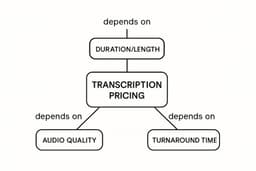
Trying to figure out transcription costs can feel like comparing apples and oranges. The rates are all over the place, and what you'll ultimately pay depends on what you really need.
Generally, you're looking at two main options. Automated AI services are the budget-friendly choice, usually running between 0.10 and 0.25 per audio minute. On the other end of the spectrum, human-powered transcription is a premium service, with prices starting around 1.25 per minute** and climbing to over **5.00. The final bill comes down to how accurate you need it, how fast you need it back, and how messy the audio is.
What You Should Expect to Pay for Transcription

Before you can pick the right service, you need to know how the pricing works. This isn't just about finding the cheapest option; it's about matching the service to what the transcript will actually be used for.
For things like internal meeting notes or just getting a rough draft of a conversation down, the speed and low cost of AI are usually a perfect fit. But when the stakes are higher—think legal records, content you're publishing, or audio with a lot of background noise and speakers talking over each other—the higher price for a human professional is worth every penny. You're paying for quality and nuance that an algorithm just can't catch yet.
Comparing AI and Human Transcription Rates
The demand for transcription is booming for a reason—it’s become a critical tool in almost every industry. The U.S. market alone was valued at a whopping 30.42 billion** in 2024 and is expected to climb to nearly **42 billion by 2030. It's no surprise the medical field is a huge driver, making up over 43% of that demand.
To make the right call, you need to be clear on what you get for your money. For a deeper dive into the different pricing structures, check out this comprehensive guide to transcription services cost.
To keep things simple, here’s a quick comparison of the two main options.
Quick Look at AI vs Human Transcription Rates
This table breaks down the essential differences between automated and human-powered transcription services to help you see where your needs fit.
| Service Type | Average Cost Per Minute | Typical Accuracy | Best For |
|---|---|---|---|
| Automated (AI) | 0.10 – 0.25 | 80% – 95% | Internal meetings, quick drafts, high-volume content analysis. |
| Human-Powered | 1.25 – 5.00+ | 99% – 100% | Legal proceedings, published content, complex audio with multiple speakers. |
As you can see, the trade-offs are pretty clear. It's all about what you're willing to pay for speed versus near-perfect accuracy.
Ultimately, figuring out the real cost of transcribing audio means looking past the price tag. You also have to consider how much your team's time is worth and how much a faulty transcript could impact your business goals.
How AI Transcription Pricing Models Actually Work

When you start looking at AI transcription, you'll quickly notice the pricing isn't as straightforward as the old per-minute model you see with human services. Instead, you'll find a mix of subscriptions, tiered plans, and usage-based billing. It can feel a bit confusing at first.
These different models are built to serve everyone from a solo user with a one-off project to a massive company that needs to transcribe thousands of hours every month. The trick is figuring out which structure actually fits your team’s workflow and budget so you don't get hit with unexpected bills.
This whole space is growing incredibly fast. The global AI transcription market is expected to jump from 4.5 billion in 2024 to around 19.2 billion by 2034. That boom is driven by a real need for fast, scalable ways to turn audio and video into text. With North America currently making up over 35.2% of that market, getting a handle on these pricing models is a must for any business looking to keep up.
Subscription and Tiered Plans
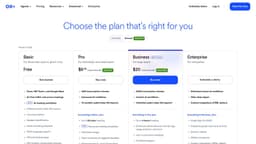
By far the most common way you'll pay for AI transcription is with a monthly or annual subscription. This model gives you a predictable, fixed cost, which is perfect for teams that have a steady stream of audio to transcribe—think sales teams logging client calls or marketers pulling content from webinars.
These subscriptions are almost always broken down into tiers:
- Free or Basic Tier: You'll get a handful of free minutes each month. This is a great way to kick the tires and see if you like the platform's accuracy, but the limits on file length and storage make it impractical for real business use.
- Pro or Business Tier: This is the workhorse plan for most teams. It usually comes with a solid bucket of minutes (maybe 1,200 to 3,000 a month), unlocks collaboration tools, and plugs into other software like Slack, Zoom, or Salesforce.
- Enterprise Tier: Built for big organizations, this is where you get custom minute allowances, beefed-up security features, a dedicated support contact, and one central bill. Pricing is almost always a custom quote you get from their sales team.
If you're curious about the raw costs that power these services, it helps to look at how the underlying language models are priced, like the ChatGPT 4o's pricing structure.
Pay-As-You-Go and Overage Fees
Some platforms offer a pure pay-as-you-go option where you just buy a block of credits or pay a flat rate per minute. This is a solid choice if you only need transcription sporadically and don't want to be locked into a recurring subscription. Think of a freelancer who needs to transcribe one big project and might not need the service again for months.
What's more common, though, are overage fees baked into subscription plans. If your team burns through its monthly minute allowance, you’ll be charged a per-minute rate for every minute you go over. These overage rates are almost always higher than what you're effectively paying per minute inside your plan, so it pays to pick a tier that gives you some breathing room.
What Features Drive Up the Cost
The real difference between pricing tiers isn't just about how many minutes you get—it's about the tools that come with them. Moving up to a pricier plan often unlocks features that can save your team a ton of time and effort, justifying the extra cost.
Here are some of the advanced features often reserved for higher tiers:
- Custom Vocabulary: This lets you teach the AI specific industry jargon, company acronyms, or unique names, which dramatically improves accuracy for specialized content.
- Advanced Speaker Identification: The ability to more accurately tell who is speaking and when. This is non-negotiable if you’re analyzing interviews or meetings with multiple people.
- Third-Party Integrations: This is all about workflow. Seamless connections can automatically send your transcripts to a CRM, a project management tool, or cloud storage.
- Team Collaboration Tools: For managing transcription across a company, you'll need features like shared folders, user permissions, and centralized billing.
When you're comparing plans, look past the per-minute cost. Ask yourself which of these advanced features will genuinely make your team more efficient. That’s where you’ll often find the best return on your investment.
How Human Transcription Services Price Their Work
When accuracy is everything, nothing beats a human transcriber. While AI is fast and cheap, human-powered services are the go-to for projects where mistakes simply aren't an option. Their pricing models are usually more direct than the complex tiers you see with AI, but a few key details can really change the final price tag.
The most common model you'll find is per audio minute. It’s simple: you pay for the length of your recording, not the time it takes someone to type it. This makes it incredibly easy to estimate your costs upfront. A 30-minute file will cost exactly half of a 60-minute one, assuming all other conditions are the same.
But that base per-minute rate? Think of it as a starting point. Several factors can—and will—push that number higher.
What Makes Human Transcription More Expensive?
Not all recordings are created equal, and transcription companies price their services to reflect that. The standard transcription services rates you see advertised usually assume you're submitting a perfect recording, like a crystal-clear, one-on-one interview. When your audio is less than ideal, the price goes up.
These extra fees aren't just a cash grab; they're directly tied to the extra effort involved. For instance, a file with loud background noise or people talking over each other can easily take a professional two or three times longer to get right compared to a clean one.
Here are the most common reasons you'll pay more:
- Poor Audio Quality: This is the biggest cost driver, hands down. Files with background hiss, muffled voices, or low volume require a ton of extra work and specialized tools to transcribe accurately.
- Multiple Speakers: The more people talking, the more complex the job. Keeping track of who said what adds a significant amount of time, especially with more than two or three speakers.
- Heavy Accents: Strong or unfamiliar accents often require the transcriber to listen to sections over and over again to ensure every word is captured correctly.
- Technical Jargon: If your recording is full of dense legal, medical, or scientific terms, you need a transcriber who knows the lingo. That specialized expertise costs more.
How Verbatim Style and Deadlines Affect Your Bill
Beyond the audio itself, two other choices you make have a huge impact on the final cost: how detailed you need the transcript to be and how quickly you need it back.
First is Strict Verbatim Transcription. A standard transcript is cleaned up for readability—filler words like "uh," "um," and false starts are removed. Strict verbatim, on the other hand, captures everything: every stutter, every filler word, every pause. This is crucial for things like legal proceedings or academic research, but it's a meticulous process. Expect to pay an extra 0.25 to 0.50 per minute for it.
The other big factor is turnaround time. Most services offer a standard delivery within 24 to 48 hours. But if you're in a hurry, you can always pay to jump the queue.
Example of How Turnaround Time Impacts Cost:
| Turnaround Time | Approximate Surcharge Per Minute |
|---|---|
| Standard (24-48 hours) | +$0.00 |
| Rush (12 hours) | +0.50 - 1.00 |
| Express (Under 4 hours) | +1.25 - 2.50+ |
As you can see, asking for a rush job can easily double the cost of your project. If you're not on a tight deadline, simply choosing the standard turnaround is one of the easiest ways to keep your budget in check without compromising on quality.
Watch Out for Hidden Costs and Sneaky Add-On Fees
The price you see advertised is rarely the price you pay. Whether you're looking at a sleek AI platform or a traditional human transcription service, there are almost always extra fees that can inflate your final bill. Knowing what to look for is the key to budgeting accurately and avoiding any nasty surprises.
With AI services, the biggest "gotcha" is usually the overage fees. Many subscription plans give you a set number of minutes per month. If you go over, you'll start paying per-minute charges that are often way higher than what your plan's rate breaks down to. It’s a lot like exceeding your phone's data limit—that extra usage costs a premium.
Another thing to watch for is feature-gating. The tools that make AI transcription truly powerful for teams—like collaboration features or API access to automate your workflows—are often reserved for the pricier subscription tiers. That low-cost introductory plan gets your foot in the door, but you'll have to upgrade to really make it part of your daily process.
Common Upcharges for Human Transcription
When you work with human transcribers, the extra fees are all about the time and effort required. The standard per-minute rate assumes you’re handing them a perfect, crystal-clear audio file. Anything that makes their job harder will probably add to the cost.
Here are the most common surcharges you should expect:
- Difficult Audio Fee: This is the big one. If your recording has a lot of background noise, people talking over each other, or was just recorded poorly, it takes much longer to transcribe. That extra effort comes with an extra fee.
- Timestamping: Need to know exactly when something was said? Adding timestamps every 30 seconds or every time the speaker changes is a common request, and it usually adds about $0.25 per minute.
- Verbatim Transcription: If you need a transcript that captures every single "um," "ah," stutter, and false start, you're asking for strict verbatim. It's essential for legal and research work, but it’s a painstaking process that can add another 0.25 to 0.50 per minute to your invoice.
- Rush Delivery: Need it back in a few hours instead of a few days? You can get it, but it'll cost you. A rush job can easily double the per-minute rate, making it one of the most expensive add-ons.
Questions to Ask Before You Sign Up
To get a real handle on the total cost, you need to ask some direct questions before you commit. Any good provider will be upfront about their pricing and potential add-ons.
Use this checklist to make sure you know what you’re getting into:
- For AI Services:
- What’s the exact per-minute fee if I go over my monthly allowance?
- Do you bill by the second, or do you round up to the nearest minute?
- Which specific collaboration and integration tools are locked behind higher-priced plans?
- For Human Services:
- What exactly do you consider "difficult audio," and how much is the surcharge?
- What are your specific rates for timestamping and full verbatim transcription?
- Can you show me a breakdown of your rush delivery fees for different turnaround times?
Asking these questions helps you see past the sticker price and understand the real financial commitment. It’s a simple step that ensures the service you choose actually fits your needs and your budget.
Comparing Costs with Real-World Scenarios
Pricing models are one thing, but seeing how they play out in real-world business situations is what really matters. Abstract numbers like per-minute rates don't tell the whole story until you connect them to your team's actual workload.
Let's walk through three common business scenarios to make these transcription services rates more tangible. We'll compare the costs for a typical AI subscription and a standard human-powered service to see which one makes more financial and practical sense for different needs.
Cost Analysis for Different Business Teams
To see how these costs stack up, let's put some numbers to these scenarios. The table below breaks down the estimated monthly expenses for different teams, highlighting how volume, accuracy needs, and budget influence the best choice.
| Team Type | Monthly Audio Volume | Estimated AI Service Cost | Estimated Human Service Cost | Key Considerations |
|---|---|---|---|---|
| Sales | 20 hours (1,200 min) | 150–250/month (team plan) | **1,500/month** (@ 1.25/min) | Speed and CRM integration are key. 85-95% accuracy is sufficient. |
| Executive | 2.5 hours (150 min) | Not recommended due to accuracy/security needs. | **225/month** (@ 1.50/min) | High accuracy and confidentiality are non-negotiable. |
| Marketing | 10 hours (600 min) | 100–200/month (team plan) | **750/month** (@ 1.25/min) | A hybrid approach (AI first, then human polish) works best. |
As you can see, the "right" choice is completely dependent on the job at hand. A sales team would be overspending massively with a human service, while an executive team would be taking an unnecessary risk with AI.
Scenario 1: The Sales Team
First up, a sales team that needs to transcribe 20 hours (1,200 minutes) of client calls every month. Their main goal isn't a perfect, word-for-word transcript. They just need to pull out key action items, customer pain points, and competitor mentions to log in their CRM as quickly as possible.
With an AI service, a business-tier subscription might run 30–50 per user. For a team of five, you're looking at 150–250 per month, which typically includes more than enough minutes. Transcripts are ready almost instantly, so there's no delay in getting data where it needs to go.
Now, let's look at a human service. At a standard rate of **1.25 per minute**, the math is simple and a bit scary: 1,200 minutes x 1.25/min = $1,500 per month.
For this team, an AI service is the obvious winner. The cost is a tiny fraction of the human alternative, and an accuracy rate of 85-95% is plenty for internal notes. The speed of AI just fits the pace of a sales cycle perfectly.
Scenario 2: The Executive Team
Next, picture an executive team holding four confidential, two-hour board meetings each quarter. That adds up to 8 hours (480 minutes) of audio every three months. The content is sensitive, filled with complex financial details, and requires near-perfect accuracy for the official record.
Here, human transcription is the only real option. At a rate of **1.50 per minute**—a bit higher to account for multiple speakers and technical jargon—the cost would be 480 minutes x 1.50/min = $720 per quarter.
Sure, an AI tool could generate a first draft, but an executive assistant would spend hours correcting it. That time alone would wipe out any potential savings. Plus, specialized human services offer much stronger security protocols for handling this kind of sensitive information.
For larger organizations, understanding the nuances between different service levels is crucial. You can dive deeper into this topic with our enterprise transcription services cost comparison for 2025.
Scenario 3: The Marketing Team
Finally, consider a marketing team that repurposes 10 hours (600 minutes) of webinars and podcasts into blog posts, social media clips, and ebooks each month. Accuracy is important since the content is public-facing, but the team's editors will be rewriting and polishing the text anyway.
A hybrid approach is the smartest play here:
- Start with AI: Run all 600 minutes through an AI service. This would likely be covered by a team subscription costing around 100–200 for the month.