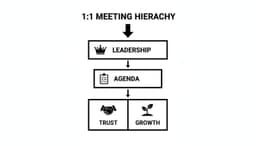
Let's be honest, most one-on-one meetings without a plan feel like a waste of time. A collaborative agenda for one on one meeting isn't just another to-do list; it’s the blueprint for a meaningful conversation. It transforms a casual chat into a strategic discussion that actually helps people solve problems and grow.
Why Your One on Ones Need a Real Agenda
Have you ever walked out of a one-on-one wondering, "What was the point of that?" If so, you're not alone. When these check-ins don't have a clear structure, they almost always drift into rambling status updates or superficial small talk that accomplishes next to nothing. This is a huge missed opportunity.
Without a shared plan, the important stuff gets glossed over. Small frustrations fester, career development stalls, and minor roadblocks mushroom into major project delays. The employee starts to feel like the meeting is just for the manager, while the manager feels like they're not getting the real story. It’s a recipe for mutual disengagement.
From Casual Chat to Strategic Discussion
A simple agenda changes this dynamic completely. It turns a passive meeting into an active, collaborative session where both people are invested in the outcome. When an employee adds their own topics to the agenda, they take ownership of their challenges and their own growth.
This small act of preparation makes sure the conversation stays focused on what really matters:
- Problem-Solving: Getting right to the specific obstacles that are holding things up.
- Goal Alignment: Making sure daily tasks connect to the bigger picture.
- Career Growth: Talking about skills, ambitions, and what’s next for them.
- Feedback Exchange: Creating a predictable, safe space for giving and receiving honest input.
The True Cost of Unprepared Meetings
The fallout from unprepared meetings isn't just a feeling; it hits the bottom line. A clear agenda can turn a time-suck meeting into a productive powerhouse—in fact, 79% of workers say a well-planned agenda makes meetings far more effective.
In the US alone, roughly 56 million meetings happen every day, racking up an unbelievable $37 billion in annual losses due to poor preparation. That alone is a pretty compelling reason to spend a few minutes planning.
Ultimately, a simple, shared agenda is one of the most valuable tools in your leadership toolkit. For a deep dive into this, check out A Practical Guide to the Agenda for One on One Meeting. And if you're looking for more ideas, you might like our guide on how to build a better one on one meeting agenda to drive growth.
Crafting Your Collaborative Meeting Template
A great agenda for a one-on-one isn't some rigid script handed down from on high. Think of it more as a flexible framework that you and your team member build together. The goal is to move away from a one-sided manager's report and create a shared space for real problem-solving.
An effective template has a few key building blocks, each with a clear job to do. It’s not just a random list of questions; it's a structured canvas for a focused conversation. I've found the best way to start is with a simple shared document that has four core sections you can use every single time.
The 4 Must-Have Sections for a Shared Agenda
To create a template that actually works, you need dedicated space for these four critical areas:
- Team Member's Priorities (Their Space): This part always comes first. Putting it at the top sends a clear message: this meeting is for them. Get them in the habit of adding their own discussion points, wins, and anything blocking their progress throughout the week.
- Manager's Topics (Your Input): This is your spot to add anything you need to cover, like important company updates, feedback on a recent project, or questions you have about their goals.
- Goal and Progress Tracking (Accountability): You need a dedicated section to review how things are going with their main goals. This keeps long-term objectives in the spotlight and stops one-on-ones from just being about day-to-day tactical stuff.
- Professional Development (Looking Ahead): This is where you talk about career goals, new skills, and what the future looks like for them. It shows you’re invested in their long-term success, not just their current output.
A solid meeting template gives both of you a place to add items. Learning how to start prioritizing tasks effectively will make sure the most important conversations always happen first.
This flowchart really captures the journey from chaotic, unprepared meetings to sessions that genuinely drive growth.
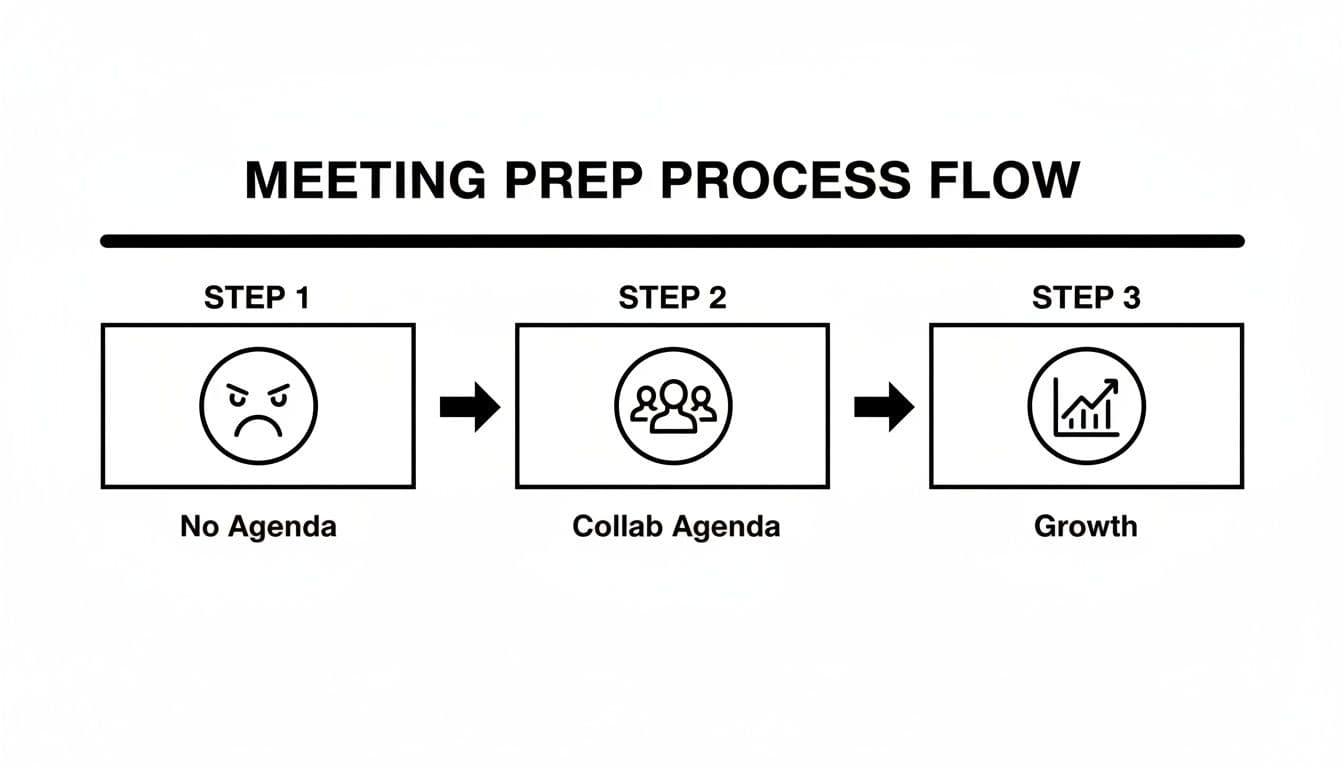
The real takeaway here is that the simple act of creating a collaborative agenda is what unlocks meaningful professional development.
How to Structure a 30-Minute Check-In
How you spend your time in a one-on-one is just as important as what you talk about. I’ve seen it happen a thousand times: one topic blows up and eats the entire meeting, leaving zero time for career chats or goal reviews. Having a simple timing guide prevents this and keeps things balanced.
Here’s a practical breakdown for a typical 30-minute one-on-one. It helps create a natural flow and ensures all the important bases get covered.
Sample 30-Minute One on One Agenda Timing
| Agenda Section | Time Allotment (Minutes) | Purpose |
|---|---|---|
| Settle In & Connect | 5 | Build rapport and check in on a personal level before diving into business. |
| Team Member's Topics | 10 | Address their most pressing issues, blockers, and questions first. |
| Your Topics & Goal Review | 10 | Discuss your key points and review progress on established goals. |
| Development & Next Steps | 5 | Focus on growth, confirm action items, and end on a forward-looking note. |
Of course, this is a guide, not a straitjacket. If a critical issue pops up that needs more attention, you can absolutely adjust on the fly. But having this default timing in your back pocket helps maintain balance week after week, so no single area gets ignored.
This kind of foundation is what makes your one-on-ones consistent and valuable. For a little more inspiration, you can check out our list of the 15 best meeting agenda templates for all sorts of scenarios. When you have a solid framework, both you and your direct report can show up ready for a truly meaningful discussion.
Adapting Your Agenda for Different People and Situations
A copy-paste agenda for your one-on-ones just won’t cut it. The conversation you need to have with a top sales rep who just blew their quota out of the water is worlds apart from a check-in with a junior engineer feeling isolated while working remotely. If you want these meetings to have a real impact, you have to tailor your approach.
Think of your agenda as a living document, not a rigid checklist. For some folks, you'll dive deep into tactical roadblocks and project updates. For others, the conversation might need to revolve around career growth, morale, or even brainstorming big-picture ideas. The real skill is knowing how to adapt on the fly.
Tailoring Questions for Specific Roles
The questions you ask are everything. They need to reflect the actual, day-to-day world your team member lives in. Generic questions get you generic, unhelpful answers. Get specific to show you’re paying attention.
- For a Sales Representative: Instead of "How's it going?", try "What's the health of your pipeline looking like for next quarter?" or "Which deal are you most worried about right now, and what's the game plan?" These questions get straight to tangible outcomes and force proactive thinking.
- For a Customer Success Manager: A vague check-in isn't useful. Ask, "What’s the current sentiment among your key accounts?" or "Are we hearing any client feature requests that need to be escalated?" This keeps the conversation grounded in customer health and valuable product feedback.
- For a Software Engineer: Don't just ask about sprint progress. Go deeper with questions like, "Is there any technical debt that's really slowing the team down?" or "What part of the codebase are you most excited to dig into next?" This opens up a conversation about both their challenges and their passions.
When you customize your questions, the agenda immediately becomes more relevant. It’s a clear signal that you’re not just going through the motions—you’re genuinely invested in helping them succeed.
Adjusting Your Agenda for Key Scenarios
It’s not just about their role; the situation itself often demands a completely different kind of meeting. Your standard weekly template will fall flat when you need to have a tough, high-stakes conversation.
Here’s how you can shift your approach for a few common scenarios:
1. The First Meeting with a New Hire Forget performance metrics and project updates. This meeting is all about connection and setting expectations. Your agenda should be built around questions like, "What are your first impressions after week one?" or "How can I best support you while you're getting up to speed?" The goal here is to build a foundation of psychological safety right from the start.
2. A Check-In Before a Performance Review The mantra for this meeting should be "no surprises." The agenda needs to be forward-looking, centered on their self-assessment and future ambitions. Ask things like, "What accomplishments from this quarter are you most proud of?" and "Where do you want to grow in the next six months?" This empowers them to take an active role in shaping their own performance story.
3. When a Project is Falling Behind Time to switch gears. When there’s a problem, your one-on-one agenda needs to become a focused, collaborative troubleshooting session. Ditch the broad topics and adopt a tight, three-part structure:
- What’s the current status and the single biggest blocker?
- What are three potential solutions we can brainstorm right now?
- What’s the one action we’ll take in the next 24 hours to move this forward?
This approach shifts the conversation from a general status update to an immediate, action-oriented plan. A flexible one-on-one agenda is truly one of the most powerful tools you have for meeting the diverse needs of your team.
Getting the Most Out of Your 1:1 Time
A shared agenda is a great starting point, but the real impact comes from what you do before, during, and after your one-on-one. The best managers I know don't see this as just another 30-minute calendar block. They treat it as a three-part process, turning simple check-ins into conversations that actually move the needle on someone's career.
First things first: send the shared agenda at least 24 hours in advance. This isn’t just about being polite; it’s a strategic move. It gives your team member the headspace to think through their own topics, prepare real updates, and come to the table as an equal partner. A last-minute agenda forces them to be reactive, but sending it early invites proactive, thoughtful input.

During the Conversation
When the meeting kicks off, your job shifts from planner to listener. It’s so easy to fall into the trap of just running down a checklist, but that's a huge mistake. Your goal is to ask open-ended questions that get to the heart of what's really going on.
A few swaps can make all the difference:
- Instead of, "Is that project done?" try, "What was the trickiest part of that project for you?"
- Rather than asking, "Are there any blockers?" go with, "If you could snap your fingers and remove one obstacle this week, what would it be?"
Questions like these invite a real story, not just a yes-or-no answer. They open the door to genuine dialogue about wins, struggles, and opportunities for growth.
After the Meeting Ends
Here’s where most people drop the ball: the follow-up. A great conversation without clear action items is really just a nice chat. To make sure your discussions actually lead to progress, you have to nail down and share the key takeaways.
This is where technology can be your best friend. In today's hybrid world, where 67% of all business interactions happen virtually, trying to manually capture everything is a losing battle. Microsoft has even found that 57% of meetings are impromptu and don't even have a calendar invite, making it nearly impossible to track outcomes.
AI tools like Otter.ai or Fireflies.ai are total game-changers here. They can transcribe and summarize those spontaneous huddles, pulling out action items in seconds. This frees you up to focus on the person in front of you, not on frantically scribbling notes. For more on these trends, check out some recent remote meeting statistics.
Ultimately, a well-run one-on-one is a full cycle: prepare, listen intently, and then follow up relentlessly. If you want more tips on nailing the execution, take a look at our guide on how to run effective meetings.
Using Technology to Improve Your One on Ones
Let’s be honest, trying to have a meaningful conversation while simultaneously scribbling down notes is nearly impossible. You’re either fully present or you’re taking good notes—you can’t really do both well. This is where modern tools, especially AI meeting assistants, can completely change the dynamic of your one-on-ones.
Imagine being able to give your team member your undivided attention, knowing that every important detail is being captured for you. That’s not a far-off dream; it’s what technology allows for right now. This simple shift from frantic note-taker to active listener has a massive impact on the quality of your conversations.
Automated Transcription and Summarization
The biggest win with an AI assistant is handing off the note-taking. These tools can join your virtual meetings and generate a perfect, word-for-word transcript. You get a complete record of the conversation, which is incredibly handy when you need to recall a specific detail a week later.
But the real magic happens after the call. The AI automatically creates a concise summary highlighting the most critical information: key decisions, important discussion points, and—most importantly—the action items you both agreed on.
This alone solves one of the most common pitfalls of one-on-ones: conversations that go nowhere because nothing was written down.
Ensuring Accountability and Action
When action items are automatically captured and distributed, accountability is no longer an afterthought—it’s built right into the process. There's no more head-scratching over who was supposed to do what. This simple step closes the loop and turns your conversations into tangible progress.
Here’s how these tools really drive accountability:
- Clear Action Items: The AI summary spells out the tasks for both you and your direct report, often including any deadlines that were mentioned.
- A Single Source of Truth: With a shared record of the meeting, there’s no room for "I thought you said..." Everyone is on the same page.
- Seamless Follow-Up: The action items from your last meeting become the natural starting point for the agenda for your next one on one meeting. It creates a continuous cycle of progress.
Choosing the right tool isn’t just about adding tech for tech's sake. It's about building a more reliable system for communication and follow-through. This ensures the time you carve out for these critical check-ins is always time well spent.
Common Questions About One on One Agendas
Even with a great template in hand, you’re bound to hit a few real-world snags when you start using a structured agenda for one on one meetings. These are the practical hurdles that pop up for everyone. Let's walk through them with some clear, straightforward advice.
How Often Should I Have One on One Meetings?
For most roles, weekly or bi-weekly is the sweet spot.
A weekly meeting is probably your best bet for fast-moving teams where things change daily and alignment is everything. If you're working on projects with longer timelines, a bi-weekly cadence can work just as well without feeling like overkill.
The one rhythm you really want to avoid? Monthly. A month is an eternity in most jobs. Small problems have a nasty habit of turning into massive headaches when they're left to simmer for that long. At the end of the day, consistency is far more important than frequency. Pick a schedule you know you can keep.
What if My Employee Never Adds to the Agenda?
This happens a lot, and it's a great opportunity for a little coaching. First, gently remind them that the agenda is their space. It’s their chance to bring up what’s on their mind. If that doesn't get things moving, try a more direct prompt before you meet.
A quick Slack or email can do the trick:
- "What's one win from this week you'd like to share?"
- "What's the biggest thing I can help you unblock right now?"