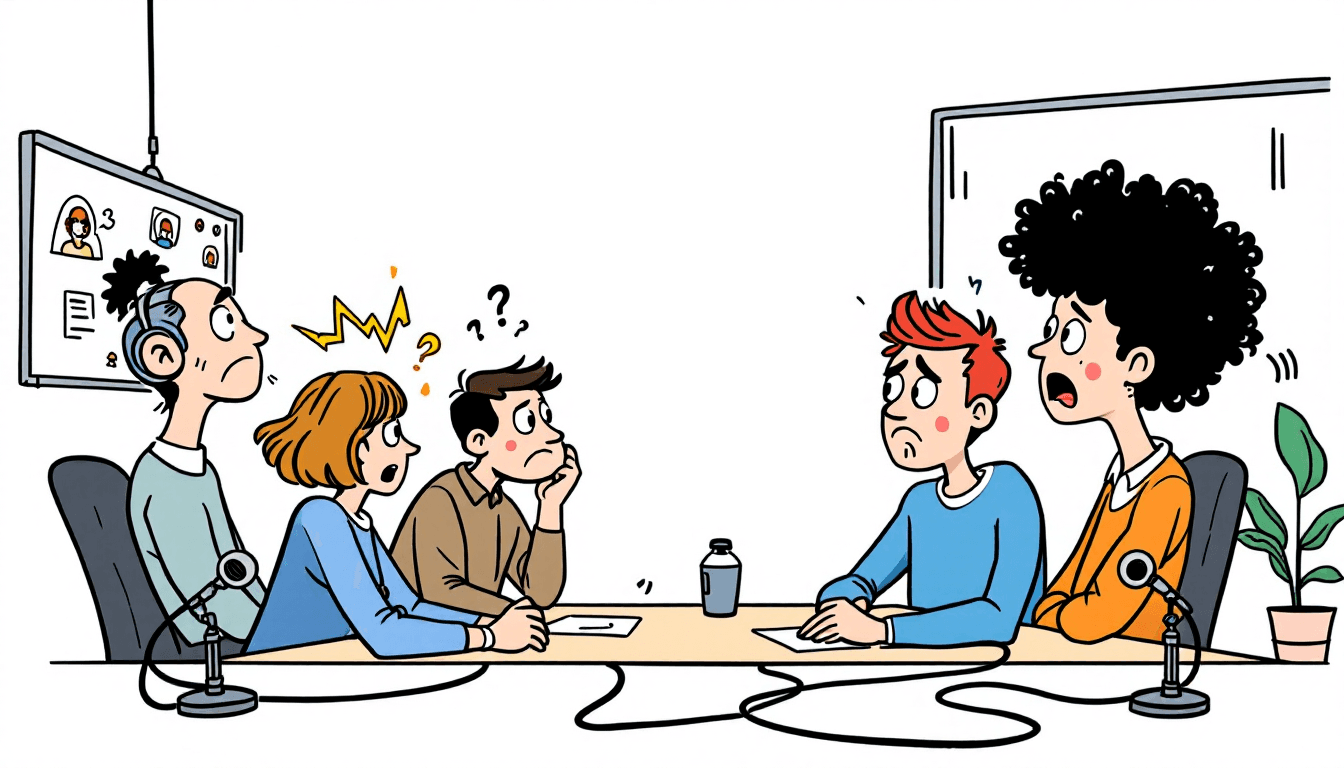
📈 La crisi delle riunioni: in cifre
Il costo delle riunioni inefficaci
- • 37 miliardi di dollari persi ogni anno a causa di riunioni inefficaci
- • Un dipendente medio trascorre 21,5 ore a settimana in riunioni
- • Il 67% dei lavoratori ritiene che le riunioni impediscano loro di svolgere lavoro profondo
- • Il 92% delle persone svolge più attività contemporaneamente durante le videochiamate
Punti di guasto comuni
- • 32% - Scarsa preparazione e agende poco chiare
- • 28% - Basso coinvolgimento e partecipazione
- • 21% - Difficoltà tecniche e ritardi
- • 16% - Obiettivi e risultati poco chiari
Queste statistiche rivelano un'epidemia sul posto di lavoro che da decenni sta devastando silenziosamente la produttività. Ma cosa va esattamente storto nelle riunioni e, soprattutto, come possiamo porvi rimedio?
🔧 Guasti tecnici: quando la tecnologia diventa il problema
Problemi Tecnici Più Comuni
Problemi audio (68%)
- • Eco e feedback
- • Partecipanti disattivati
- • Microfoni di scarsa qualità
- • Rumore di fondo
Problemi di connettività (45%)
- • Cadute della connessione Internet
- • Arresti anomali della piattaforma
- • Difficoltà di accesso
- • Limitazioni di larghezza di banda
Condivisione dello schermo (34%)
- • Impossibile condividere lo schermo
- • Finestra sbagliata condivisa
- • Bassa risoluzione
- • Latenza e blocchi
Soluzioni basate sull'IA
Gli strumenti moderni di riunione basati sull'IA sono specificamente progettati per eliminare questi problemi tecnici:
Elaborazione Audio Intelligente
- • Cancellazione del rumore e rimozione dell'eco
- • Bilanciamento automatico del volume
- • Trascrizione in tempo reale come backup
- • Identificazione del parlante
Registrazione Intelligente e Backup
- • Registrazione automatica nel cloud
- • Sincronizzazione multi-dispositivo
- • Generazione di trascrizioni offline
- • Protocolli di riconnessione di emergenza
📋 Scarsa preparazione: la radice della maggior parte dei fallimenti nelle riunioni
Il problema della preparazione
Cosa va storto
- • Nessuna agenda chiara: Il 73% delle riunioni è privo di ordini del giorno strutturati
- • Partecipanti sbagliati: Il 41% include partecipanti non necessari
- • Tempismo sbagliato 56% programmati in orari scomodi
- • Mancanza di materiali: Il 38% non condivide le risorse pre-riunione
L’effetto domino
- • Le riunioni sforano i tempi previsti in media di 18 minuti
- • Il 64% dei partecipanti si sente impreparato a dare il proprio contributo
- • Le riunioni di follow-up aumentano del 43%
- • Processo decisionale ritardato in media di 2,3 settimane
Preparazione potenziata dall’IA
Le principali piattaforme di riunioni basate sull’IA ora offrono funzionalità di preparazione intelligenti che affrontano questi problemi:
Generazione intelligente dell'agenda
Strumenti come Leggi AI analizza il contesto della riunione e suggerisce automaticamente i punti all’ordine del giorno in base alle discussioni precedenti, alle tempistiche del progetto e ai ruoli dei partecipanti.
Intelligent Participant Suggestions
AI analyzes project involvement and expertise to recommend optimal attendee lists, reducing unnecessary participants by up to 35%.
Automated Pre-Meeting Briefs
Systems automatically compile relevant documents, previous meeting notes, and action items into digestible pre-meeting summaries.
😴 Lack of Engagement: When Meetings Become Energy Drains
Engagement Statistics
- • 92% of people multitask during virtual meetings
- • 67% admit to doing other work during calls
- • Average attention span drops to 8 minutes in long meetings
- • 39% have fallen asleep during virtual meetings
- • 45% feel overwhelmed by meeting frequency
Root Causes
- • Meeting fatigue: Back-to-back scheduling
- • Irrelevant content: One-size-fits-all approach
- • Passive participation: Lecture-style format
- • Poor facilitation: Unclear discussion flow
- • No clear value: Participants don't see benefit
AI Solutions for Better Engagement
Real-Time Engagement Analytics
Advanced AI tools monitor speaking patterns, response times, and participation levels to identify disengaged participants and suggest interventions.
Personalized Content Delivery
AI analyzes individual roles and interests to highlight relevant discussion points and suggest when specific participants should contribute.
Intelligent Break Suggestions
Machine learning algorithms detect optimal break timing based on energy levels, discussion intensity, and meeting length.
📚 Real-World Case Studies: Meeting Transformation Success Stories
Case Study 1: Tech Startup Reduces Meeting Time by 40%
Before AI Implementation
- • 25 hours/week average meeting time per employee
- • 60% of meetings ran over scheduled time
- • Only 34% of action items completed on time
- • High employee burnout from meeting fatigue
After AI Implementation
- • 15 hours/week average meeting time per employee
- • 89% of meetings finish on time
- • 78% of action items completed on schedule
- • 43% improvement in employee satisfaction
Key Tools Used
Implemented Otter.ai for transcription and action item tracking, combined with automated agenda generation and participant optimization algorithms.
Case Study 2: Fortune 500 Company Saves $2.3M Annually
Challenge
15,000 employees across 40 offices, massive meeting coordination overhead
Solution
Enterprise AI meeting platform with intelligent scheduling and automated follow-ups
Result
$2.3M annual savings in productivity gains and reduced meeting overhead
Implementation Details
- • Phase 1: Rolled out AI transcription to 200 pilot teams
- • Phase 2: Added intelligent scheduling and preparation tools
- • Phase 3: Implemented advanced analytics and optimization
- • ROI Timeline: Broke even at 4 months, full benefits realized at 8 months
Case Study 3: Remote-First Company Eliminates Meeting FOMO
The Problem: Timezone Meeting Chaos
Global team across 12 timezones struggled with inclusive meeting scheduling. 67% of employees felt excluded from important decisions due to timezone conflicts.
The AI Solution
Implemented asynchronous AI meeting tools that create comprehensive summaries, action items, and decision logs automatically.
- • Real-time transcription with multiple language support
- • Automated meeting summaries sent within 10 minutes
- • AI-generated follow-up questions for async input
- • Decision tree documentation for transparency
Results After 6 Months
- • 89% feel included in decision-making
- • 52% reduction in follow-up meetings
- • 34% faster project completion times
- • 78% improvement in cross-timezone collaboration
- • 91% employee satisfaction with meeting quality
- • Zero complaints about FOMO since implementation
🛡️ Prevention Strategies: Building a Meeting-Success Culture
The Meeting Success Framework
🎯 Pre-Meeting Phase
- • AI Agenda Generation: Automatic topic prioritization
- • Smart Scheduling: Optimal timing algorithms
- • Participant Optimization: Right people, right roles
- • Resource Preparation: Auto-compiled background materials
⚡ During Meeting
- • Real-time Transcription: Never miss important points
- • Engagement Monitoring: Keep everyone involved
- • Time Management: AI-powered agenda tracking
- • Action Item Capture: Automatic responsibility assignment
📋 Post-Meeting
- • Instant Summaries: Key points delivered in minutes
- • Action Item Tracking: Automated follow-up reminders
- • Progress Monitoring: Decision implementation tracking
- • Feedback Collection: Continuous improvement insights
Essential AI Tools for Meeting Success
Core Meeting AI Tools
Specialized Solutions
Intelligent scheduling optimization
Integrated video platform intelligence
Meeting analytics + productivity metrics
Implementation Roadmap
Phase 1: Assessment & Foundation (Month 1-2)
- • Audit current meeting practices and pain points
- • Conduct employee surveys on meeting satisfaction
- • Select pilot teams for AI tool implementation
- • Establish baseline metrics for comparison
Phase 2: Core Implementation (Month 3-4)
- • Deploy transcription and basic AI tools
- • Train team leads on new meeting protocols
- • Implement automated follow-up systems
- • Begin collecting usage and satisfaction data
Phase 3: Advanced Features (Month 5-6)
- • Add engagement analytics and optimization
- • Implement intelligent scheduling algorithms
- • Deploy advanced reporting and insights
- • Scale successful practices organization-wide
💰 Measuring Success: ROI and Key Metrics
📊 Key Performance Indicators
- • Average meeting duration reduction
- • On-time start/finish percentages
- • Meeting-to-outcome ratio
- • Tasks completed on time
- • Follow-up meeting reduction
- • Decision implementation speed
- • Meeting quality ratings
- • Engagement scores
- • Productivity self-assessment
💵 Typical ROI Calculations
Time Savings
Average 3.5 hours/week per employee
$89,000 annual value per 100 employees
Productivity Gains
23% faster decision-making
$156,000 annual value per 100 employees
Tool Investment
Enterprise AI platform cost
$24,000 annual cost per 100 employees
Net ROI
920% annual return on investment