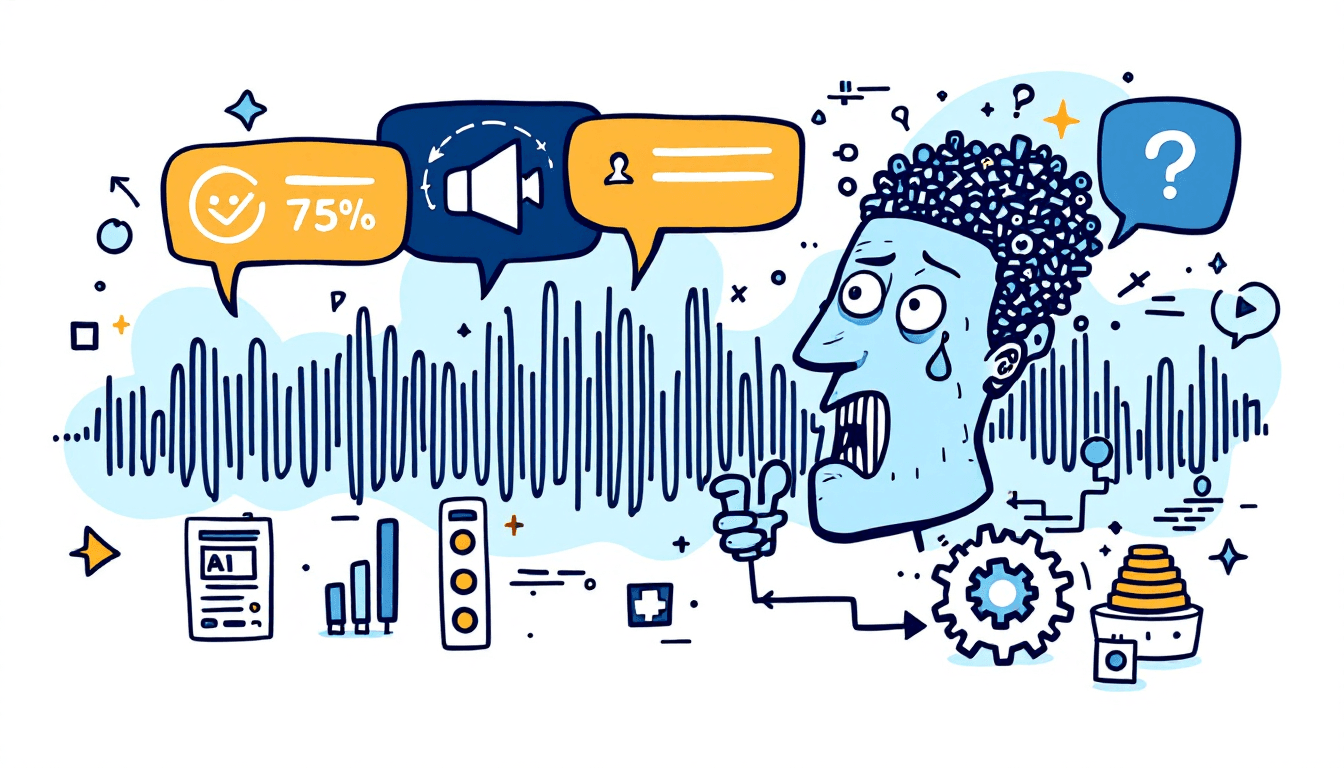
🎤 Comprendere l'accuratezza della trascrizione AI nel 2026
La transcripción de IA ha alcanzado un hito crítico en 2026, pasando de ser tecnología experimental a soluciones listas para producción que impulsan desde la documentación médica hasta las notas de reuniones corporativas. Pero, ¿qué significa realmente "exacto" en el contexto del reconocimiento de voz?
La realtà è più sfumata rispetto a semplici affermazioni in percentuale. Sebbene le principali piattaforme vantino un’accuratezza del 95-98% nei materiali di marketing, le prestazioni nel mondo reale variano notevolmente in base alle condizioni audio, alle caratteristiche dei parlanti e alla complessità dei contenuti. Comprendere questi fattori è fondamentale per scegliere lo strumento giusto e ottimizzare il proprio flusso di lavoro di trascrizione.
⚡ Intuizione chiave
La differenza tra l'85% e il 95% di accuratezza non è solo di 10 punti percentuali: è la differenza tra 15 errori ogni 100 parole (che richiedono una revisione significativa) e 5 errori ogni 100 parole (con una modifica minima necessaria).
📊 Comprendere il Word Error Rate (WER) - Lo standard del settore
Il Word Error Rate (WER) rappresenta il parametro fondamentale per misurare l’accuratezza del riconoscimento vocale in tutto il settore. Il WER quantifica la percentuale di parole trascritte in modo errato calcolando il rapporto tra gli errori di riconoscimento e il numero totale di parole in una trascrizione di riferimento.
🧮 Formula di calcolo del WER
📈 Referencias WER 2026
🏆 Eccellente prestazione
- Sotto il 5% di WER: pronto per la produzione per la maggior parte delle applicazioni
- 2-3% WER: audio di qualità da studio con parlanti chiari
- Modifica minima: 3-5 correzioni ogni 100 parole
⚠️ Da migliorare
- 10-20% WER: È necessaria una pulizia manuale significativa
- Sopra il 20% di WER: spesso è più veloce digitare manualmente
- Revisione approfondita: oltre 15 correzioni ogni 100 parole
🥇 Principales Sistemas di Trascrizione AI nel 2026
Valutazioni complete recenti su 60 lingue utilizzando set di dati del mondo reale rivelano i leader attuali in termini di accuratezza nello spazio della trascrizione AI.
| Sistema | Condizioni Ottimali WER | Prestazioni nel mondo reale | Punti di forza chiave |
|---|---|---|---|
| Trascrivi con GPT-4o | 2-4% | 5-8% | Multilingue, comprensione del contesto |
| Deepgram Nova-v3 | 3-5% | 6-10% | Elaborazione in tempo reale, diarizzazione dei parlanti |
| OpenAI Whisper V3 | 4-6% | 8-12% | Open source, multilingue |
| Google Speech-to-Text | 5-7% | 10-15% | Funzionalità enterprise, punteggiatura |
| Servizi cognitivi di Azure | 5-8% | 10-16% | Modelli personalizzati, sicurezza enterprise |
📊 Performance Note
These benchmarks represent performance on audio-duration-weighted averages across VoxPopuli, Earnings-22, and AMI-SDM datasets. Real-world results may vary significantly based on your specific audio conditions and content type.
🎛️ Critical Factors Affecting Transcription Accuracy
Understanding what impacts AI transcription accuracy helps you optimize your setup and set realistic expectations. Here are the key factors that can make or break transcription quality:
🎵 Audio Quality - The #1 Factor
Audio quality has the greatest impact on transcription accuracy. Clear recordings achieve 95-98% accuracy while noisy environments can reduce performance by 30-40%.
✅ Good Audio Conditions
- • Studio-quality microphones
- • Minimal background noise
- • Clear speaker separation
- • Consistent audio levels
❌ Poor Audio Conditions
- • Phone/laptop built-in mics
- • Echo and reverberation
- • Background conversations
- • Inconsistent volume levels
🔊 Background Noise Impact
Even moderate background noise significantly impacts accuracy. Each 10dB increase in noise reduces accuracy by 8-12%.
📉 Noise Level Impact Chart
- Quiet room (30-40dB): 95-98% accuracy
- Office environment (50dB): 85-90% accuracy
- Busy coffee shop (60dB): 70-80% accuracy
- Traffic noise (70dB+): Below 60% accuracy
👥 Speaker Characteristics
Speaker variability including accents, dialects, vocal patterns, tone, and volume significantly challenge ASR systems. Native speakers typically perform 15-20% better than non-native speakers.
🎯 High Accuracy
- • Clear enunciation
- • Standard accents
- • Normal speaking pace
- • Single speaker
⚠️ Moderate Challenge
- • Regional accents
- • Fast speakers
- • Soft-spoken voices
- • Multiple speakers
🚫 High Challenge
- • Heavy accents
- • Overlapping speech
- • Mumbled speech
- • Non-native speakers
🏥 Technical Terminology & Specialized Vocabulary
Specialized terminology can drop accuracy by 20-30%. Medical terms, legal language, scientific nomenclature, and industry-specific acronyms frequently result in transcription errors.
📋 Domain-Specific Challenges
- Medical: Drug names, procedures, anatomy
- Legal: Case citations, Latin terms, statute numbers
- Technical: Software names, protocols, specifications
- Financial: Company names, financial instruments, metrics
🧪 Testing Methodologies for AI Transcription Accuracy
Proper testing is essential for selecting the right transcription solution and understanding its real-world performance. Here's how to conduct meaningful accuracy evaluations:
🔬 Industry-Standard Testing Approach
Advanced benchmarking uses audio-duration-weighted average WER across approximately 2 hours from datasets like VoxPopuli, Earnings-22, and AMI-SDM to evaluate models in real-world speech conditions.
📝 Step-by-Step Testing Process
Step 1: Prepare Reference Audio
- • Create 10-15 minute audio samples representative of your use case
- • Include various speakers, accents, and terminology relevant to your domain
- • Record at different quality levels (studio, conference room, phone)
- • Manually create 100% accurate reference transcripts
Step 2: Test Multiple Systems
- • Process the same audio through 3-5 different AI transcription services
- • Use identical settings where possible (language, domain, speaker count)
- • Test both real-time and batch processing modes
- • Document any preprocessing or custom model options used
Step 3: Calculate WER and CER
WER = (S + D + I) / N × 100%
Where: S = Substitutions, D = Deletions, I = Insertions, N = Total Words
- • Use automated tools like
jiwer(Python) oreditdistancelibraries - • Calculate both Word Error Rate (WER) and Character Error Rate (CER)
- • Normalize text (remove punctuation, lowercase) for fair comparison
- • Track errors by category (substitution, insertion, deletion)
Step 4: Analyze Error Patterns
- • Identify common misrecognized words or phrases
- • Note performance differences by speaker or accent
- • Analyze domain-specific terminology accuracy
- • Document any systematic patterns or biases
🎯 Specialized Testing Scenarios
🏢 Enterprise Testing
- • Multi-speaker conference calls
- • Various video platforms (Zoom, Teams, etc.)
- • Background noise simulation
- • Industry-specific vocabulary
🎓 Academic/Research Testing
- • Lecture hall acoustics
- • Technical terminology density
- • Non-native speaker performance
- • Real-time vs. batch processing
📊 Testing Best Practice
Always test with audio that represents your actual use case. Marketing benchmarks often use ideal conditions that don't reflect real-world performance. Your 15-minute test with representative audio is worth more than generic accuracy claims.
🚀 Proven Strategies to Improve Transcription Accuracy
Optimizing transcription accuracy requires a systematic approach across audio capture, system configuration, and post-processing. Here are actionable strategies that deliver measurable improvements:
🎤 Audio Optimization - The Foundation
Microphone Setup
- • Distance: Place microphones 6-8 inches from speakers' mouths
- • Quality: Use mid-range USB mics minimum (avoid built-in laptop/phone mics)
- • Directionality: Cardioid mics reduce background noise pickup
- • Multiple speakers: Individual mics perform better than single room mics
Environmental Controls
- • Noise reduction: Turn off HVAC, close windows, use soft furnishings
- • Echo control: Avoid large empty rooms, add carpets/curtains
- • Consistent levels: Test and adjust microphone gain before recording
- • Speaker discipline: Minimize interruptions and crosstalk
⚙️ System Configuration Optimization
Model Selection Strategy
Domain-Specific Models
- • Medical: AWS Transcribe Medical, Nuance Dragon Medical
- • Legal: Verbit Legal, Rev Legal transcription
- • Financial: Earnings call optimized models
- • Education: Lecture-optimized, multi-accent trained models
Language and Accent Optimization
- • Select region-specific models (US English vs UK English vs Australian)
- • Use multilingual models for mixed-language content
- • Enable accent adaptation features when available
- • Consider custom vocabulary additions for repeated terms
🔧 Advanced Enhancement Techniques
Custom Vocabulary & Training
- • Add company names, product terms, and industry jargon
- • Include common abbreviations and acronyms
- • Provide pronunciation guides for unusual terms
- • Regular vocabulary updates based on error patterns
Post-Processing Enhancement
- • Automated punctuation and capitalization
- • Smart formatting for numbers, dates, and currencies
- • Custom find-replace rules for common errors
- • Integration with spell-check and grammar tools
💡 Pro Tip: Iterative Improvement
Track your most common transcription errors over 2-3 weeks, then implement targeted fixes. This data-driven approach typically yields 10-15% accuracy improvements within a month of optimization.
🏭 Industry-Specific Accuracy Considerations
Different industries have unique accuracy requirements and challenges. Understanding these helps set realistic expectations and choose appropriate solutions:
🏥 Healthcare & Medical
Accuracy Requirements:
- • Clinical notes: 98%+ accuracy required
- • Patient consultations: 95%+ acceptable
- • Medical dictation: <2% WER target
Key Challenges:
- • Complex medical terminology
- • Drug names and dosages
- • Anatomy and procedure names
- • HIPAA compliance requirements
💼 Business & Corporate
Accuracy Requirements:
- • Board meetings: 90%+ for minutes
- • Sales calls: 85%+ for analysis
- • Training sessions: 80%+ acceptable
Key Challenges:
- • Multiple speakers and interruptions
- • Company-specific terminology
- • Video conference audio quality
- • Mixed accents in global teams
⚖️ Legal Services
Accuracy Requirements:
- • Depositions: 99%+ required
- • Client consultations: 95%+ needed
- • Internal meetings: 90%+ acceptable
Key Challenges:
- • Legal terminology and citations
- • Formal language patterns
- • Precise quote attribution
- • Confidentiality requirements
🎓 Education & Research
Accuracy Requirements:
- • Lectures: 80%+ for accessibility
- • Research interviews: 95%+ for analysis
- • Student recordings: 85%+ helpful
Key Challenges:
- • Large lecture hall acoustics
- • Technical academic terminology
- • Non-native speaker variations
- • Budget constraints for premium services
🔗 Related Resources & Tools
📊 How Accurate is AI Transcription?
Deep dive into current AI transcription accuracy rates, benchmarks, and real-world performance expectations.
🏆 Best Transcription Tools 2026
Compare the most accurate AI transcription tools with detailed accuracy benchmarks and feature analysis.
🎯 Speaker Identification Features
Learn how speaker diarization affects accuracy and which tools offer the best multi-speaker recognition.
🔒 Security & Compliance Guide
Understand security requirements and compliance considerations for enterprise transcription deployments.
Ready to Find Your Perfect Transcription Solution? 🚀
Get personalized tool recommendations based on your accuracy requirements, budget, and use case with our intelligent matching quiz.