At its heart, stakeholder communication is simply the way a company shares information with anyone who has a stake in its success. Think of it as a continuous conversation between an organization and all the people or groups affected by its work—from the team in the next cubicle to a customer halfway across the world.
The goal isn't just to talk at them; it's to build trust, manage expectations, and make sure everyone is on the same page. When done right, it's a strategic process that ensures the right people get the right information when they need it most.
Defining Stakeholder Communication
Let's use an analogy. Imagine you're building a new public park. To succeed, you need to talk to many different groups, and each conversation will be different.
You'll need to coordinate with your construction crew (employees) about blueprints and timelines. You'll need to excite future park-goers (customers) with updates on new playgrounds and opening dates. The city council (regulators) will need official permits and progress reports, while the community leaders who funded the project (investors) will want to see that their money is being spent wisely.
That’s stakeholder communication in a nutshell. It’s not about sending one mass email and hoping for the best. It's a thoughtful, tailored approach to relationship management. If you fail to communicate effectively with any one of these groups, the entire project could stall.
Who Are Your Stakeholders?
The first step in any communication plan is figuring out who you're talking to. Stakeholders generally fall into two main camps: internal and external.
- Internal Stakeholders: These are the people inside your organization. Think employees, managers, and board members. Their focus is usually on things like job security, hitting company targets, and overall business health.
- External Stakeholders: This group is outside your company but still has a vested interest. This includes your customers, suppliers, government bodies, and even the local community where you operate.
The key is recognizing that each of these groups cares about different things. Your customers want a great product, while your suppliers need timely payments and clear orders. Good communication acknowledges and respects these unique needs.
A planned approach ensures every person with a stake in your success feels heard, valued, and informed. It turns what could be a simple business transaction into a real partnership, and that’s where the magic happens.
To make this clearer, here’s a quick breakdown of common stakeholder groups and what they typically care about.
Key Stakeholder Groups and Their Core Interests
| Stakeholder Group | Primary Interest | Communication Goal |
|---|---|---|
| Employees | Job security, career growth, fair compensation, positive work environment. | Foster engagement, build loyalty, and align everyone with company goals. |
| Customers | Product quality, value for money, excellent customer service, ethical practices. | Build brand trust, encourage repeat business, and gather valuable feedback. |
| Investors/Shareholders | Financial returns, profitability, long-term company stability, strategic direction. | Instill confidence, demonstrate value, and ensure transparency. |
| Suppliers & Partners | Timely payments, clear contracts, long-term business relationships. | Ensure smooth operations, build reliable partnerships, and manage the supply chain. |
| Government & Regulators | Compliance with laws, public safety, economic contribution, tax revenue. | Maintain legal standing, manage risk, and demonstrate corporate responsibility. |
| Community | Job creation, environmental impact, corporate social responsibility (CSR). | Build a positive local reputation and maintain a social license to operate. |
Understanding these different perspectives is the foundation for creating a communication strategy that actually works for everyone involved.
Why Strong Stakeholder Communication Matters
Let's be blunt: stakeholder communication isn't just a "nice-to-have" part of doing business. It's the lifeblood of any successful project or company. Think of it as the glue that holds everything together. When it's working, information gets to the right people at the right time, letting you make smart decisions, adapt quickly, and move forward as a team.
But when it fails? The fallout can be disastrous. You end up with teams working at cross-purposes, customers feeling ignored, and investors getting blindsided by bad news. A lack of clear, consistent communication creates a void, and that void is quickly filled with rumors, assumptions, and distrust—all of which can kill a project.
Building Trust and Ensuring Alignment
At its core, great communication builds one thing: trust. When people feel like they're in the loop, that their voices are heard, and that you're being straight with them, they'll stick with you, even when things get tough. It's the difference between a simple transaction and a real partnership.
This is what gets everyone pulling in the same direction. By making sure your goals, your progress, and even your problems are out in the open, you get your entire team—from internal staff to outside partners—on the same page. This slashes internal conflict and dramatically increases your odds of hitting your targets on time and on budget.
When you get this right, stakeholders don't just support you; they become your biggest champions. They advocate for your mission because they truly understand what you're trying to do and feel like they're a part of it.
Gaining Valuable Insights and Mitigating Risk
Good communication is a two-way street. It’s not just about pushing out updates; it's about listening and learning. Your customers, suppliers, and community members see things you can't. They have boots-on-the-ground insights that can be incredibly valuable.
For example, a supplier might give you a heads-up about a potential hiccup in the supply chain. A customer focus group could point out a deal-breaking flaw in your new product before you spend a fortune on the launch. This kind of dialogue is an early-warning system that helps you spot and fix problems before they blow up.
This has never been more important. The COVID-19 pandemic, for instance, reset everyone's expectations. People now demand more transparency and more frequent updates. It’s the new normal.
In fact, companies that actually listen to stakeholder concerns and build them into their strategy report 20-25% higher reputation scores. You can see more on this at reputation-inc.com. Weaving that feedback into your plan is how you dodge risks and build a business that can weather any storm.
How to Identify Your Key Stakeholders
Great stakeholder communication doesn't start with an email or a meeting invite. It starts with a simple, yet absolutely crucial, question: who are we actually talking to? If you can't answer that, you're flying blind.
The first move is to just get everyone down on paper. Cast a wide net and think about every single person or group that has a stake in your project's outcome, both inside and outside the company walls.
- Internal Stakeholders: These are the people on your payroll. Think about your immediate project team, sure, but also department heads, the C-suite, and even employees in other departments whose work might be affected by what you're doing. For a deeper dive on this, check out our guide on how to enhance your business with cross-functional communication.
- External Stakeholders: This is everyone else. The list can get long pretty quickly: customers, vendors, investors, government agencies, partners, and even the local community.
Mapping Stakeholders with the Power Interest Grid
Once you have your master list, it's time to get strategic. Let's be honest, not every stakeholder needs the same level of attention. A fantastic tool for sorting this out is the power/interest grid. It’s a simple way to figure out who needs what from you.
The grid helps you plot each stakeholder based on two simple factors: how much power they have to influence your project, and how much interest they have in its success. Seeing it all mapped out makes it instantly clear where you need to focus your time and energy. You avoid over-communicating with people who don't need the details while making sure you don't accidentally ignore someone who could make or break your project.
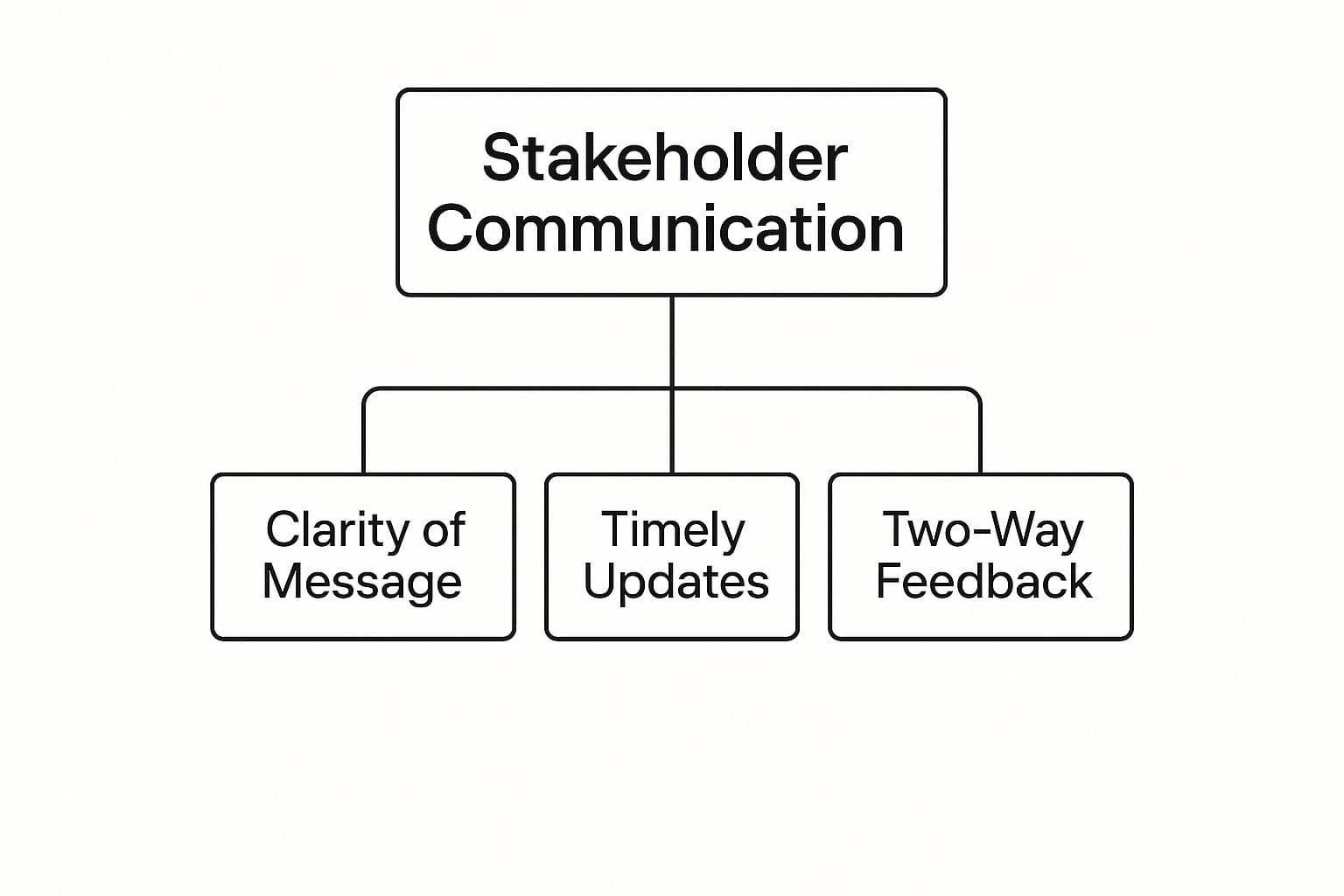
As this graphic shows, it all boils down to delivering a clear message, getting it to them on time, and creating a genuine channel for feedback.
By taking the time to identify and analyze your stakeholders, you're not just creating a contact list. You're building a strategic map that guides your entire communication effort, making sure the right message gets to the right people at the right time.
Building Your Stakeholder Communication Plan
So, you’ve mapped out who your stakeholders are. That's a huge first step. But knowing who they are is one thing; actually talking to them effectively is another. This is where a stakeholder communication plan comes in. Think of it as your project's playbook—the document that turns your audience insights into a real, actionable strategy.
It's a bit like planning a cross-country road trip. You wouldn't just hop in the car and start driving, right? You'd figure out your route, plan your stops, and decide who's navigating. A communication plan does the exact same thing for your project. It makes sure every important group gets the right information, through the right channels, precisely when they need it.
Without a plan, you're constantly in reactive mode. You spend your days putting out fires and clearing up misunderstandings instead of preventing them. Stakeholders feel left in the dark, which erodes trust and can throw a project completely off course.

Setting Clear Objectives and Messages
Every single piece of communication needs a purpose. Before you type that email or book that meeting, take a second and ask yourself, "What am I trying to achieve here?" Your goals should be concrete and measurable.
For instance, an objective for your investors might be to build their confidence in the budget for the second quarter. For your internal team, the goal might be ensuring they grasp the new feature requirements so there's less rework later on.
Once your objective is clear, crafting the message becomes much easier. The update for investors will naturally focus on financial projections and ROI. The message for your developers, on the other hand, will be far more technical and detailed. Customizing the message is non-negotiable; a generic, one-size-fits-all update rarely lands well with anyone.
Choosing Channels and Frequency
The how is just as critical as the what. The channel you use to deliver your message can make or break its effectiveness. It all comes down to the stakeholder and the kind of information you're sharing. A formal, detailed report might be perfect for the board, but a quick update on a Slack channel is much better for your team's daily check-in.
Think about common pairings that just make sense:
- Investors: Formal quarterly reports, in-depth presentations, and one-on-one calls.
- Employees: Weekly team meetings, internal newsletters, and instant messaging.
- Customers: Social media updates, email newsletters, and blog posts.
The final piece of the puzzle is frequency. Stakeholders with high interest and high power in your project will need to hear from you often—maybe even weekly. Other groups might be perfectly happy with a monthly or quarterly check-in. The key here is consistency. When you set a schedule and stick to it, you build a reputation for reliability and manage everyone's expectations.
To help you put all this into practice, here's a straightforward template you can adapt for your own projects. It’s a simple way to organize your thoughts and make sure no one falls through the cracks.
Stakeholder Communication Plan Template
| Stakeholder Group | Key Message | Communication Channel | Frequency | Owner |
|---|---|---|---|---|
| Investors | Progress against financial milestones and updated ROI projections. | Formal Email Report & Presentation | Quarterly | CFO |
| Project Team | Weekly priorities, sprint goals, and roadblocks to address. | Daily Stand-up & Project Mgt. Tool | Daily | Project Manager |
| Customers | Updates on new features, benefits, and launch timelines. | Email Newsletter & Social Media | Monthly | Marketing Lead |
| Suppliers | Production timelines, inventory needs, and contract updates. | Scheduled Phone Calls | Bi-weekly | Operations Manager |
This table isn't just a to-do list; it's a commitment. It holds your team accountable and gives every stakeholder group a clear idea of what to expect from you, and when.
Modern Tools and Channels for Engagement
Effective stakeholder communication today is a world away from just sending out the occasional press release or company newsletter. The right digital tools can transform one-way announcements into genuine, two-way conversations, building much stronger relationships and gathering feedback that's pure gold. It’s no longer about simply broadcasting a message; it’s about picking the right platform to connect with the right people.
Think of it this way: you wouldn't use a megaphone to have a quiet chat, so why use a formal report to engage your community on social media? The trick is to match the channel to what your stakeholders expect and what you're trying to say. For example, Customer Relationship Management (CRM) systems are fantastic for personalizing how you talk to clients, while good project management software keeps your internal teams perfectly in sync.
Putting Technology to Work for Smarter Communication
The digital shift has completely changed how organizations connect with their stakeholders. A recent analysis found that around 65% of large-cap companies are now using AI-powered tools to personalize content and create continuous feedback loops. This tech helps businesses make their communication more efficient and more meaningful. You can find more on this trend and see how digital engagement is evolving at blacksun-global.com.
This move allows for a much more proactive approach, where you can start to anticipate what your stakeholders need instead of just reacting to their concerns.
Key Digital Channels and How to Use Them
Picking the right tool is all about who you're talking to and what you want to accomplish. A smart strategy almost always involves a mix of platforms to cover all your bases.
- Social Media Platforms (LinkedIn, X): These are perfect for broad public announcements, showing off your company culture to attract new talent, and jumping into conversations with customers and your wider community about what's happening in your industry.
- Dedicated Engagement Software: Tools specifically for stakeholder management give you a central place to track every interaction, map out relationships, and make sure no one falls through the cracks.
- AI-Powered Tools: Artificial intelligence is a total game-changer for making sense of feedback, especially when you have a lot of it. It can scan thousands of comments to pinpoint sentiment and common themes, giving you a crystal-clear view of what matters most to people. For meetings, tools like the best AI meeting assistant tools can automatically capture and summarize discussions so you don't miss a thing.
- Email and Newsletters: Still the champion for formal, direct communication. They're ideal for sending detailed reports, official updates, and important information to investors, partners, and subscribers who have opted-in.
- Interactive Forums and Webinars: These create a space for real dialogue. They let community members, customers, or employees ask questions and give feedback directly in a managed, open setting.
Best Practices for Effective Communication

Knowing who you need to talk to and which channels to use is a great start, but it's only half the battle. The real magic happens in the execution. Following a few proven best practices will ensure your message not only lands but also builds the kind of trust that weathers any storm.
At the top of the list is transparency and honesty. It's simple, really. Be upfront about everything—the wins, the losses, and the bumps in the road. This is the fastest way to build credibility. When people know they can count on you for the truth, they're far more likely to stick by you when things get tough.
Consistency is just as crucial. Your core messages need to be the same whether they're in a formal investor report or a quick social media update. A consistent voice prevents confusion and reinforces that your organization is reliable and unified.
Create a Two-Way Dialogue
Let's be clear: great communication is never a one-way street. It has to be a genuine conversation where people feel their voice actually matters. That means you have to stop just broadcasting updates and start actively inviting feedback.
Here are a few ways to make that happen:
- Practice Active Listening: In meetings, surveys, or forums, truly listen to the concerns and ideas being shared. Don't just wait for your turn to talk; show people you're absorbing what they're saying.
- Establish Feedback Loops: Make it easy for stakeholders to share their thoughts. More importantly, close the loop by showing them how their input is being put to use.
- Tailor Your Message: You wouldn't talk to your best friend the same way you'd talk to a new CEO, right? The same principle applies here. Adapt your tone, style, and content for each specific stakeholder group.
Stay Timely and Relevant
Timing is everything, especially when a crisis hits. Getting ahead of the story with proactive, timely updates can stop misinformation in its tracks and show everyone that you're in control. Don't wait for people to come to you with questions; anticipate what they need to know and give them answers before they even have to ask.
It's also impossible to ignore the growing importance of social responsibility. Weaving Environmental, Social, and Governance (ESG) topics into your messaging isn't just a nice-to-have anymore; it's an expectation. In fact, over 60% of organizations now use digital tools to create more inclusive conversations around these very issues. You can read more about the future of stakeholder engagement at quicker.com.au.
These principles are the bedrock of any strong relationship. If you're looking to drill down even further, check out our guide on how to improve team communication with easy tips for success.
Got Questions? Let's Clear a Few Things Up
Even the best-laid plans can leave you with a few lingering questions. Let's tackle some of the most common ones that pop up when you're in the trenches managing stakeholder communication.
Is Stakeholder Communication the Same as Stakeholder Management?
It's a great question, and the short answer is no—but they are deeply connected.
Think of stakeholder management as the big-picture strategy. It’s your master plan for figuring out who your stakeholders are, what they care about, and how much influence they have over your project. It's the "what" and "why."
Stakeholder communication is the action part of that strategy. It’s the "how." This includes the actual emails you send, the meetings you hold, and the reports you create to keep everyone in the loop. You can't have good management without good communication; one is the plan, the other is the execution.