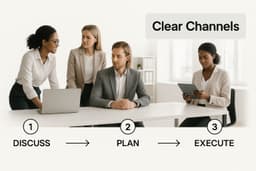
In today's fast-paced, often remote, work environment, simply 'communicating' isn't enough. Misaligned teams, endless meetings, and lost action items drain productivity and morale, directly impacting your bottom line. The solution lies not in more communication, but in smarter, more deliberate methods. A clear plan is essential for turning conversations into concrete outcomes.
This guide cuts through the noise to deliver 10 proven workplace communication strategies you can implement immediately. We move beyond generic advice to provide a tactical playbook for modern teams. You will find specific, actionable steps for everything from mastering asynchronous updates to building a robust feedback culture.
Each strategy is broken down into a simple, repeatable framework:
- What it is: A clear definition of the strategy.
- How to implement it: Concrete steps to put the strategy into action.
- Real-world examples: Scenarios showing the strategy at work.
- Measuring success: How to track its impact on your team’s performance.
We also explore how modern tools, especially AI-powered meeting summarizers, can automate and enhance these practices. This isn't about theory; it's about transforming your team’s daily interactions into a powerful engine for growth. By moving from accidental communication to an intentional strategy, you can build a more efficient, aligned, and engaged organization, giving you a definitive competitive edge. Let's get started.
1. Asynchronous Communication
Asynchronous communication is one of the most powerful workplace communication strategies for modern teams, especially those distributed across different time zones. It involves exchanging information without the need for immediate, real-time responses. Instead of instant messaging or back-to-back meetings, teams rely on platforms like project management tools, shared documents, and recorded messages, allowing individuals to contribute thoughtfully on their own schedules.
This approach promotes deep work, reduces meeting fatigue, and creates a living record of decisions and discussions. Companies like GitLab and Zapier have built their entire operational models around this principle, using comprehensive documentation and structured communication channels to maintain alignment and productivity without constant interruptions.
How to Implement Asynchronous Communication
To successfully adopt this strategy, you need clear structures and shared expectations. It isn't just about sending emails; it's a deliberate cultural shift.
- Establish Clear Guidelines: Set and communicate expected response times for different channels. For example, a 24-hour turnaround for non-urgent emails or project comments allows team members to plan their work without feeling pressured to be constantly online.
- Use the Right Tools: Leverage tools that create a single source of truth. Think project management boards like Asana or Trello for tasks, and detailed Google Docs or Notion pages for project briefs.
- Reserve Meetings for High-Stakes Topics: Use synchronous time (meetings) for complex brainstorming, sensitive feedback, or major strategic decisions, not for simple status updates.
To deepen your understanding of effective asynchronous communication, explore resources on Async Communication Best Practices for detailed frameworks.
How AI Supports This Strategy
AI-powered meeting summarization tools are a game-changer for asynchronous workflows. They can automatically transcribe and summarize a meeting, identify key decisions, and list action items. This summary can then be shared with team members who couldn't attend, ensuring everyone stays informed without sacrificing their focus time.
2. Active Listening and Feedback Loops
Active listening is a foundational workplace communication strategy that goes beyond simply hearing words. It involves fully concentrating on, understanding, and responding to what is being said. When combined with structured feedback loops, it creates a powerful cycle of clarification and mutual understanding, ensuring that messages are received as intended. This is especially critical in meetings where decisions are made and actions are assigned.
This two-part approach builds psychological safety, as seen in Google's Project Aristotle, where team members who felt heard were more engaged and effective. Similarly, HubSpot uses structured feedback loops in its sales teams to refine pitches and improve performance, proving the strategy's value in high-stakes environments. It ensures that every voice contributes to a more accurate and shared understanding.
How to Implement Active Listening and Feedback Loops
Effective implementation requires intentional practices that encourage participation and confirmation. It’s about creating an environment where listening is valued as much as speaking.
- Practice Reflective Listening: After someone speaks, paraphrase their key points back to them ("So, if I'm understanding correctly, you're suggesting we prioritize X because of Y?"). This confirms understanding and shows you are engaged.
- Establish Summary Checkpoints: Pause meetings at key intervals to summarize decisions and action items. Ask for verbal confirmation from the group to ensure everyone is aligned before moving on.
- Implement Round-Robin Speaking: In meetings, go around the room (or virtual room) to give each person an uninterrupted turn to speak. This ensures quieter voices are heard and prevents a few dominant personalities from controlling the conversation.
To build a stronger foundation in this area, you can learn more about how to improve active listening with this practical guide.
How AI Supports This Strategy
AI meeting assistants are invaluable for reinforcing this strategy. By recording and transcribing meetings, they create an objective record of what was said. AI-generated summaries can then be circulated as a formal feedback loop, allowing participants to review and confirm their understanding of key decisions and assigned action items. This verification step ensures that what was heard matches what was intended, solidifying alignment across the team.
3. Meeting Transcription and AI-Powered Summarization
One of the most impactful modern workplace communication strategies is the adoption of automated meeting transcription and AI-powered summarization. This approach uses technology to convert spoken dialogue from meetings into text, then applies artificial intelligence to distill that text into key decisions, action items, and concise summaries. It eliminates the need for manual note-taking, reduces human error, and creates an accurate, searchable archive of every conversation.
This strategy is critical for knowledge retention, compliance, and keeping remote or asynchronous teams aligned. Companies like Salesforce use tools like Fireflies.ai to document sales calls, while remote-first startups rely on Notta to sync their distributed teams. The result is a single source of truth that ensures no critical information is lost, making follow-ups more efficient and transparent.
How to Implement Meeting Transcription and Summarization
Successfully integrating this technology requires more than just turning on a tool; it involves creating new team habits around documentation and follow-through.
- Select the Right Tool and Configure It: Choose a platform like Otter.ai or the native transcription in Microsoft Teams. Ensure it integrates with your calendar and conferencing software to automatically join and record scheduled meetings.
- Establish a Post-Meeting Workflow: Create a standardized process. For example, the meeting host is responsible for reviewing the AI-generated summary, making any necessary edits for context, and sharing it with all attendees and relevant stakeholders within 24 hours.
- Train Your Team: Teach employees how to use the transcripts effectively. Show them how to search for keywords to find past decisions, how to reference specific parts of a conversation, and how to track action items assigned to them directly from the summary.
For those looking to explore a powerful tool in this space, learn more about how platforms like Grain create shareable video highlight clips from meetings.
How AI Supports This Strategy
This strategy is fundamentally powered by AI. Beyond simple transcription, AI algorithms analyze conversational patterns to identify questions, decisions, and commitments. It can automatically detect who was assigned a task and by when, populating project management boards or sending reminders. This level of automation ensures accountability and transforms meeting outcomes into tangible progress with minimal manual effort.
4. Structured Meeting Agendas and Clear Objectives
Structured meeting agendas are a foundational workplace communication strategy designed to make synchronous time more productive and focused. It involves creating and sharing a detailed plan before a meeting, outlining the topics, time allocations, desired outcomes, and key decision-makers. This simple discipline prevents meetings from derailing into tangents, ensures everyone arrives prepared, and transforms them from time-wasters into powerful decision-making tools.

This approach is famously practiced by companies like Amazon, which requires a detailed six-page memo to be read at the start of key meetings, ensuring deep, informed discussion. Similarly, Atlassian uses pre-read documents and Trello board agendas to keep their planning sessions on track. The goal is to shift the meeting's focus from information sharing to high-value collaboration and decision-making.
How to Implement Structured Meeting Agendas
Making agendas a non-negotiable part of your meeting culture requires consistency and clear templates. It's about setting a standard for how time is respected and used.
- Create Purpose-Driven Templates: Develop agenda templates for different meeting types, such as one-on-ones, project kickoffs, or weekly standups. Each template should have sections for objectives, topics with time limits, and required attendees.
- Share Agendas in Advance: Distribute the agenda at least 24 hours before the meeting. This gives participants time to review materials, prepare their thoughts, and add relevant points.
- Assign Clear Roles: Designate a facilitator to keep the conversation on track and a notetaker to capture decisions and action items. This ensures accountability during and after the meeting. To maximize engagement, consider including essential group check-in questions at the beginning.
To discover more practical tips, you can find a comprehensive guide on how to run effective meetings that aligns with this strategy.
How AI Supports This Strategy
AI tools enhance agenda-driven meetings by creating a clear record of what was actually discussed. An AI meeting assistant can transcribe the entire conversation, and you can compare the final transcript and summary against the original agenda. This process helps teams identify where discussions went off-topic, ensuring future meetings are even more focused and efficient.
5. Clear Communication Channels and Protocols
Establishing clear communication channels and protocols is a foundational workplace communication strategy that prevents information overload and ensures messages are delivered effectively. It involves creating a formal system that dictates which tool to use for which type of communication, reducing ambiguity and improving response times. Instead of a chaotic free-for-all across email, chat, and project management tools, teams have a clear roadmap for where to find and share specific information.
This structured approach ensures that urgent messages get immediate attention, routine updates are stored in an accessible place, and strategic decisions are documented for future reference. Companies like GitLab and Buffer have pioneered this by creating extensive internal handbooks that outline their communication hierarchies, from a quick Slack message for a simple question to a formal document for a major policy change.
How to Implement Clear Communication Channels and Protocols
Success with this strategy depends on documentation, training, and consistent reinforcement. It’s about building a system and making it an intuitive part of the team's daily workflow.
- Document Your Communication Stack: Create a simple guide that outlines each tool's primary purpose. For example: Slack for urgent, real-time queries; Asana for task-specific updates; and Email for formal external communication.
- Set Response Time Expectations: Define clear service-level agreements (SLAs) for each channel. A 1-hour response time might be expected for urgent Slack DMs, while a 24-hour turnaround is acceptable for project comments in Asana.
- Create Dedicated Channels: Organize communication by creating specific channels for projects, teams, or topics (e.g., #project-phoenix, #q4-marketing-campaign). This keeps conversations focused and easy to find later.
For a deep dive into creating these guidelines, review GitLab's Communication Guide, which offers a comprehensive framework.
How AI Supports This Strategy
AI meeting summarization tools are critical for upholding these protocols. After a meeting, an AI-generated summary, including key decisions and action items, can be automatically routed to the correct channel. For instance, a summary of a high-level strategy meeting could be posted in a read-only #announcements channel, while a tactical project sync summary could be sent directly to the relevant #project-team channel, ensuring information is distributed according to established rules.
6. Regular One-on-One Meetings with Documentation
Regular one-on-one meetings are a cornerstone of effective workplace communication strategies, providing a dedicated space for managers and direct reports to connect. This approach moves beyond simple status updates, fostering personalized feedback, career development conversations, and mutual trust. When systematically documented, these meetings create a clear record of goals, challenges, and agreed-upon actions, ensuring accountability and preventing misunderstandings.
This strategy humanizes the manager-employee relationship, turning feedback from an annual event into an ongoing dialogue. Companies like Deloitte famously shifted away from annual performance reviews to a model of frequent check-ins, recognizing that continuous coaching is far more effective. Similarly, platforms like 15Five are built around the principle of structured, documented one-on-ones to drive performance and engagement.
How to Implement Documented One-on-One Meetings
Success with this strategy depends on consistency, preparation, and creating a psychologically safe environment. The goal is a productive, two-way conversation, not an interrogation.
- Establish a Consistent Cadence: Schedule recurring weekly or bi-weekly meetings and protect this time. Consistency signals to your team member that they are a priority.
- Create a Shared Agenda: Use a shared document where both the manager and employee can add talking points beforehand. This ensures the conversation covers what matters most to both parties.
- Focus on Forward-Looking Growth: While it's important to review past performance, dedicate significant time to future goals, skill development, and overcoming potential roadblocks.
- Document and Review Action Items: End each meeting by summarizing key takeaways and action items. Begin the next meeting by briefly reviewing the notes from the previous one to ensure follow-through.
For a deeper dive into structuring these conversations, Harvard Business Review offers excellent guidance on making them more productive.
How AI Supports This Strategy
AI meeting assistants are invaluable for documenting one-on-ones without disrupting the natural flow of conversation. These tools can automatically transcribe the discussion, generate a concise summary, and extract action items with assigned owners. This eliminates the need for manual note-taking, allowing both participants to be fully present while creating an accurate, unbiased record for future reference.
7. Cross-Functional Collaboration and Transparency
Cross-functional collaboration is a powerful workplace communication strategy designed to break down departmental silos and foster a unified organizational culture. It involves creating deliberate structures for information sharing and joint projects between teams that don't normally work together, like marketing and engineering. This transparency ensures everyone is aligned on broader company goals, not just their team's immediate tasks.
This approach prevents the "it's not my department" mentality, leading to more innovative solutions and faster problem-solving. Companies like Spotify build their entire product development model around cross-functional “squads” and “tribes” to maintain agility. Similarly, Zapier promotes radical transparency by making most internal documents and meeting notes accessible to everyone, empowering employees with context from across the business.
How to Implement Cross-Functional Collaboration
Effective implementation requires more than just mixing teams; it demands intentional systems for sharing information and building trust.
- Establish a Central Source of Truth: Use a shared knowledge base like Notion or Confluence to house project plans, meeting summaries, and key decisions. Make this repository easily searchable and accessible to all departments.
- Schedule Regular Cross-Functional Syncs: Organize recurring meetings or forums where different teams can share updates, discuss challenges, and identify opportunities for collaboration. These shouldn't be status reports but strategic alignment sessions.
- Create Clear Transparency Guidelines: Define what information is shared by default and what remains confidential. Buffer is famous for its radical transparency, even sharing salaries publicly, but most companies can start by making project roadmaps and team goals visible across the organization.
For teams looking to build this culture, exploring frameworks like Spotify's engineering model can offer valuable structural ideas.
How AI Supports This Strategy
AI meeting summarization tools are essential for scaling transparency. An AI assistant can automatically transcribe, summarize, and highlight key decisions from a product team’s strategy meeting. By sharing this summary in a public Slack channel or central knowledge base, the sales and marketing teams can instantly understand upcoming features and align their own roadmaps without ever needing to attend the meeting, saving time and ensuring company-wide alignment.
8. Action Item Assignment and Accountability Tracking
Effective workplace communication strategies must ensure that discussions translate into tangible outcomes. Action item assignment and accountability tracking is a formal process for capturing tasks, assigning clear owners, and setting deadlines during or after a meeting. This system prevents critical next steps from being forgotten or ignored, creating a transparent record of who is responsible for what and by when.
This structured approach transforms abstract conversations into a concrete plan, closing the loop between discussion and execution. Teams using project management tools like Asana or Monday.com often integrate this process by creating tasks directly from meeting notes, ensuring that every decision is linked to a deliverable. The goal is to eliminate ambiguity and empower everyone with a clear understanding of their responsibilities.