Having a solid sample minutes of a meeting template is more than just good housekeeping; it's about turning a jumble of notes into a real tool for getting things done. It gives you a consistent framework to capture key decisions, assign tasks, and create an official record of what everyone agreed to.
Why Effective Meeting Minutes Are Crucial
Let's be honest, we've all sat through meetings that felt like a waste of time. In the U.S. alone, there are somewhere between 36 and 56 million meetings every single day. The poorly run ones? They cost the economy an estimated $37 billion annually.
A huge part of that problem is the lack of clear, actionable notes afterward, which leads to confusion, forgotten tasks, and the same conversations happening over and over. You can dig into more of these stats and their impact over at MyHours.com. Using a standardized template helps fix this by creating a single, reliable source of truth that keeps projects from getting sidetracked by misunderstandings.
Drive Accountability and Clarity
When you document action items and assign them to specific people with clear due dates, there’s no room for guesswork. Everyone walks away knowing exactly what they need to do.
This simple act of writing things down creates a culture of ownership and keeps the momentum going. It makes it easy to track progress and hold people accountable for what they promised to deliver.
Build a Reliable Historical Record
Think of your meeting minutes as your organization's memory. They create a paper trail of decisions, debates, and how projects have changed over time. This historical record is incredibly useful for a few key reasons:
- Getting new team members up to speed quickly.
- Looking back at past decisions to make smarter choices in the future.
- Providing clear documentation for any compliance checks or audits.
By sticking to a consistent template, you're building an organized archive that safeguards your team's most important knowledge.
The Complete Meeting Minutes Template
Here's a straightforward, universally useful template for meeting minutes that you can copy and paste right away. I've designed it to be clear and structured, making sure you capture all the critical details to turn conversations into concrete actions.
Think of this as a solid starting point for any meeting you're in, whether it’s a formal board review or a quick team huddle.
Foundational Meeting Details
First things first, you need to capture the basic context. This information is crucial for your records and gives anyone who wasn't there a quick snapshot of when and where the meeting happened.
- Meeting Title: [e.g., Q4 Marketing Strategy Review]
- Date: [YYYY-MM-DD]
- Time: [e.g., 10:00 AM - 11:00 AM EST]
- Location: [e.g., Conference Room 4B or Zoom Link]
- Meeting Facilitator: [Name of the person leading the meeting]
- Minute Taker: [Name of the person taking notes]
Attendance and Agenda Record
Next, make a note of who was there and what you planned to talk about. Listing attendees is key for accountability, and having the agenda right there sets the stage for the discussion that follows.
Attendees Present: [List names of all participants who were present]
Attendees Absent: [List names of invited participants who were not present]
Agenda Items:
- [First Agenda Topic]
- [Second Agenda Topic]
- [Third Agenda Topic]
Take a look at this screenshot. It's a classic example of how minutes have traditionally been structured, with a heavy emphasis on formally recording motions and votes.
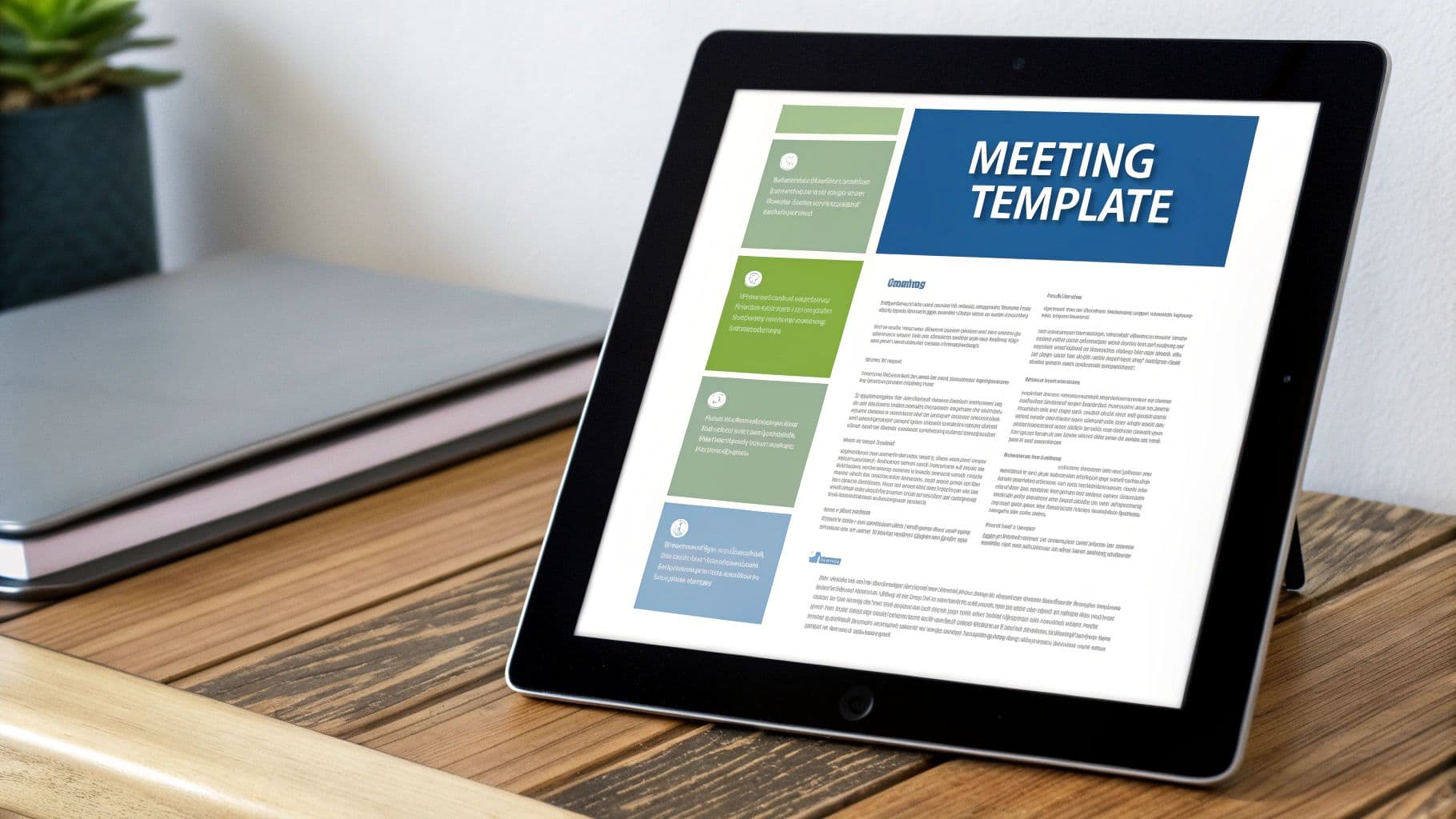
While styles have evolved, the core principle of a clear, organized structure for official records remains just as important today. If you want to dig deeper into modern formatting, check out this practical guide to meeting minutes format with action items.
Discussions Decisions and Actions
This section is the heart of your notes. For every item on the agenda, you’ll summarize the main discussion points, note any final decisions made, and clearly list out the action items that came from it. Don't forget to assign owners and deadlines!
How to Use Each Section of the Template
A solid meeting minutes template is more than just a fill-in-the-blanks document—it’s a roadmap for capturing what actually matters. When you understand the "why" behind each section, your notes stop being a simple record and become a powerful tool for pushing work forward.
Let's start with the basics. The Foundational Meeting Details (like the title, date, and location) are your future self's best friend. They make the minutes easy to file, search for, and reference later. Nailing down the Meeting Facilitator and Minute Taker also clarifies who ran the show and who owns the document. It’s simple, but it’s crucial for good record-keeping.
Documenting Attendance and Discussions
It might seem minor, but listing both Attendees Present and Attendees Absent is a surprisingly important step. This immediately shows who was in the room when decisions were made and, just as importantly, flags who needs to be looped in afterward. It's a small detail that heads off a lot of potential confusion.
When it comes to the Discussions section, your job isn't to be a court reporter. No one wants to read a word-for-word transcript. The real goal is to capture the essence of the conversation—the main arguments and key insights that shaped the outcome. This gives context to the final decisions without bogging everyone down. If you want to sharpen this skill, our guide on how to take better meeting notes has some great techniques.
This approach helps anyone who missed the meeting quickly understand the logic that led to a particular path, which is far more valuable than a simple play-by-play.
Turning Conversation into Action
Now for the most important part: the Decisions and Action Items. These sections are where words turn into work. This is what keeps projects from stalling. Be crystal clear and leave no room for interpretation.
Documenting Decisions Effectively:
- Be Specific: Don't just write, "Agreed to the new marketing plan." Instead, try: "Approved the Q4 Digital Marketing Plan as presented by Jane’s team." See the difference?
- Record Votes: In more formal settings, always note the results of a vote. It’s good practice to also include who made the motion and who seconded it.
Assigning Clear Action Items:
An action item without a name and a date is just a wish. To make sure things actually get done, every task needs three things. This simple formula removes any doubt about what happens next.
- Specific Task: State exactly what needs to be done (e.g., "Draft the project proposal").
- Assigned Owner: Put a name to it—no ambiguity (e.g., "Sarah Jones").
- Firm Due Date: A concrete deadline creates accountability (e.g., "by EOD Friday, October 25th").
Best Practices for Taking Accurate Minutes
Taking good notes during a meeting, especially when the conversation is moving quickly, isn't just about being a fast typist. It's a skill that combines active listening with a sharp focus on separating the casual back-and-forth from the important decisions and actions. The goal is never to create a word-for-word transcript; it's to build a clear, objective record that anyone—even someone who wasn't there—can understand.

The best way to succeed is to start before the meeting even begins. Take some time to review the agenda. This gives you a roadmap for the discussion, helping you anticipate the major topics and structure your notes ahead of time so you can focus on listening instead of just trying to keep up.
Prepare and Listen Actively
To create a record people can trust, you have to remain objective. The minutes need to capture what the group decided, not what you think about it.
Here are a few simple tips for staying neutral and focused:
- Focus on Outcomes: You don't need to write down everything everyone says. Instead, train your ear to catch key phrases that signal a conclusion, like "So, we've agreed..." or "The next step is..." These are your cues to document a firm decision.
- Clarify Ambiguity: If an action item or decision seems fuzzy, don't be afraid to speak up. A quick question like, "Just to confirm, who is responsible for that?" can prevent a ton of confusion down the road.
- Use Shorthand: Develop your own system of abbreviations or symbols for recurring names, projects, or terms. This can dramatically speed up your note-taking without losing any of the important details.
Document and Refine
Once the meeting is over, your job isn't quite done. Now it's time to clean up your notes and get them ready for distribution. To keep things organized as others review and comment, it's a good idea to start implementing robust document version control. This ensures every change is tracked and the final version is the correct one.
For a deeper dive, check out our article on https://summarizemeeting.com/blog/taking-minutes-at-meetings-a-practical-guide, which will help you master this critical skill.
Getting Your Meeting Minutes Out and Stored for Good
Once the meeting's over, your job isn't quite done. The real value of those notes kicks in only when you get them into people's hands. Think about it—the conversation is still fresh, and everyone needs a clear record of what was just decided.
The golden rule? Aim to send out the minutes within 24 hours. Any longer, and you risk losing momentum. A quick turnaround keeps the project moving and gives everyone a chance to double-check the notes for accuracy. It also puts a friendly spotlight on accountability by officially logging who's doing what and by when.
Building a Smart, Searchable Archive
Now, let's talk about the long game. Your meeting minutes aren't just for today; they're a long-term asset. Storing them in a central, easy-to-search place is how you build up your team's institutional knowledge. It's like creating a library of your team's history and decisions.
Here are a few simple ways to make your archive work for you:
- Stick to a naming system: A consistent format like "ProjectName_MeetingType_YYYY-MM-DD" is a lifesaver when you're trying to find something specific down the line.
- Pick one central spot: Whether it's a shared folder in Google Drive or SharePoint, or a dedicated channel in your project management software, just make sure everyone knows where to look.
- Tag it up: If your platform supports it, adding keywords for project names, key topics, or departments makes searching a breeze.
Adapting the Template for Different Meetings
A solid sample minutes of a meeting template is a fantastic starting point, but its real value comes from its adaptability. Let's be honest, not all meetings are the same, so why should your notes be? The secret is to tweak the structure to match the meeting’s specific goal.
A formal board meeting, for example, demands a very strict format. You'll need to prioritize sections that document motions, who seconded them, and the precise outcomes of any votes. On the flip side, a creative brainstorming session benefits from a much more relaxed structure, where the main goal is just to capture a whirlwind of ideas and concepts, not to assign a long list of tasks.
This infographic breaks down the typical journey of meeting minutes, from the initial note-taking all the way to long-term storage.
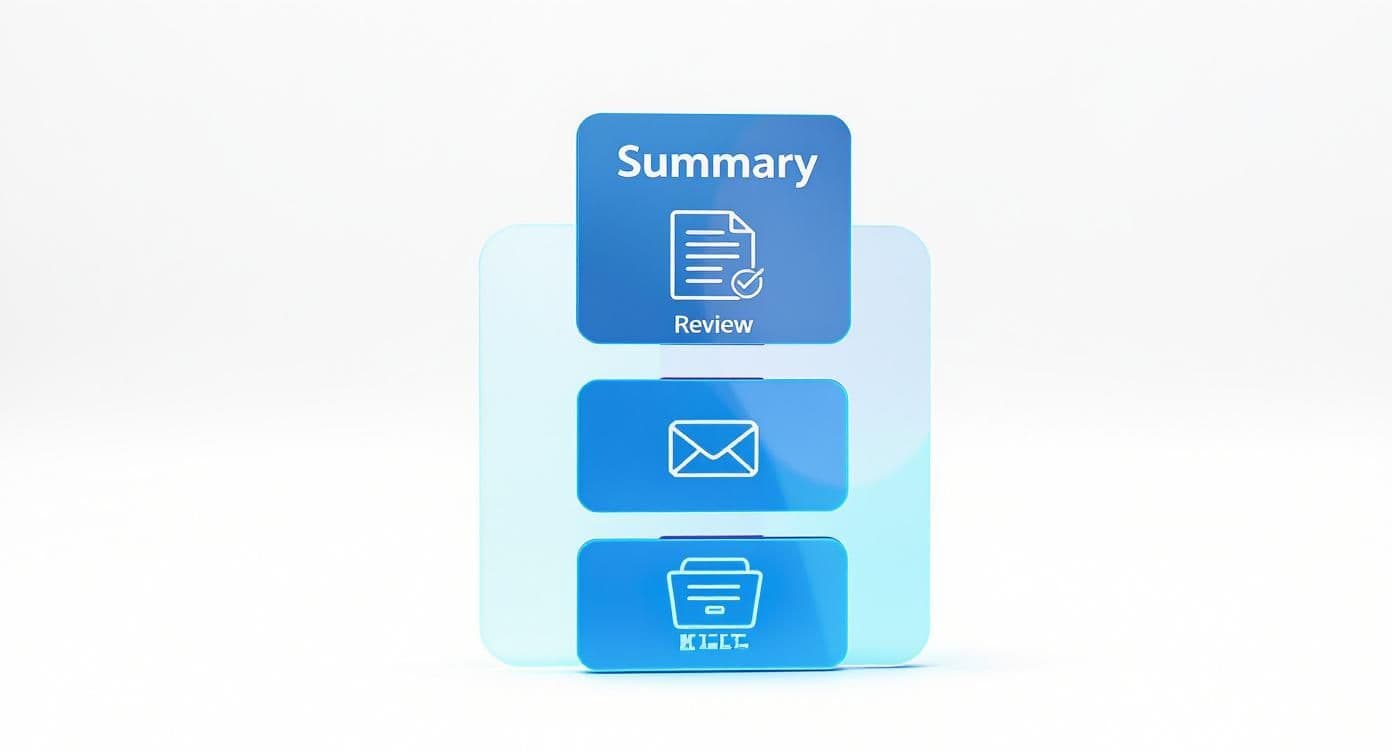
As you can see, regardless of the meeting type, those final steps—review, distribution, and filing—are always crucial. They ensure you have a dependable record you can refer back to later.
Customizing for Specific Meeting Types
Before your next meeting, take a moment to think about its primary purpose and adjust your template to fit. This quick step makes a world of difference, ensuring your minutes are always relevant and genuinely useful.
Here are a few common scenarios:
- Project Status Updates: These meetings live and die by tracking progress. Your template should put the spotlight on sections for milestones hit, any new roadblocks, and updated timelines. The Action Items section is absolutely essential here.
- One-on-One Check-ins: This is a much more personal conversation. The focus should be on individual goals, career development points, and giving and receiving feedback. Keep the template simple, with the employee's growth and needs at the center.
The table below offers a quick reference for tailoring your template to various meeting styles.
Template Customization for Meeting Types
| Meeting Type | Key Section to Emphasize | Optional Section to Add |
|---|---|---|
| Formal Board Meeting | Motions, Votes, and Resolutions | Executive Session Summary (if applicable) |
| Project Kickoff | Project Goals, Scope, and Key Deliverables | Risk Assessment Log |
| Creative Brainstorming | Ideas Generated (mind map or list format) | "Parking Lot" for off-topic ideas |
| Client Review | Client Feedback and Decisions Made | Next Steps & Follow-up Plan |
Ultimately, by tailoring your template, you’re turning a generic document into a sharp, purpose-built tool. It serves the specific needs of each conversation, which means you get maximum clarity and effectiveness every time. For more great ideas, check out these essential samples of meeting minutes format to see different approaches in action.
Common Questions About Meeting Minutes
Getting the hang of meeting minutes can bring up a few questions. Let's tackle some of the most common ones that come up when people start using a sample minutes of a meeting template.
Are Meeting Minutes a Legal Document?
They definitely can be. For corporate boards, non-profits, or official committees, meeting minutes are often treated as legal records. They act as proof that the organization is following proper procedures and making decisions responsibly.
To make sure they hold up, the minutes need to be a fair and accurate account of what happened, without any bias. They also need to be formally approved by the group, usually at the next meeting.