In any organization, the most valuable asset isn't just what each individual knows, but how effectively that knowledge is shared across the entire team. When information gets trapped in silos, teams waste time reinventing the wheel, repeating mistakes, and missing crucial opportunities for innovation. This isn't just an inconvenience; it's a direct bottleneck to growth, efficiency, and competitive advantage. The ability to seamlessly transfer insights, skills, and experience from one person to another is what separates high-performing organizations from the rest.
This guide moves beyond generic advice to provide a comprehensive and actionable roundup of proven knowledge sharing best practices. We will explore practical strategies you can implement immediately to foster a culture of continuous learning and collaboration. You won't find vague theories here, but rather a blueprint for building a more intelligent, connected, and effective organization.
Inside, you will find detailed, step-by-step guidance on how to:
- Establish vibrant Communities of Practice (CoP) to connect experts.
- Implement powerful knowledge management systems and central repositories.
- Launch impactful mentoring, coaching, and reverse mentoring programs.
- Structure effective documentation and best practice playbooks.
- Leverage informal learning formats like brown bag sessions and storytelling.
Each practice is broken down with concrete examples and clear implementation steps. Get ready to transform how your organization captures, shares, and leverages its collective genius to drive tangible results and build a sustainable competitive edge.
1. Communities of Practice (CoP)
One of the most powerful and organic knowledge sharing best practices is to foster Communities of Practice (CoPs). These are groups of people who share a common passion, a set of problems, or a professional discipline and deepen their expertise by interacting regularly. Unlike formal project teams, CoPs are self-organizing and exist to drive innovation, solve problems, and share tacit knowledge that often gets lost in official documentation. They break down departmental silos by connecting experts who might not otherwise collaborate.
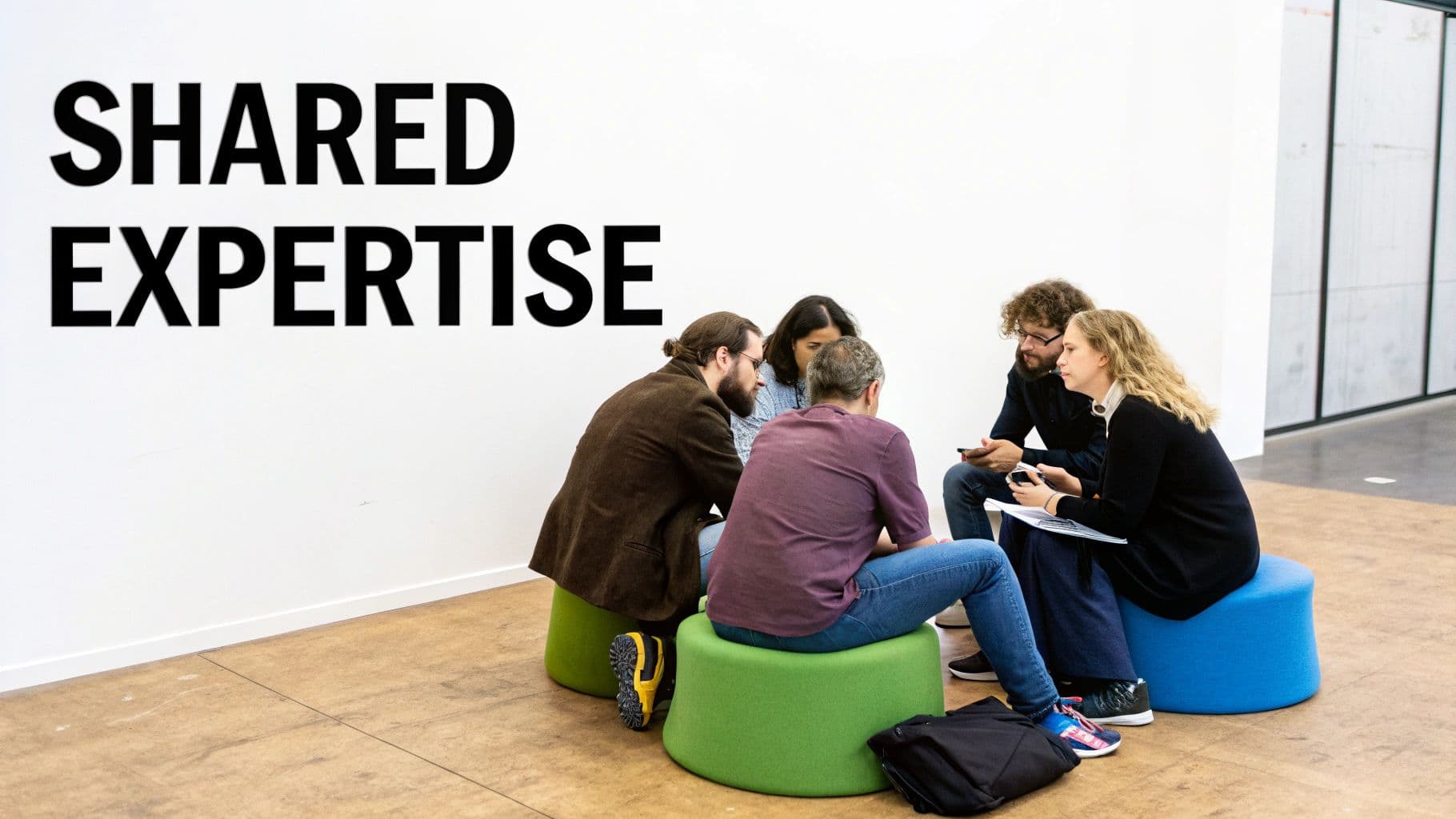
This approach is highly effective because it leverages intrinsic motivation. People join because they want to learn and contribute, not because it’s a mandated task. For instance, Xerox famously used CoPs among its field technicians to share repair tips informally, which significantly reduced service call resolution times. Similarly, Microsoft’s internal technical communities allow engineers across the company to share solutions and prevent redundant work.
How to Implement Communities of Practice
To successfully launch and sustain CoPs, follow a structured yet flexible approach. The goal is to provide a framework that empowers members without imposing restrictive bureaucracy.
- Define a Clear Domain: Start with a well-defined purpose. Is the community for "Front-End Developers," "Customer Success Managers," or "AI Ethics Researchers"? A clear focus attracts the right people and keeps conversations relevant.
- Identify Champions: Find enthusiastic experts to act as community coordinators or facilitators. Their role is to schedule meetings, moderate discussions, and keep the momentum going. Support them with resources and recognition.
- Provide Dedicated Space and Time: Create a home for the community, whether it's a dedicated Slack channel, a Microsoft Teams group, or a physical meeting space. Crucially, give employees permission to dedicate a small portion of their work hours to participate.
- Establish a Rhythm: Set up a regular cadence for interaction. This could be a monthly "lunch and learn," a bi-weekly virtual meetup to discuss challenges, or an active online forum. Consistency keeps the community alive and engaged.
By nurturing these peer-driven learning networks, organizations can create a resilient and continuously improving knowledge ecosystem.
2. Knowledge Management Systems (KMS) & Repositories
Establishing a centralized Knowledge Management System (KMS) is a foundational knowledge sharing best practice for any organization seeking to create a "single source of truth." These are dedicated digital platforms designed to capture, organize, store, and retrieve institutional knowledge, from procedural documents to project retrospectives. A well-implemented KMS prevents knowledge loss from employee turnover and eliminates the time wasted searching for information across scattered drives, emails, and chat messages.
This approach is effective because it structures and democratizes access to information. For example, Atlassian's Confluence allows engineering teams to document code, project plans, and meeting outcomes in a central, searchable wiki. Similarly, many organizations use Microsoft SharePoint or Notion to build comprehensive internal knowledge bases that house everything from HR policies to sales playbooks, ensuring every team member has access to the most current information. This formalizes the process of knowledge capture, making it a reliable and scalable asset.
How to Implement a Knowledge Management System
Successfully launching a KMS requires more than just choosing software; it demands a strategic approach to content governance and user adoption.
- Establish Clear Governance: Before migrating content, define who is responsible for creating, updating, and archiving information. Create clear documentation standards and templates to ensure consistency across all entries.
- Implement a Smart Taxonomy: Develop a logical classification system with tags, categories, and folders from the start. A clear structure makes the system intuitive to navigate and ensures users can find what they need quickly, preventing the repository from becoming a digital junk drawer.
- Integrate with Daily Workflows: The KMS should not be a separate destination but an integrated part of daily work. Link it with communication tools like Slack or Teams and project management software. To effectively manage and deliver learning content, understanding what constitutes a robust Learning Content Management System (LCMS) can provide valuable insights for structuring your training materials within the KMS.
- Encourage and Train Users: Provide comprehensive training on how to use the system and, more importantly, why it benefits everyone. Recognize and reward employees who actively contribute and maintain high-quality documentation, such as those who consistently organize meeting notes for clarity.
By creating a central, well-organized repository, organizations can significantly reduce redundant work, accelerate onboarding, and empower employees to make better, more informed decisions.
3. Mentoring and Coaching Programs
One of the most effective knowledge sharing best practices involves establishing formal and informal mentoring and coaching programs. These initiatives pair experienced employees with more junior colleagues to transfer critical skills, institutional knowledge, and professional wisdom. Unlike static documentation, mentoring provides a dynamic, personalized learning channel where tacit knowledge, such as navigating company culture or handling complex client situations, can be shared effectively.
This approach creates a powerful, cascading effect on organizational learning and employee retention. For example, Google’s mentorship programs are renowned for accelerating the growth of engineers, while Deloitte uses a formal structure to ensure all new hires have access to experienced guides. These programs not only speed up skill acquisition but also foster a strong sense of belonging and loyalty, directly addressing employee development needs.
How to Implement Mentoring and Coaching Programs
Building a successful mentoring program requires a thoughtful framework that encourages genuine connection and targeted growth. The goal is to facilitate meaningful relationships that benefit the mentee, the mentor, and the organization.
- Create a Structured Framework: Define the program’s purpose, duration, and expectations. Offer different models, such as one-on-one pairings, group mentoring, or reverse mentoring, where junior employees share skills like social media expertise with senior leaders.
- Provide Training and Resources: Don’t assume everyone knows how to be a great mentor. Offer training on active listening, giving constructive feedback, and goal setting. Provide mentors and mentees with conversation starters, goal templates, and resource guides.
- Match Participants Thoughtfully: Use a combination of skill-based needs, career aspirations, and personality traits to create strong matches. Allow participants to have input in the selection process to ensure a good fit and personal investment.
- Establish Clear Goals and Check-ins: Encourage pairs to set specific, measurable goals at the beginning of the relationship. Implement a regular cadence for check-ins, such as monthly meetings, to track progress, solve challenges, and maintain accountability.
By investing in these developmental relationships, organizations can accelerate learning, cultivate future leaders, and build a more interconnected and supportive culture.
4. Regular Training and Workshops
Formalizing knowledge transfer through regular training and workshops is a cornerstone of effective knowledge sharing best practices. These structured sessions are designed to systematically build skills, introduce new processes, and ensure critical information is disseminated consistently across the organization. Unlike informal methods, they provide a controlled environment for deep learning, allowing for complex topics to be broken down and absorbed through guided instruction.
This approach is invaluable for onboarding new hires, upskilling existing teams, and rolling out new technologies or strategies. For instance, Amazon’s comprehensive internal training programs ensure that employees worldwide adhere to its unique operational principles. Similarly, Starbucks’ "Coffee Master" program is a workshop-based initiative that turns passionate employees into brand evangelists by sharing deep product knowledge. These programs create a reliable baseline of expertise and reinforce organizational standards.
How to Implement Regular Training and Workshops
To make your training programs impactful, they must be relevant, engaging, and aligned with organizational goals. A well-designed program goes beyond a simple presentation and creates a genuine learning experience.
- Align Content with Strategic Goals: Ensure every workshop serves a clear business purpose. Is the goal to improve sales techniques, increase software adoption, or enhance compliance knowledge? Tying training directly to objectives demonstrates its value.
- Use Blended Learning Formats: Cater to diverse learning preferences by mixing formats. Combine in-person sessions with virtual webinars, self-paced eLearning modules (like those on LinkedIn Learning), and hands-on projects to reinforce concepts.
- Incorporate Hands-On Practice: Adults learn best by doing. Move beyond theory by including interactive elements like role-playing, case study analysis, live demonstrations, and group exercises that simulate real-world scenarios.
- Gather Feedback and Iterate: Treat your training programs as living documents. Use post-session surveys and performance metrics to gather feedback on what worked and what didn't. Continuously refine the content and delivery to improve effectiveness.
5. Storytelling and Narrative-Based Learning
A powerful and deeply human approach to knowledge sharing is to embed information within stories. Storytelling and narrative-based learning use case studies, personal anecdotes, and structured narratives to transfer complex lessons, cultural values, and tacit knowledge. This method taps into our natural affinity for stories, making information more memorable, relatable, and emotionally resonant than dry data or procedural documents.
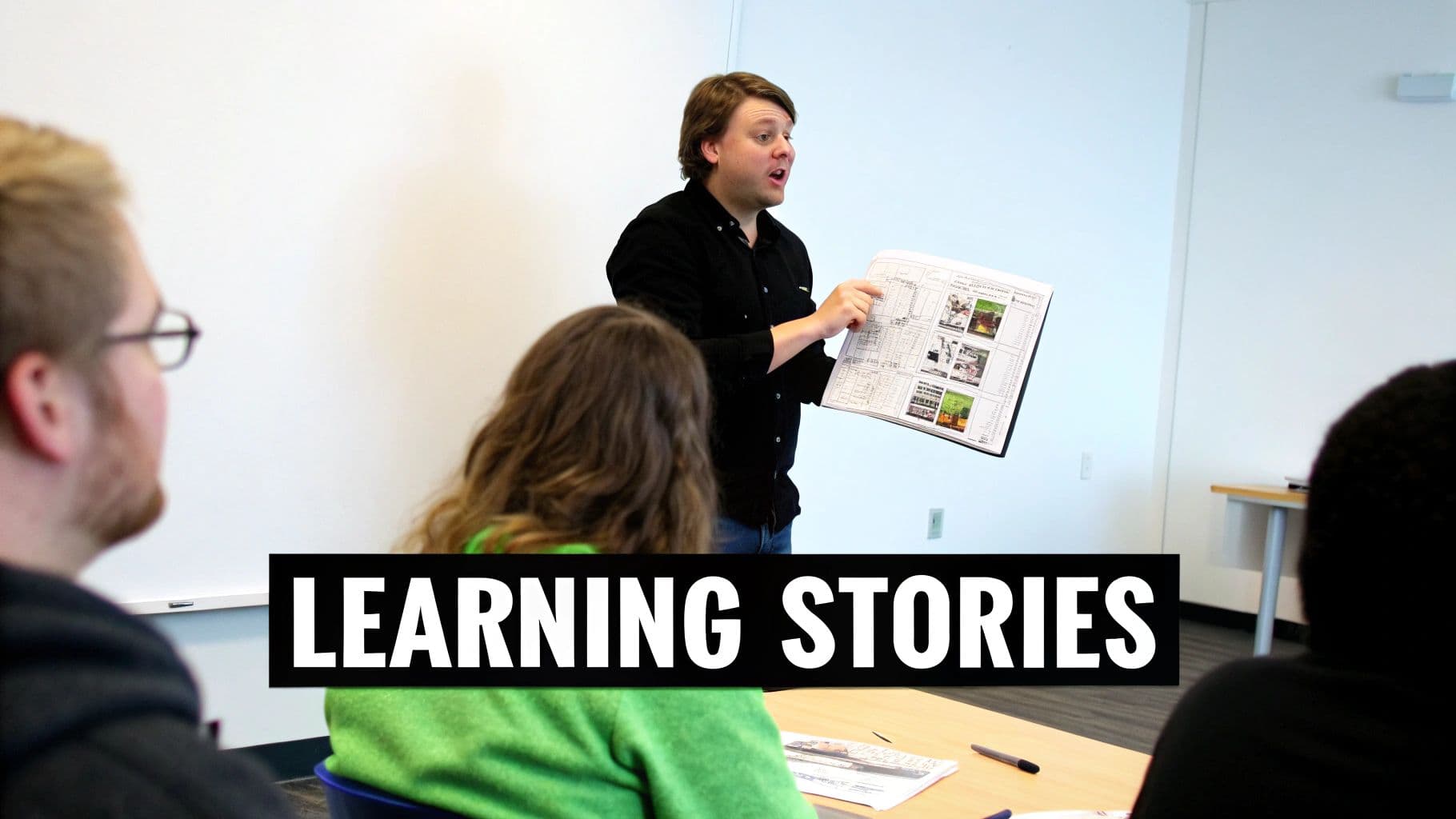
This practice is effective because stories provide context, illustrating not just what happened but why it mattered and how a decision was made. For instance, Southwest Airlines has long used employee stories to reinforce its customer-first culture, while Pixar uses narratives from past film productions to share crucial creative and technical lessons. These stories are far more impactful than a simple list of company values or a technical post-mortem report.
How to Implement Storytelling and Narrative-Based Learning
Integrating storytelling into your knowledge sharing best practices requires a systematic effort to find, shape, and share impactful narratives. The goal is to make stories a natural part of communication.
- Identify and Collect Stories: Actively seek out compelling narratives from all levels of the organization. Ask employees about their biggest challenges, successes, and even failures during one-on-ones, team meetings, or company-wide calls for submissions.
- Establish a Simple Structure: Encourage a consistent narrative framework, like the "Situation-Behavior-Impact" model or a simple "Challenge-Action-Result" format. This helps storytellers stay focused and makes the key lessons easy to understand.
- Create a Story Library: Capture these stories in various formats like written case studies, short video interviews, or audio clips. Organize them in a central, accessible repository (like an intranet page or knowledge base) tagged by themes such as "Innovation," "Customer Success," or "Problem Solving."
- Train and Empower Storytellers: Provide basic training or workshops on effective storytelling techniques. Acknowledge and reward employees who share valuable stories, encouraging a culture where everyone feels empowered to contribute their experiences.
6. Documentation and Best Practice Repositories
While organic knowledge sharing is vital, a structured approach through documentation and best practice repositories is equally critical. These centralized libraries systematically capture organizational expertise, standard operating procedures, and institutional wisdom. By creating a single source of truth, companies can standardize high-quality approaches, significantly reduce employee learning curves, and ensure that critical knowledge doesn't leave when an employee does.
This method ensures that valuable insights are explicit, searchable, and accessible to everyone. For example, AWS's legendary documentation library allows millions of developers to build complex applications by providing clear, reliable information. Similarly, Etsy's well-maintained Engineering Wiki serves as a central hub for their developers, codifying best practices and preventing repetitive problem-solving. These repositories transform tacit knowledge into a tangible, scalable asset that supports consistent performance across the organization.
How to Implement Documentation and Repositories
Building an effective repository requires a deliberate and user-centric approach. The goal is to create a living resource that people trust and use, not a digital graveyard of outdated documents.
- Create Structured Templates: Standardize documentation from the start with templates for different content types, such as project kickoffs, how-to guides, or troubleshooting articles. This ensures consistency and makes information easier to consume.
- Assign Clear Ownership: Every piece of documentation should have a designated owner or team responsible for keeping it accurate and up-to-date. Accountability prevents content from becoming stale. If you want to dive deeper, you can explore more about what is process documentation done right.
- Establish a Review Cadence: Schedule regular reviews (e.g., quarterly or bi-annually) to audit content for relevance and accuracy. An automated reminder system can help keep this process on track.
- Make It Discoverable: The best documentation is useless if no one can find it. Invest in a powerful search function and organize content with intuitive categories and tags. Ensure the repository is easily accessible from primary work platforms.
By prioritizing structured documentation, organizations build a resilient foundation for scaling operations and preserving one of their most valuable assets: collective knowledge.
7. Cross-Functional Collaboration and Projects
Structuring projects that intentionally bring together employees from different departments is a cornerstone of effective knowledge sharing best practices. Cross-functional collaboration dismantles organizational silos by design, creating a natural environment where diverse skills, perspectives, and tacit knowledge are shared in the pursuit of a common goal. Instead of knowledge being confined within a single team like marketing or engineering, it flows freely as individuals work together, solve problems, and innovate.
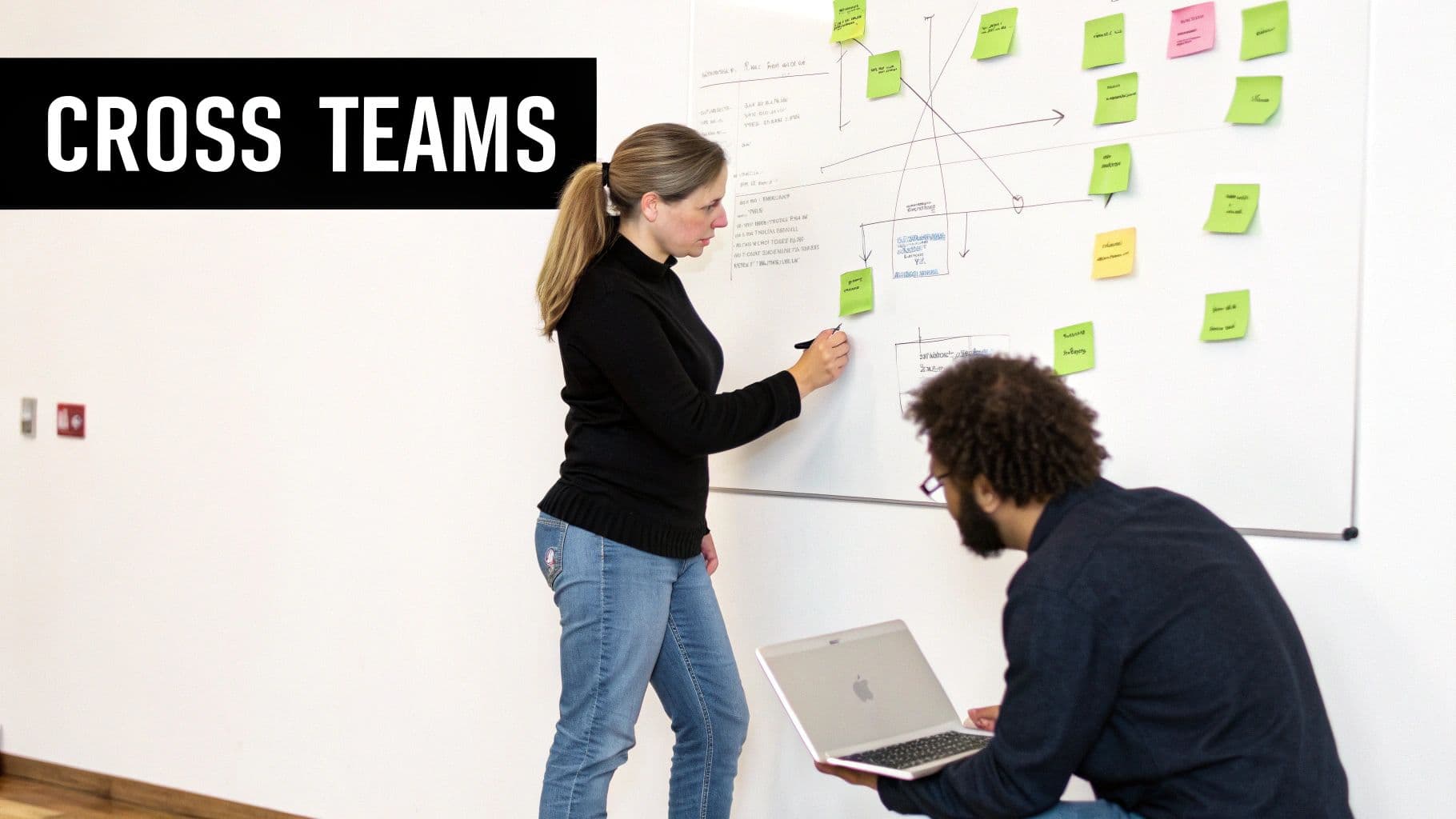
This approach is powerful because learning happens in the context of doing. Team members don't just hear about how another department works; they experience it firsthand. For instance, Amazon’s famous "two-pizza teams" are small, autonomous groups with all the skills needed to own a project from start to finish. This model forces engineers, marketers, and product managers to share knowledge continuously to succeed. Similarly, Spotify’s "squad" model empowers small, cross-functional teams to own specific features, fostering rapid learning and innovation. For more on this, you can learn about enhancing your business with cross-functional communication.
How to Implement Cross-Functional Collaboration
To make cross-functional projects a success, you need more than just putting people from different teams in the same virtual room. It requires intentional design and support.
- Form Teams with Purpose: Intentionally assemble teams with a diverse mix of skills and expertise relevant to the project goal. Ensure a balance of perspectives from different functions like product, design, engineering, and sales.
- Establish Clear, Shared Goals: Define what success looks like for the project and ensure every team member understands their role in achieving it. This shared objective becomes the unifying force that encourages collaboration over departmental loyalty.
- Promote Psychological Safety: Create an environment where team members feel safe to ask questions, challenge ideas, and share incomplete thoughts without fear of judgment. This is critical for unlocking honest dialogue and deep knowledge exchange.
- Conduct Post-Project Retrospectives: After a project concludes, hold a "lessons learned" session. Document what went well, what challenges arose, and what knowledge was gained. This captured insight becomes a valuable asset for future cross-functional initiatives.
8. Brown Bag Sessions and Lunch-and-Learn Programs
One of the most accessible knowledge sharing best practices is to implement brown bag sessions, also known as lunch-and-learns. These are informal, voluntary training or presentation sessions held during the lunch hour. Employees bring their own lunch (the "brown bag") and learn from a peer or expert on a specific topic. This format democratizes knowledge sharing by creating a low-pressure, inclusive environment where anyone can present or attend.
This method thrives because it fits neatly into the workday without adding to an employee's workload. It transforms a routine break into a valuable opportunity for professional development and cross-departmental connection. For example, Google’s famous "Tech Talks" series started as an informal way for engineers to share their work over lunch and has since become a cornerstone of its innovative culture. Similarly, many non-profits use these sessions to train staff on new fundraising software or communication strategies without needing a large training budget.
How to Implement Brown Bag Sessions
To launch a successful lunch-and-learn program, focus on consistency, accessibility, and value. The goal is to make it an easy and rewarding experience for both presenters and attendees.
- Establish a Consistent Schedule: Choose a recurring day and time, such as every other Wednesday at noon. A predictable schedule makes it easier for employees to plan ahead and attend regularly.
- Simplify Topic Submission and Registration: Create a simple online form or a dedicated channel where employees can suggest topics or volunteer to present. This empowers them to share their expertise and ensures content is relevant to their interests.
- Equip Your Speakers: Not everyone is a natural presenter. Offer speakers guidance and support. Providing them with tips for creating impactful and clear presentations can boost their confidence and the quality of the session.
- Record and Share Sessions: Maximize the value of each session by recording it. Post the recordings in a central knowledge base or company intranet so employees who couldn't attend live can still benefit from the shared information.
- Keep It Concise and Interactive: Limit sessions to 30-45 minutes to hold attention and respect employees' break time. Always leave at least 10-15 minutes at the end for a Q&A to encourage discussion and deeper learning.
By fostering these casual learning moments, organizations can build a more connected and knowledgeable workforce one lunch break at a time.
9. Reverse Mentoring and Peer Learning Networks
Traditional mentoring is a one-way street, but one of the most dynamic knowledge sharing best practices flips this model on its head. Reverse mentoring and peer learning networks create bidirectional learning relationships where expertise flows in all directions, regardless of hierarchy. This approach recognizes that everyone, from a new hire to a senior executive, holds valuable, specialized knowledge that can benefit the entire organization.
This practice is incredibly effective for bridging generational and skill gaps. For instance, Procter & Gamble famously paired senior executives with digitally native junior employees to help leaders grasp emerging social media trends. Similarly, companies like Cisco use these networks to transfer critical technology skills, ensuring the workforce stays current. The core benefit is mutual growth; the senior leader gains new skills while the junior employee develops leadership acumen and organizational visibility.
How to Implement Reverse Mentoring and Peer Learning
To build a successful program, focus on creating a supportive framework that encourages open, two-way communication and mutual respect.
- Create a Clear Framework: Define the program's purpose, whether it's closing digital skill gaps, fostering cross-departmental understanding, or promoting inclusive leadership. Outline the time commitment and expected outcomes.
- Match Participants Thoughtfully: Pair individuals based on complementary skills and goals, not just seniority. A marketing veteran could mentor a data scientist on customer personas, while the data scientist teaches the marketer about predictive analytics.
- Establish Mutual Goals: Before the first meeting, have pairs co-create a simple charter outlining what they want to achieve. This ensures both participants are invested and the relationship has a clear direction.
- Provide Light-Touch Training: Offer brief training to both mentors and mentees on how to give constructive feedback, set expectations, and navigate potential hierarchical awkwardness. Emphasize that it is a partnership of equals.