We've all been there. Trapped in a meeting that drones on and on, with no clear purpose and even less of an outcome. It's a universal pain point in the professional world, leaving teams feeling drained and behind on their actual work. The answer isn't to stop meeting, but to start having better meetings. And that all starts with setting some simple ground rules.
Why Your Meetings Are Failing (And How to Fix Them)
Let's be real: a meeting without a plan isn't a meeting. It's just a conversation that hijacks everyone's productivity. The cost is staggering. Unproductive meetings bleed an estimated $37 billion annually from businesses in the United States alone. It’s no wonder that a whopping 71% of employees feel that most of the meetings they attend are a waste of time.
The culprits are almost always the same. There's no agenda, the conversation wanders off into the weeds, and everyone leaves without a clue about what to do next. This doesn't just waste money; it tanks morale and builds a culture where people dread collaborating.
The infographic below nails down the usual suspects behind a failed meeting.
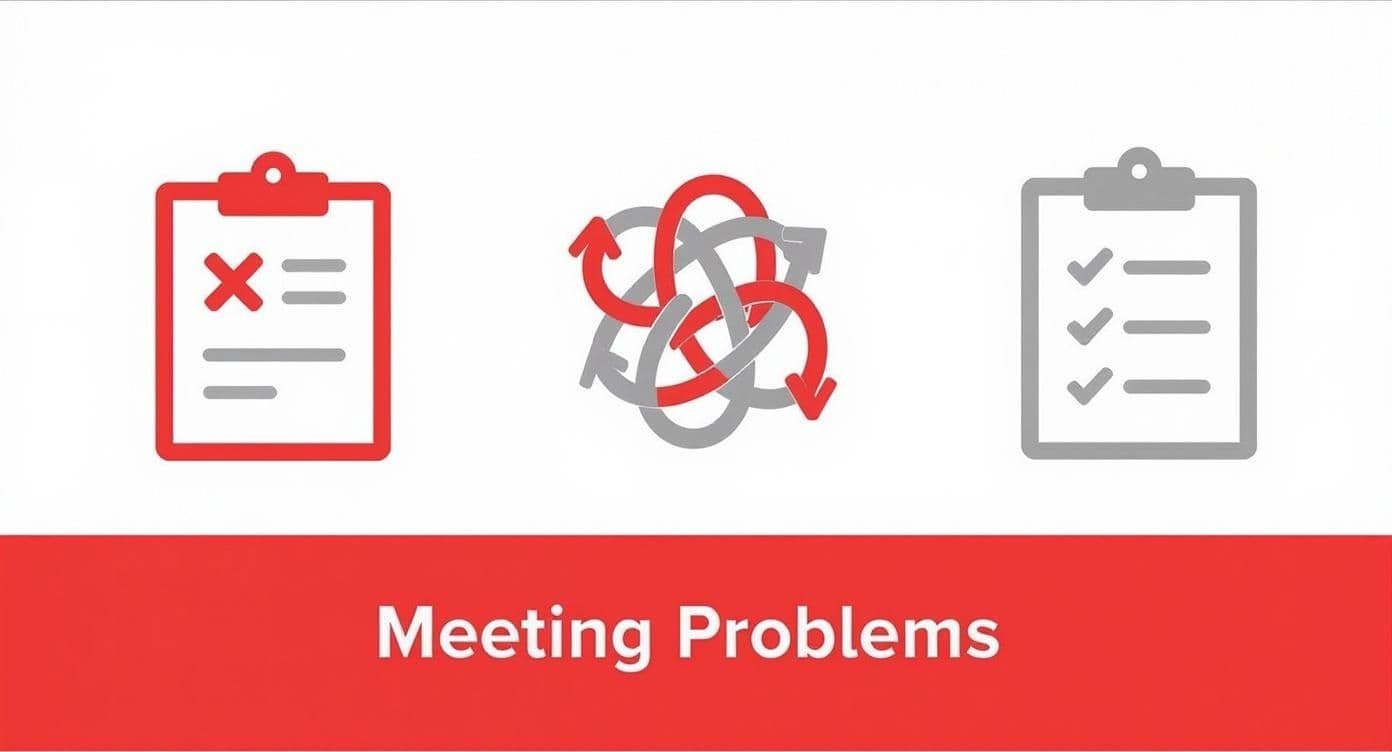
Think about it—no agenda, off-topic rants, and no clear takeaways are all symptoms of a bigger problem. It's a problem that a solid set of ground rules can easily fix.
From Chaos to Clarity
The first step is to stop thinking of ground rules as rigid policies. Instead, see them for what they are: a shared agreement to respect each other's time and contribution. They create the framework that turns a chaotic free-for-all into a focused session where actual decisions get made.
When you have this framework, everyone knows what to expect. People show up prepared, add value to the conversation, and leave with a clear understanding of the next steps. To dive deeper, check out our guide on how to run effective team meetings that drive results.
The Impact of Meeting Ground Rules
See the transformation when a team moves from unstructured discussions to meetings guided by clear, agreed-upon rules.
| A Typical Meeting Without Rules | A Focused Meeting With Ground Rules |
|---|---|
| Starts late, with people trickling in. | Begins and ends on time, respecting everyone's schedule. |
| No clear agenda; the purpose is vague. | Agenda is shared in advance; goals are crystal clear. |
| One or two people dominate the conversation. | Everyone is encouraged to contribute their ideas. |
| Discussions go off on tangents, wasting valuable time. | Facilitator keeps the conversation focused and on-topic. |
| Decisions are unclear or postponed to another meeting. | Clear decisions are made and documented. |
| No follow-up; action items are forgotten. | Action items are assigned with owners and deadlines. |
| Team members leave feeling frustrated and drained. | The team leaves feeling accomplished and aligned. |
The difference is night and day. This shift toward structure is especially important for remote and hybrid teams.
For teams running on platforms like Microsoft Teams, even small tweaks can yield big results. For example, using tools discussed in a complete guide to Microsoft Teams transcription can instantly solve the problem of poor documentation and follow-up.
At the end of the day, the goal is to create a predictable, respectful, and genuinely productive space for your team to do its best work together.
Establishing Your Core Meeting Ground Rules

Alright, this is where we build the foundation for meetings that don't suck. The idea isn't to create a massive rulebook that no one reads. Instead, we want a handful of powerful ground rules that make a real difference.
A great place to start is with the agenda. Forget just listing topics; every single agenda needs to be objective-driven.
This means clarifying the why behind every item. Are we making a decision? Brainstorming new ideas? Just sharing a quick update? When everyone walks in knowing the goal, the entire dynamic of the meeting shifts for the better. If you need some inspiration, check out these powerful meeting agenda template examples for 2025.
Crafting Your Essential Rules
When you're writing down your rules, be specific. A vague guideline like "be respectful" is nice, but it's hard to enforce. What does it actually mean in practice?
Think about the most common frustrations your team has in meetings and build rules that tackle those head-on.
For example, a rule like ‘Laptops Down, Focus Up’ can be a game-changer for in-person meetings where multitasking is a problem. If you're running virtual or hybrid calls, a ‘One Conversation’ rule is a must to stop people from talking over each other or having sidebar conversations in the chat. The goal is to create rules that feel right for your team.
Actionable Examples for Your Toolkit
Here are a few practical ground rules you can steal or adapt. Pick and choose what will solve your team’s biggest meeting headaches.
- Start on Time, End on Time: This is non-negotiable. It respects everyone's schedule and quickly builds a culture of punctuality and efficiency.
- Agendas and Prep Materials Sent 24 Hours in Advance: No more ambushing people with big topics. This gives everyone a chance to read up, think, and come prepared to contribute meaningfully.
- Agree and Commit: Once the group makes a decision, everyone gets behind it, even if it wasn't their top choice. This simple rule stops decisions from being reopened and debated again a week later.
This stuff matters more than you think. Did you know a staggering 90% of employees admit to multitasking during meetings? And it gets worse: only 37% of meetings actually use an agenda. By setting just a few clear expectations, you can rescue your team from becoming another statistic and start having meetings that actually move work forward.
How to Introduce and Uphold Your New Rules

So, you’ve got a great list of rules. Now for the hard part: getting everyone to actually use them. The secret here is to avoid dropping these rules on your team like a mandate from on high. That's a recipe for resistance.
Instead, frame the whole thing as a team effort. You’re not laying down the law; you're solving a shared problem together. Think about it—everyone hates meeting fatigue.
Start a conversation about it. A simple question like, "What's the one thing that drives you crazy about our current meetings?" can open the floodgates. You'll hear about tangents, people showing up unprepared, or that one person who dominates every discussion. This is your opening to build the solution as a team.
Getting Everyone on Board
When people have a hand in creating the rules, they feel a sense of ownership. It's a simple psychological truth. Come to the table with a few starting points, but let the group debate, tweak, and finalize them.
Suddenly, they’re not "your rules"—they become "our rules." That small shift makes all the difference in accountability.
Once you have your final list, keep it short and sweet. Stick it at the top of every meeting invite or in a shared team space. A quick, visible reminder is often all it takes to keep the train on the tracks.
Practical Ways to Keep the Rules Alive
Enforcing the rules shouldn't feel like you're scolding a child. It’s all about gentle nudges and consistent reminders that reinforce your team's commitment.
One of the best ways I've seen this done is by assigning a rotating facilitator for each meeting. This isn't about being a drill sergeant; it's about being a helpful guide.
Here are a few phrases the facilitator can use to keep things moving smoothly:
- The Parking Lot: When a fantastic but off-topic idea pops up, try saying, "That's a great point. Let's stick it in the parking lot to tackle later so we don't lose focus." This validates the idea without derailing the agenda.
- Gentle Redirection: If one person is monopolizing the airtime, the facilitator can jump in with, "Thanks, John, great perspective. I'd love to open it up and hear what others are thinking."
- Time Checks: A simple, "Just a heads-up, we have 10 minutes left and two more topics to get through," is a powerful way to keep everyone conscious of the clock.
This way, keeping the meeting on track becomes a shared responsibility, not one person's policing duty.
Adapting Your Rules for Different Meeting Types
Let's be honest: not all meetings are created equal. The ground rules that keep a quarterly budget review on track would absolutely crush the creative chaos needed for a good brainstorming session. The secret to consistently successful meetings is knowing how to adapt your rules to fit the purpose.
Think of it this way: your guidelines should be a helpful framework, not a restrictive cage. Before the meeting starts, ask yourself what the end goal is. Are you trying to land on a final decision? Generate a list of brand-new ideas? Or just get a quick status update? The answer to that question will tell you which rules to lean on.
Rules for Virtual and Hybrid Meetings
Since 2020, we've seen a fascinating shift. The average meeting length has dropped by about 20%, but the number of meetings has exploded—we're now holding an estimated 55 million of them every week in the U.S. alone. This flood of virtual get-togethers needs its own rulebook to fight off Zoom fatigue and keep people from zoning out.
When everyone is remote, clarity is king. Here are a few non-negotiable protocols I’ve found work wonders:
- Cameras on, please. It creates a real sense of presence and helps everyone feel more connected. Plus, it's way easier to read the room when you can see people's faces.
- Use the chat for questions and links. This is a brilliant way to avoid constant interruptions. It lets the speaker keep their flow while making sure every thought gets captured for later.
- Become a master of the mute button. Such a simple rule, but so powerful. It cuts out distracting background noise and keeps the focus where it needs to be.
If you're planning online collaboration, you might be organizing virtual team building activities, which need a more relaxed but still structured set of rules. For a complete rundown, take a look at our guide on the best practices for virtual meetings.
Tailoring Rules for Specific Outcomes
Different goals demand different guardrails. You wouldn't use the same approach to explore a new jungle as you would to defend a castle, right? Your meeting rules need that same kind of strategic thinking.
Take a brainstorming session. The entire point is to encourage wild ideas and out-of-the-box thinking. Your rules should fuel that creativity:
- No judgment allowed. Seriously. In the first round, there's no such thing as a "bad idea."
- Build on what others say. Encourage that "Yes, and..." mindset to expand on concepts instead of shutting them down.
- Aim for quantity over quality. The initial goal is to get a massive list of possibilities, not to find the perfect one right away.
On the flip side, a decision-making meeting needs to be all about focus and resolution. The rules here have to be much tighter:
- Debate, then commit. Have the healthy arguments, but once a decision is made, everyone gets behind it. No exceptions.
- Bring data, not just opinions. Ask people to back up their points with actual evidence. It moves the conversation forward much faster.
- End with clear next steps. No one should leave the room (or call) wondering what happens next. Define the action items, who owns them, and when they're due.
The Future of Meetings and Why Rules Still Matter

The way we meet is definitely changing. We're seeing some incredible new tools emerge, like AI assistants that can automatically whip up an agenda or summarize everything that was said. Some teams are even gathering in virtual reality spaces.
These technologies are fantastic for taking the tedious, administrative work off our plates. This should, in theory, free us up to focus on what humans do best: thinking critically, solving complex problems, and actually connecting with each other. But here’s the thing—no amount of fancy tech can fix a fundamentally broken meeting.
Human Rules in a Tech-Driven World
At the end of the day, technology is just a tool. It's a facilitator, not a substitute for good old-fashioned discipline and respect. The smartest AI on the planet can't stop a team member from going off on a tangent, and a VR headset won't magically make someone come prepared.
This is precisely why having solid ground rules for meetings is more important than ever. In fact, by 2026, predictions show that fundamentals like tight agendas, clear roles, and smart time management will be the key to making meetings productive on a global scale. You can dig into more meeting statistics at archieapp.co if you're curious.
No matter how advanced our tools become, the foundation of great collaboration will always be a shared agreement to respect everyone's time and attention.
Got Questions About Meeting Rules? We’ve Got Answers.
Even with the best intentions, actually rolling out new ground rules for your meetings can feel a little awkward. Let's walk through a few common hurdles that teams often face when they're trying to build better meeting habits.
How Can I Introduce These Rules Without Coming Off as a Dictator?
This is all about framing. Instead of issuing a new set of commands, present it as a collaborative fix for a problem everyone hates: draining, unproductive meetings.
Kick things off by asking a simple question: "What drives you crazy about our current meetings?" Once you have a shared list of frustrations, you can pivot to, "Okay, how about we create a few simple guidelines together to fix this?"
When the team builds the rules together, they own them. It’s no longer your mandate; it’s our agreement. That sense of shared ownership is everything.
What if a Senior Leader Breaks One of the Rules?
Ah, the classic scenario. This is a moment that can make or break your new system. The key is to have a designated facilitator for each meeting—and this role should rotate among team members. The facilitator's job is to keep everyone on track, regardless of their job title.
This approach acknowledges the value of their input without letting the meeting get derailed. It subtly reinforces that the rules apply to everyone, which is crucial for building a culture of mutual respect.
How Many Rules Are Too Many?
Less is definitely more here. Start with just 3 to 5 core rules that target your team's biggest pain points. A short, memorable list is far more powerful than a comprehensive document that no one can remember. You can always add or adjust the rules later as the team gets the hang of things.
Of course, having the right tools to back up your new meeting habits can make a huge difference. Summarize Meeting has a fantastic guide on AI summarization tools, comparing popular options like Fireflies.ai and Otter.ai to help you find the right fit for your team's workflow. You can check out their comparisons and find your perfect tool at https://summarizemeeting.com.