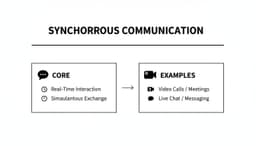
At its most basic level, organizational communication is the lifeblood of a company. It’s how information, ideas, and even company values move between people—both inside and outside the business—to get things done.
Think of it as the central nervous system connecting every department, team member, and leader into a single, functioning whole.
The True Meaning of Organizational Communication
When we talk about organizational communication, it’s easy to think of just the obvious stuff: emails, meetings, and company newsletters. But it’s so much more than that. It’s the entire web of interactions that shapes your company culture, drives efficiency, and ultimately determines your success.
Every single memo, Slack message, project update, and water-cooler chat is part of this larger flow.
Picture a sports team where the players can’t communicate. The quarterback doesn't know the receiver’s route, and the defense is clueless about the play. The result? Chaos and a guaranteed loss. A business is exactly the same. Without clear and consistent communication, teams fall out of sync, projects grind to a halt, and morale takes a nosedive.
More Than Just Memos and Meetings
Organizational communication is the glue holding your entire operation together. It’s what ensures a new marketing campaign actually aligns with the sales team’s targets. It’s how feedback from a frustrated customer makes its way back to the product team so they can fix the problem.
Most importantly, it’s how a leader’s vision gets translated into real, actionable tasks for every employee on the ground.
This isn't just a "culture" problem; it has a real financial cost. Senior employees can lose up to 63 workdays annually due to communication bottlenecks, costing companies an incredible $54,860 per high-earning employee. Leaders feel this pain, too, with 41% reporting higher turnover as a direct result of these communication failures. You can find more of these insights in the 2025 Employee Communication Impact Study on Staffbase.
To really grasp its importance, let's break down the core components.
Core Components Of Organizational Communication
Here's a quick look at the fundamental elements that make up organizational communication. Think of these as the building blocks for every interaction within your company.
| Component | Simple Description | Example |
|---|---|---|
| Sender | The person or group starting the communication. | A manager sending an email about a new project deadline. |
| Message | The actual information, idea, or feeling being shared. | The content of the email, including project details and the new date. |
| Channel | The medium used to send the message. | Email, a Slack message, a face-to-face meeting, or a phone call. |
| Receiver | The person or group who the message is for. | The team members who need to be aware of the new deadline. |
| Feedback | The receiver's response, which tells the sender if the message was understood. | A team member replying, "Got it, thanks for the update!" |
Understanding these pieces helps you see how even a simple email is part of a larger, more complex system.
Ultimately, effective organizational communication is what determines:
- Clarity: Does everyone truly understand their role and what the company is trying to achieve?
- Collaboration: Can teams work together seamlessly, or is there constant friction and confusion?
- Culture: Does the work environment feel transparent, trusting, and supportive?
- Efficiency: Are people able to get work done, or are they constantly bogged down by crossed wires?
Getting this right isn’t just an HR initiative—it’s a strategic priority for any business that wants to grow and thrive.
The Four Key Flows Of Workplace Communication
Information doesn't just appear out of thin air in a company. It moves in predictable patterns, almost like currents in an ocean. If you want to get a real handle on organizational communication, you first have to understand these flows. Each one serves a different purpose, whether it's sharing a new company vision or just getting a project done.
When you start to map out these flows, you can see how the message itself, the way it's delivered, and its final impact are all tied together.
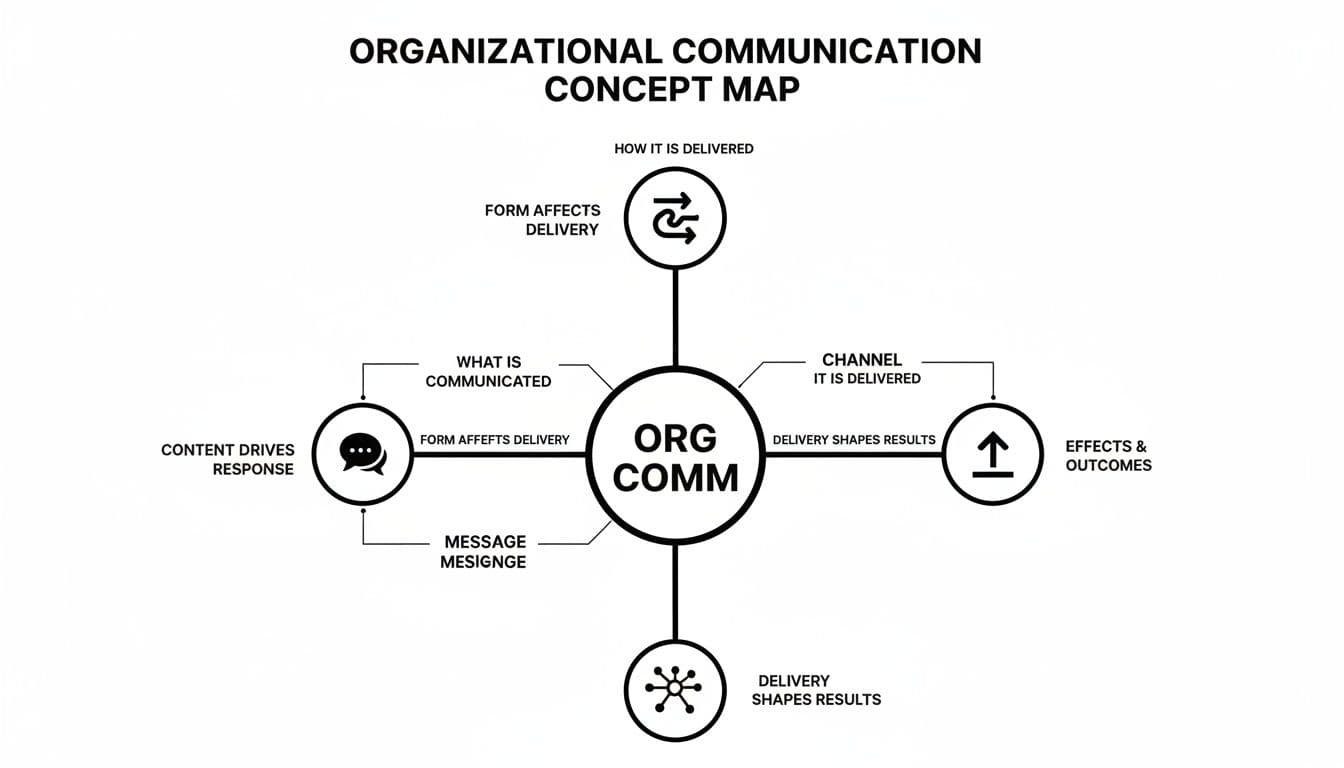
This map drives home a key point: every message has a reason, a path it travels, and an effect on the organization. Let's break down the four main directions this communication takes.
Downward Communication
Downward communication is exactly what it sounds like—information flowing from the top of the organization down to the team members. It’s the main way leaders share strategies, goals, and day-to-day instructions. A perfect example is a CEO sending a company-wide email about quarterly results or a manager laying out the tasks for a new project.
This top-down approach is all about creating clarity and direction. Its job is to inform, instruct, and delegate. Without it, people are just guessing, unsure of what the company is trying to achieve or how their work fits into the bigger picture.
Upward Communication
On the flip side, upward communication travels from employees back up to management. This flow is absolutely critical for leaders who need to know what’s really happening on the ground level. Think of a developer giving a project status update, an employee filling out an anonymous feedback survey, or a team presenting its research to a director.
Good upward communication builds trust and gives leaders the honest, unfiltered information they need to make smart decisions. It’s the organization’s feedback loop.
Horizontal Communication
Horizontal communication, sometimes called lateral communication, happens between peers at the same organizational level. This is where the bulk of daily collaboration lives.
Picture two marketing managers syncing up on a campaign or engineers from different teams troubleshooting a bug together. This flow is the lifeblood of coordination, problem-solving, and breaking down the "us vs. them" mentality between departments. It builds relationships and helps things move faster because people can work directly with each other instead of going up and down the chain of command.
Informal Communication
Finally, you have informal communication, which everyone knows as the "grapevine." This is the web of casual conversations happening in Slack DMs, over coffee, or in quick hallway chats. It might not be official, but it’s an incredibly powerful force that shapes company culture and morale.
Together, these four flows create a living, breathing communication network. While modern tools like Slack have definitely blurred the lines and made communication feel more fluid, understanding these core directions is more important than ever. For a closer look, you can explore how to build a solid plan with these 10 actionable internal communication strategy examples for 2026. Being deliberate about how information moves is the key to keeping everyone on the same page, especially when teams are spread out in remote and hybrid environments.
Why Effective Communication Is a Competitive Advantage
Let’s be clear: strong organizational communication isn't just a "nice-to-have" soft skill. It’s a hard-hitting business driver that directly impacts your bottom line. Think of it less like company culture flair and more like a high-performance engine. When it's finely tuned, your entire organization moves faster, smarter, and with far less friction. This is where communication transforms from a simple function into a powerful competitive advantage.
When messages are clear and information flows freely, you start to see tangible benefits almost immediately. Teams stop wasting time duplicating work or fixing mistakes born from simple misunderstandings. Employees feel more connected to the company's mission, which ignites their motivation and sense of ownership.
This connection isn't just a feeling; it translates into powerful business outcomes. For instance, the clarity of communication from C-level executives leading multinational companies can directly influence strategic alignment and market perception across the globe.
Boosting Engagement and Productivity
One of the biggest wins from great communication is a massive jump in employee engagement. When people understand the "why" behind their work and feel their voices are actually heard, they become far more invested. This isn't just about making people happy; it’s about unlocking their full potential.
Highly engaged teams are more innovative, resilient, and productive. They solve problems proactively instead of waiting for direction, and they're more likely to go the extra mile because they genuinely believe in what they're doing. This creates a positive feedback loop where success just fuels more engagement.
Reducing Costly Turnover
Employee turnover is one of the biggest hidden costs in any business. The time and money poured into recruiting, hiring, and training new staff can be absolutely enormous. A primary driver for why great employees leave is a feeling of being disconnected, uninformed, or undervalued—all classic symptoms of poor communication.
Transparent and consistent communication builds trust, which is the bedrock of employee loyalty. When leaders are open about challenges and celebrate successes, they create an environment of psychological safety. This makes people feel secure and respected, giving them a compelling reason to stay and grow with the company.
Preventing Mistakes and Driving Innovation
Clear communication is also your best defense against costly errors. Just think about a product launch where the marketing and engineering teams aren't aligned. Marketing might promise a feature that engineering hasn't even started, leading to customer disappointment and wasted resources. Strong horizontal communication demolishes these silos. To learn more, check out our guide on how to run effective meetings to keep teams aligned.
Ultimately, putting resources into better organizational communication isn't an expense; it's a strategic investment in efficiency, stability, and growth. It allows your organization to become more agile and innovative, turning clear messaging into a measurable and sustainable advantage in the marketplace.
Common Communication Barriers and How to Fix Them
Even with the best intentions, communication can go sideways. Messages get lost, wires get crossed, or important updates are flat-out ignored. The result? Frustration, stalled projects, and a team that feels completely out of the loop.
Spotting these roadblocks is the first step to clearing the path.

These breakdowns rarely come down to one person or a single bad email. More often, they're symptoms of a bigger problem—unclear processes, using the wrong tools for the job, or a culture where people are afraid to speak up.
Overcoming Information Overload
We’re all drowning in a sea of emails, pings, and notifications. This constant digital noise makes it nearly impossible to tell what’s actually important versus what's just... noise. When everything is flagged as urgent, nothing is.
A surprisingly effective fix is creating a communication charter. Think of it as a simple rulebook that establishes which tool to use for what.
- Email: For formal announcements, detailed project briefs, or talking to anyone outside the company.
- Instant Messaging (Slack/Teams): Perfect for quick questions, real-time brainstorming, and casual team chatter.
- Project Management Tools (Asana/Jira): The go-to place for who's doing what, by when. It's the official record for tasks and deadlines.
By setting these ground rules, you hand your team a map to cut through the clutter. Important messages actually get the attention they deserve.
Breaking Down Hierarchical Silos
In a classic top-down company, information often struggles to flow uphill. Front-line employees might be hesitant to share honest feedback or flag a problem, worried it could backfire on them. This silence is risky because it leaves leaders with a massive blind spot about what's really happening.
Leaders set the tone here. You have to actively ask for feedback, thank people for their honesty (especially with bad news), and listen without getting defensive. When people feel safe enough to be candid, they become your best source of innovation and early warnings. Communication stops being a one-way broadcast and starts becoming a real conversation.
How AI and Technology Are Reshaping Communication
Technology isn't just a simple tool for sending messages anymore; it's become an active partner in how we communicate at work. While platforms like Slack and Asana are the go-to for daily collaboration, a new wave of artificial intelligence is changing the game entirely. It’s turning communication from a headache to manage into a real strategic advantage.
This shift tackles a massive, and frankly, expensive problem. Poor communication and misalignment cost U.S. companies an astonishing 1.2 trillion** every year. For just one large company, that can add up to over **12 million annually. The pain is real, with 1 in 5 leaders admitting they’ve lost business because of communication breakdowns. Discover more insights about these workplace communication statistics on Chanty.com. This is exactly the kind of costly friction that modern technology is built to solve.
The Rise of AI in Communication Workflows
Artificial intelligence is stepping in to fix some of the most stubborn communication bottlenecks we all face. One of the most powerful applications is making our endless stream of meetings more productive and accessible. Instead of relying on manual notes—which are often incomplete or forgotten—AI-powered tools can create a perfect record of every conversation.
Think about a global team spread across different time zones. It's impossible for everyone to make every meeting, which often leaves people feeling out of the loop on important decisions. This is where AI-driven meeting summarizers really shine.
This isn’t just about convenience; it’s a powerful step toward inclusion and alignment. A team member in another country can wake up, read a quick summary of a meeting that happened overnight, and instantly know what was decided and what they need to do next. Nothing gets lost in translation or falls through the cracks. You can see how this all works by exploring our guide to conversation intelligence.
From Simple Tools to Strategic Assets
The impact of this technology goes way beyond just catching up on a missed call. It fundamentally changes how knowledge is shared and held onto inside a company.
Here’s a look at how old methods stack up against new, smarter solutions for common workplace headaches.
Modern Communication Tools and Their Impact
| Challenge | Traditional Approach | AI-Powered Solution (e.g., Meeting Summarizers) |
|---|---|---|
| Information Silos | Relying on attendees to share notes, which are often incomplete or biased. Information gets trapped with a few people. | Creates a central, searchable transcript and summary accessible to everyone, breaking down knowledge barriers. |
| Meeting Overload | Attending back-to-back meetings, often "just in case" something important is mentioned, leading to burnout. | Allows team members to skip non-critical meetings and catch up with a concise AI summary in minutes, freeing up their calendars. |
| Lack of Accountability | Action items are discussed but not formally documented, leading to confusion about who owns what and when it's due. | Automatically identifies and assigns action items to specific individuals, creating a clear record of responsibilities. |
| Onboarding Delays | New hires slowly get up to speed through one-on-one meetings and by reading dense documentation. | Provides instant access to a library of past project meetings, allowing new hires to learn context and history quickly. |
| Knowledge Loss | When an experienced employee leaves, their valuable insights and decision-making context are lost forever. | Preserves conversational data from meetings as a permanent, searchable company asset, protecting institutional knowledge. |
As you can see, AI-powered tools do more than just manage communication—they enhance it, making teams smarter and more aligned.
By automating the tedious work of capturing and organizing information, AI frees up teams to focus on what humans do best: creative problem-solving, big-picture thinking, and building stronger relationships. This shifts technology from being a simple messenger to a true partner in building a better-communicating organization.
Frequently Asked Questions
Even when you understand the theory behind organizational communication, putting it into practice brings up a lot of real-world questions. Here are some straightforward answers to the things leaders and teams ask most often.
What’s the Most Important Type of Organizational Communication?
If you have to pick just one, it's internal communication. Think of it as the foundation of your entire company. If your own team isn't on the same page, engaged, and well-informed, trying to send a clear message to customers or partners is going to be a real struggle.
Good internal communication—both from leaders to their teams (vertical) and between colleagues (horizontal)—is what builds the trust and clarity you need for everything else to work. Without it, the whole structure is shaky.
How Can Small Businesses Improve Communication?
For small businesses, the key is to keep it simple and consistent. You don't need a massive, complicated system to see huge improvements. A few smart habits can make all the difference.
- Run Better Meetings: Hold regular team huddles that have a clear agenda and a purpose. No more meetings about meetings.
- Pick One Main Tool: Choose a central place for conversations, like Slack or Microsoft Teams. This stops important info from getting lost across emails, texts, and random DMs.
- Build a “Source of Truth”: Use a shared space like Google Drive or Notion to keep essential documents, how-to guides, and company info organized and accessible.
- Make Feedback Normal: Create a culture where people feel safe speaking up. An "open-door" policy only works if people feel genuinely comfortable walking through it.
How Does Communication Affect Remote Teams?
For remote teams, you can’t just let communication happen. It has to be intentional. You lose all the small, in-person cues—body language, a quick chat by the coffee machine—so misunderstandings can pop up out of nowhere.