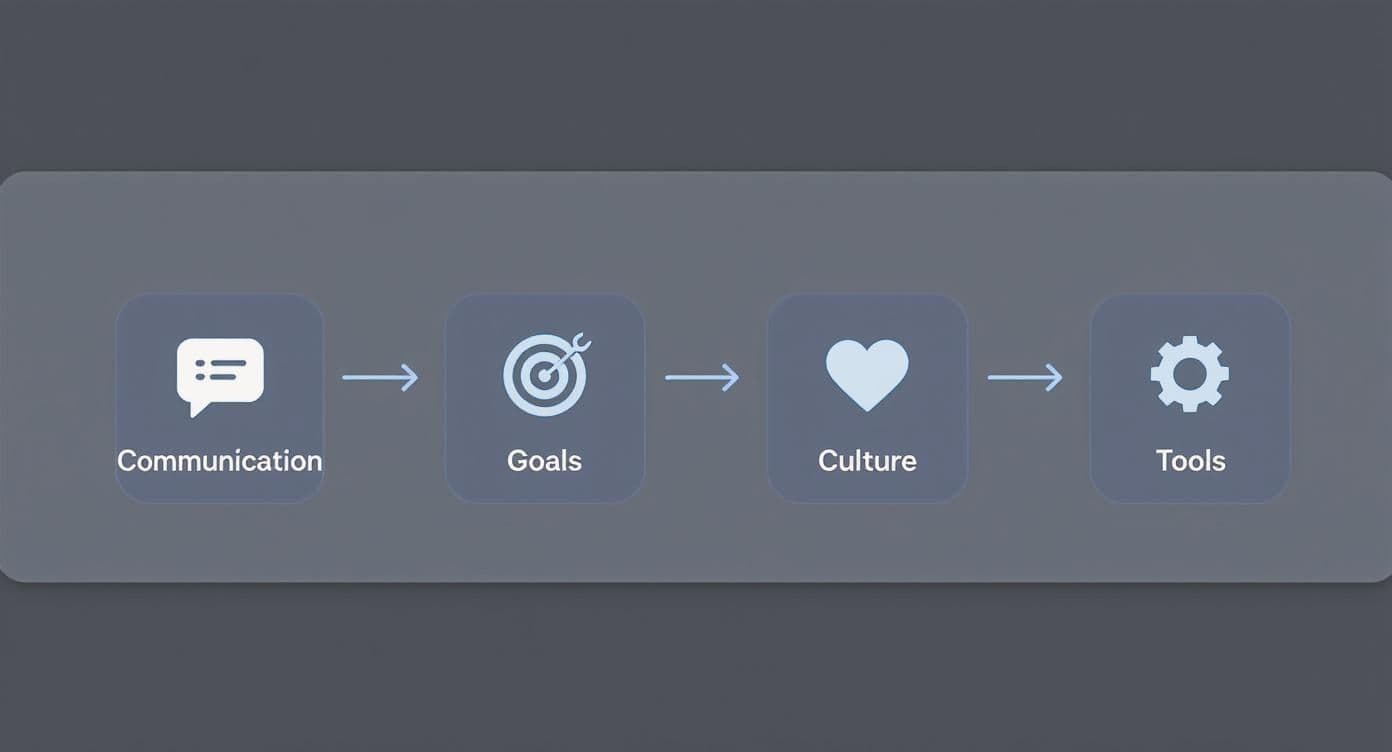
Leading a remote team that truly clicks all comes down to getting four things right.You need to nail your communication rhythms, set crystal-clear goals, intentionally build a culture of trust, and pick the right tools for the job. Get these fundamentals in place, and you'll have a solid roadmap for leading your team with confidence, no matter where they are.
The Foundations of Remote Team Management
Let's face it, remote work isn't just a phase—it’s how modern business gets done. The stats back this up in a big way. By 2025, it's expected that 48% of employees around the globe will be working remotely at least some of the time. That’s a huge leap from just 20% back in 2020. This shift means that knowing how to lead a remote team well isn't a nice-to-have skill anymore; it's absolutely essential for any manager. If you're curious about the data behind this massive change, you can dive into more detailed remote work statistics.
You can't just stumble into building a high-performing remote team. It takes a thoughtful, deliberate approach. Without the casual check-ins and shared coffee breaks of an office, you have to be much more intentional about creating an environment where people feel connected, accountable, and clear on what they need to do. This isn't about just moving your old office habits online; it's about designing a whole new operating system built for a team that's spread out.
The Four Pillars of Remote Leadership
To keep things simple, I've always found it helpful to break down remote leadership into four core pillars. Think of these as the support beams holding up your virtual workspace. If you get these right, you create a sturdy framework that helps your team stay productive, engaged, and successful for the long haul.
- Communication Architecture: This is your game plan for how your team talks. It's about deciding when to jump on a quick call (synchronous) versus when to post an update that people can read on their own time (asynchronous). A good plan respects everyone's focus time and works across different time zones.
- Outcome-Driven Goals: When you can't see people at their desks, you have to stop managing by attendance and start managing by results. This means setting incredibly clear goals—frameworks like OKRs (Objectives and Key Results) are perfect for this—so everyone knows exactly what winning looks like.
- Intentional Culture Building: Culture doesn't just happen in a remote setting. You have to actively build it. This means planning virtual get-togethers, creating channels for non-work chat, and consistently recognizing great work. It’s all about creating trust and making people feel safe to be themselves.
- Strategic Tooling: The right tech stack can be a remote team's best friend—or its worst enemy. This is about choosing and integrating the right tools for communication, project management, and collaboration to make work smoother, not more complicated.
Focus on mastering these four areas, and you'll be well on your way to building a powerhouse remote team.
To help you put these ideas into practice, here's a quick summary of the core principles. Think of this table as your cheat sheet for remote leadership.
Core Pillars of Remote Team Leadership
| Pillar | Focus Area | Key Action |
|---|---|---|
| Communication Architecture | Clarity and Rhythm | Define specific channels for specific topics (e.g., Slack for urgent, email for formal) and establish a clear meeting cadence. |
| Outcome-Driven Goals | Alignment and Accountability | Implement a goal-setting framework like OKRs to connect individual contributions to company objectives. |
| Intentional Culture | Trust and Connection | Schedule regular virtual social events, create non-work communication channels, and build a strong recognition program. |
| Strategic Tooling | Efficiency and Integration | Select a core set of tools for project management (like Asana) and communication, ensuring they work well together. |
By consistently reinforcing these pillars, you create a management system that not only works but thrives in a remote environment. It's about providing the structure that empowers your team to do their best work, from anywhere.
Master Communication in Distributed Teams
When you manage a remote team, you can't rely on office walk-bys or breakroom chats to keep everyone in sync. Great communication doesn't just happen; you have to design it. The real goal isn't just more communication, but a smarter, more intentional system that keeps the team connected without burning them out.
It all comes down to finding the right balance between synchronous communication (like real-time video calls and instant messages) and asynchronous communication (think emails, project comments, or recorded video updates). One is perfect for brainstorming and quick decisions, while the other gives people the space for deep, focused work, especially when you’re juggling different time zones.
Crafting a Communication Playbook
One of the fastest ways to create chaos is to treat every communication channel as an emergency hotline. When your team feels like they need to be everywhere at once, focus plummets. The solution is to build a simple "playbook" that clearly defines the purpose of each tool you use.
This kind of clarity empowers your team by answering a few basic but critical questions:
- Urgent issue that needs eyes on it now? Send a direct message in Slack or Teams.
- Routine project update or a question that isn't time-sensitive? Post it in the relevant channel in Asana or Jira.
- Formal company announcement or talking to someone outside the team? Email is your best bet.
- Working through a complex problem that needs back-and-forth? Hop on a quick video call.
Setting these ground rules frees people from the tyranny of the notification icon and lets them know how to communicate effectively.
Optimizing Meetings and Status Updates
Let's be honest: meetings can be a massive productivity killer for remote teams. To stop the drain, every single meeting needs a non-negotiable agenda, a clear goal, and someone designated to keep the conversation on track. If you feel like your team's video calls could use a tune-up, brushing up on the rules of remote meeting etiquette is a great place to start.
But the work doesn't end when the call does. How do you make sure decisions and key takeaways don't just vanish into thin air? This is where modern tools can be a game-changer. AI meeting summarizers can automatically transcribe your calls, pull out the key points, and even assign action items. It’s a huge time-saver that ensures everyone is on the same page, even if they couldn't make the meeting.
For daily check-ins, asynchronous updates are almost always better than a live stand-up, especially with a distributed team. A quick, standardized update keeps the rhythm without forcing everyone to break their flow.
Real-World Example: The Asynchronous Update
I once worked with a marketing team spread across three continents. They ditched their daily stand-up meeting and switched to posting a simple update in their project management tool at the start of their day.
Their template was simple:
- Done: What I got done yesterday.
- Doing: My top priorities for today.
- Blocked: Anything getting in my way.
The result? Follow-up questions and "just checking in" messages dropped by over 60%. Everyone had the context they needed, and handoffs between team members in different time zones became completely seamless. It’s a small change, but it builds a culture of proactive, self-sufficient communication.
Set Goals and Drive Performance Remotely
When you lead a team that’s spread across time zones, outcomes matter more than clocked hours. As you can’t hover over everyone’s shoulder, you need a clear framework that channels effort into real impact.
Once people find their groove working remotely, the first task is setting crystal-clear objectives. According to StrongDM, remote staff log about 10% more time—nearly 4 extra hours each week or 16 additional hours monthly. That extra push boosts productivity, but it also raises the risk of burnout: 69% of remote workers say they feel exhausted.
Align Goals With Vision
Rather than handing down vague targets, gather your team in an OKR workshop. In one marketing group I worked with, participants agreed on boosting lead generation by 20% in Q2. They then met every Monday for quick updates: each person shared one key result and their next action.
- Objective Setting: Choose three measurable goals per quarter.
- Key Results Tracking: Assign owners and deadlines for every sub-goal.
- Workshop Facilitation: Rotate the moderator role to keep energy high.
This approach drove accountability and helped that marketing team exceed expectations by 15%.
Visualize Progress Clearly
A transparent dashboard turns abstract goals into visible milestones. When everyone sees live metrics—like percentage of objectives completed or weekly velocity—they can flag problems early.
| Metric | What It Tracks | Cadence |
|---|---|---|
| Objective Completion | % goals achieved | Weekly |
| Velocity | Closed work items | Daily |
| Burnout Indicators | Engagement and response rates | Monthly |
Add filters for role, project, and timeframe so each person views the data that matters to them. Tie dashboard reviews into your weekly check-ins to celebrate small wins and solve bottlenecks immediately.
Run Fair And Motivational Reviews
Performance conversations shouldn’t feel like a root-canal. Lean on your dashboard to celebrate wins and ground feedback in facts. In one-on-ones, watch for early burnout signals—missed deadlines or a drop in updates.
- Check In Deeply: Ask about workload, stress, and roadblocks.
- Coaching Focus: Frame feedback as growth opportunities.
- Re-Energize: Offer a short passion project or training module when energy dips.
Keep these chats tight—15 to 20 minutes—and always end with a clear next step.
Celebrate Wins To Reinforce Performance
Recognition supercharges motivation and cements a performance-first culture. Digital shout-outs and small rewards go a long way when everyone’s remote.
- Team Slack Channels: Maintain a #wins feed for weekly highlights.
- Virtual Events: Host a ten-minute end-of-week video huddle for kudos.
- Spot Bonuses: Send gift cards or extra time off for standout contributors.
These little rituals reinforce positive habits and spark ongoing excellence.
For more practical guidance on remote productivity, see Actionable Remote Work Productivity Tips for 2025.
Sustain Momentum And Avoid Burnout
When people churn through extra hours, fatigue is never far behind. Encourage regular breaks, rotate project types, and consider an occasional offsite or “learning day.” A software firm I know grants one full day each quarter for skill-building—creativity soared and turnover dropped.
- Time Blocks: Use timers to enforce work and rest periods.
- Peer Check-Ins: Pair up for quick wellness chats.
- Wellness Stipends: Cover subscriptions for fitness or meditation apps.
Healthy boundaries are the secret sauce to long-term performance.
Review And Iterate Goals
Every quarter, carve out time for reflection. Market shifts, product pivots or fresh insights might call for a mid-course tweak. For instance, a SaaS team I advised rewrote their OKRs halfway through Q3 to align with a surprise feature launch.
Keep the feedback loop wide open—invite every teammate to suggest adjustments for sharper, more effective goals.
Next Steps For Remote Performance
Before your next OKR kickoff, share a concise pre-read so everyone arrives on the same page. Use quick polls or surveys to gather upfront input and boost engagement. Schedule milestone reminders and automate status prompts to maintain momentum.
Consistent iteration, visible recognition, and genuine care are your roadmap to remote-team excellence. Start today.
Build Culture and Engagement Remotely
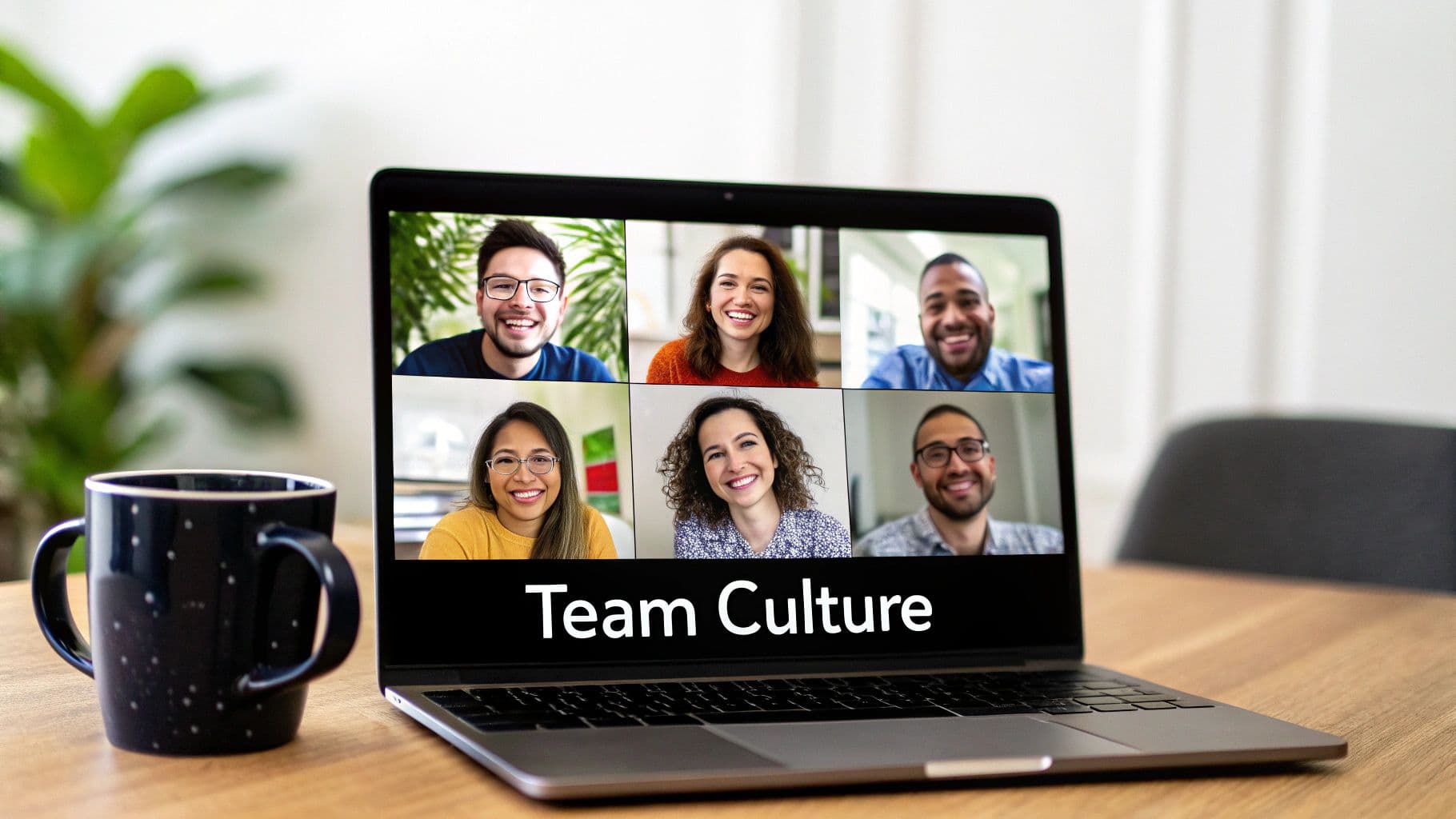
A strong remote culture doesn’t just happen. It’s not a happy accident. You have to build it, piece by piece, with intention. Without the coffee machine chats and hallway conversations of a physical office, it's on you to create those moments of connection and trust that turn a group of individuals into a real team.
This whole process kicks off the second a new person joins your company. A solid onboarding plan is your first, and arguably best, shot at pulling them into your company's world and showing them how you operate. It really sets the stage for everything that follows.
Design an Unforgettable Onboarding Experience
Let's be clear: great remote onboarding is more than just shipping a laptop and a list of logins. It needs to be a warm welcome that helps new hires feel like they belong, both professionally and socially, right from the start.
Try thinking about it from a few different angles:
- Virtual Meet-and-Greets: Set up a bunch of quick, informal 15-minute video calls between the new person and key people on the team. The goal isn't to talk shop; it's just to let them get to know the faces behind the Slack avatars.
- Mentorship Pairings: Give every new hire a "buddy" who isn't their direct manager. This person is their go-to for all the unwritten rules and random cultural questions, which creates an immediate, low-pressure connection.
- Culture-Share Sessions: Get a founder or a long-time employee to host a call to share the company’s origin story, its core values, and some key moments in its history. This gives the "why" behind the work, which is incredibly powerful for a new teammate.
When you structure the welcome like this, you prevent that "stuck on a deserted island" feeling that’s all too common in remote work.
Foster Psychological Safety and Open Feedback
Trust is the currency that makes a remote team run. People need to feel safe enough to speak up, ask a "dumb" question, or admit they messed up without worrying about being judged or punished. That feeling is psychological safety, and you have to work at it.
Get into a rhythm of regular, open feedback. You can use anonymous surveys or dedicated retrospective meetings to get the ball rolling. Ask pointed questions like, "What's one thing we should stop doing as a team?" or "Where are we creating unnecessary friction?" The key is to actually act on what you hear—that’s how you show their voices matter.
Celebrating wins is just as important. Fire up a public Slack channel like #wins or kick off meetings with shout-outs. Making sure good work is seen by everyone reinforces great habits and makes people feel valued.
You also can't ignore the massive shift happening in the workplace. Hybrid work is now the top choice for most people, with 83% of employees preferring a mix of remote and in-office time. This isn't just a preference; it's reshaping the job market. Hybrid job postings are projected to jump from 15% in mid-2023 to 24% by mid-2025, while fully on-site roles are dropping. This trend just proves how vital it is to build a culture that supports flexibility and connection, no matter where people are.
Go Beyond Generic Virtual Happy Hours
Look, team building is crucial, but staring at each other on another video call after a long day can be a drag. You have to find activities that are actually fun and get people interacting naturally. It's time to think past the standard quiz night.
- Shared Experiences: Try a remote cooking or mixology class where you send a kit with all the ingredients to everyone's house. It's a hands-on activity that gets people laughing. I’ve seen teams get a 40% boost in morale from a single session.