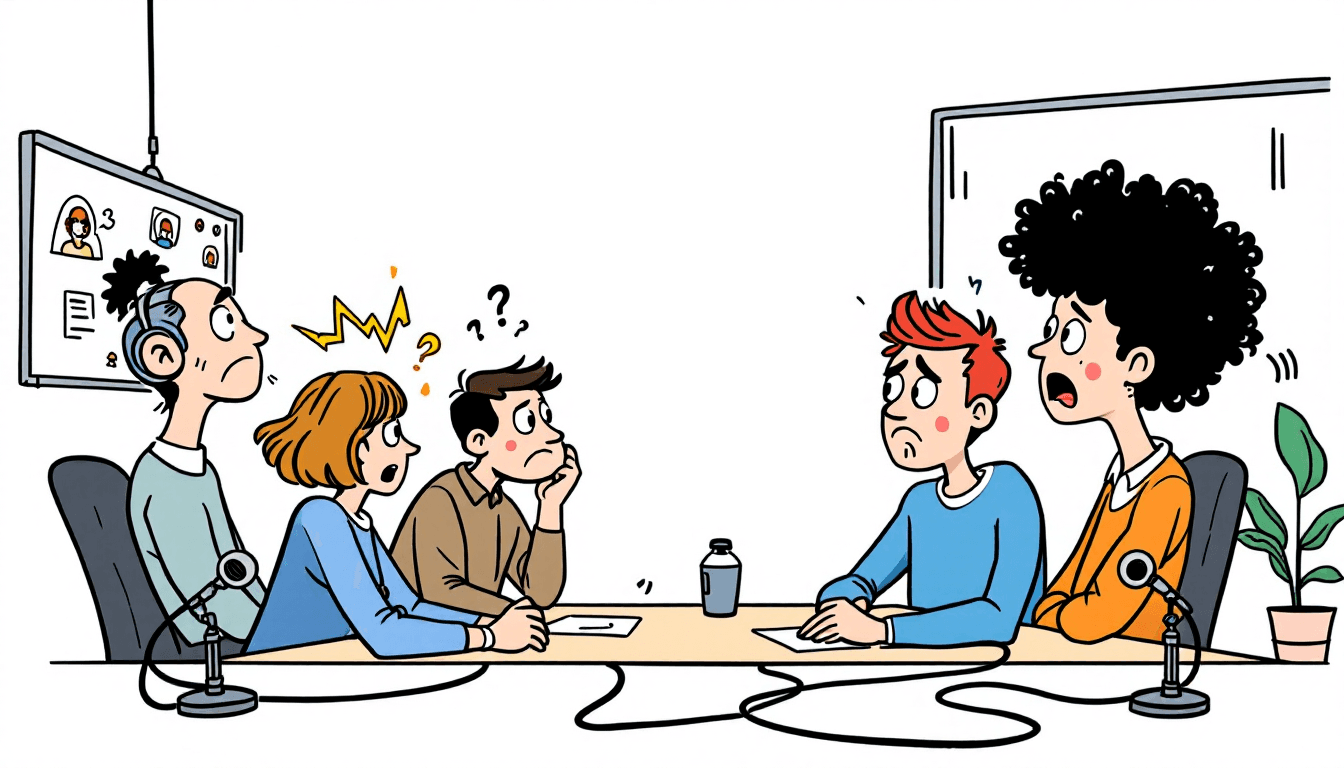
📈 Die Meeting-Krise: Zahlen und Fakten
Die Kosten schlechter Meetings
- • 37 Milliarden Dollar gehen jährlich durch ineffektive Meetings verloren
- • Durchschnittliche Mitarbeitende verbringen 21,5 Stunden pro Woche in Meetings
- • 67 % der Beschäftigten sind der Meinung, dass Meetings sie von konzentrierter Arbeit abhalten
- • 92 % der Menschen multitasken während Videoanrufen
Häufige Fehlerstellen
- • 32 % - Schlechte Vorbereitung und unklare Agenden
- • 28 % - Geringe Beteiligung und Teilnahme
- • 21 % - Technische Schwierigkeiten und Verzögerungen
- • 16 % – Unklare Ziele und Ergebnisse
Diese Statistiken enthüllen eine Epidemie am Arbeitsplatz, die seit Jahrzehnten stillschweigend die Produktivität zerstört. Doch was genau läuft in Meetings schief, und vor allem: Wie können wir das beheben?
🔧 Technische Ausfälle: Wenn Technologie zum Problem wird
Häufigste technische Probleme
Audioprobleme (68 %)
- • Echo und Rückkopplung
- • Stummgeschaltete Teilnehmende
- • Schlechte Mikrofonqualität
- • Hintergrundgeräusche
Verbindungsprobleme (45%)
- • Internetverbindung bricht ab
- • Plattformabstürze
- • Anmeldeprobleme
- • Bandbreitenbeschränkungen
Bildschirmfreigabe (34%)
- • Kann den Bildschirm nicht freigeben
- • Falsches Fenster geteilt
- • Schlechte Auflösung
- • Verzögerungen und Einfrieren
KI-gestützte Lösungen
Moderne KI-Meeting-Tools sind speziell darauf ausgelegt, diese technischen Schmerzpunkte zu beseitigen:
Intelligente Audiobearbeitung
- • Geräuschunterdrückung und Echounterdrückung
- • Automatische Lautstärkeregelung
- • Echtzeit-Transkription als Backup
- • Sprecheridentifizierung
Intelligente Aufzeichnung & Backup
- • Automatische Cloud-Aufzeichnung
- • Synchronisierung über mehrere Geräte
- • Offline-Transkripterstellung
- • Notfall-Wiederverbindungsprotokolle
📋 Schlechte Vorbereitung: Die Hauptursache für das Scheitern der meisten Meetings
Das Vorbereitungsproblem
Was schiefgeht
- • Keine klare Agenda: 73 % der Meetings haben keine strukturierte Agenda
- • Falsche Teilnehmer: 41 % schließen unnötige Teilnehmende ein
- • Schlechtes Timing: 56 % zu unpassenden Zeiten angesetzt
- • Mangel an Materialien 38 % teilen vorab keine Meeting-Ressourcen
Der Welleneffekt
- • Meetings dauern im Durchschnitt 18 Minuten länger als geplant
- • 64 % der Teilnehmenden fühlen sich unvorbereitet, einen Beitrag zu leisten
- • Folge-Meetings nehmen um 43 % zu
- • Entscheidungsfindung im Durchschnitt um 2,3 Wochen verzögert
KI-unterstützte Vorbereitung
Führende KI-Meeting-Plattformen bieten jetzt intelligente Vorbereitungsfunktionen an, die diese Probleme angehen:
Intelligente Agenda-Erstellung
Werkzeuge wie Gelesene KI analysiere den Meetingkontext und schlage automatisch Tagesordnungspunkte auf Basis früherer Diskussionen, Projektzeitpläne und Teilnehmerrollen vor.
Intelligent Participant Suggestions
AI analyzes project involvement and expertise to recommend optimal attendee lists, reducing unnecessary participants by up to 35%.
Automated Pre-Meeting Briefs
Systems automatically compile relevant documents, previous meeting notes, and action items into digestible pre-meeting summaries.
😴 Lack of Engagement: When Meetings Become Energy Drains
Engagement Statistics
- • 92% of people multitask during virtual meetings
- • 67% admit to doing other work during calls
- • Average attention span drops to 8 minutes in long meetings
- • 39% have fallen asleep during virtual meetings
- • 45% feel overwhelmed by meeting frequency
Root Causes
- • Meeting fatigue: Back-to-back scheduling
- • Irrelevant content: One-size-fits-all approach
- • Passive participation: Lecture-style format
- • Poor facilitation: Unclear discussion flow
- • No clear value: Participants don't see benefit
AI Solutions for Better Engagement
Real-Time Engagement Analytics
Advanced AI tools monitor speaking patterns, response times, and participation levels to identify disengaged participants and suggest interventions.
Personalized Content Delivery
AI analyzes individual roles and interests to highlight relevant discussion points and suggest when specific participants should contribute.
Intelligent Break Suggestions
Machine learning algorithms detect optimal break timing based on energy levels, discussion intensity, and meeting length.
📚 Real-World Case Studies: Meeting Transformation Success Stories
Case Study 1: Tech Startup Reduces Meeting Time by 40%
Before AI Implementation
- • 25 hours/week average meeting time per employee
- • 60% of meetings ran over scheduled time
- • Only 34% of action items completed on time
- • High employee burnout from meeting fatigue
After AI Implementation
- • 15 hours/week average meeting time per employee
- • 89% of meetings finish on time
- • 78% of action items completed on schedule
- • 43% improvement in employee satisfaction
Key Tools Used
Implemented Otter.ai for transcription and action item tracking, combined with automated agenda generation and participant optimization algorithms.
Case Study 2: Fortune 500 Company Saves $2.3M Annually
Challenge
15,000 employees across 40 offices, massive meeting coordination overhead
Solution
Enterprise AI meeting platform with intelligent scheduling and automated follow-ups
Result
$2.3M annual savings in productivity gains and reduced meeting overhead
Implementation Details
- • Phase 1: Rolled out AI transcription to 200 pilot teams
- • Phase 2: Added intelligent scheduling and preparation tools
- • Phase 3: Implemented advanced analytics and optimization
- • ROI Timeline: Broke even at 4 months, full benefits realized at 8 months
Case Study 3: Remote-First Company Eliminates Meeting FOMO
The Problem: Timezone Meeting Chaos
Global team across 12 timezones struggled with inclusive meeting scheduling. 67% of employees felt excluded from important decisions due to timezone conflicts.
The AI Solution
Implemented asynchronous AI meeting tools that create comprehensive summaries, action items, and decision logs automatically.
- • Real-time transcription with multiple language support
- • Automated meeting summaries sent within 10 minutes
- • AI-generated follow-up questions for async input
- • Decision tree documentation for transparency
Results After 6 Months
- • 89% feel included in decision-making
- • 52% reduction in follow-up meetings
- • 34% faster project completion times
- • 78% improvement in cross-timezone collaboration
- • 91% employee satisfaction with meeting quality
- • Zero complaints about FOMO since implementation
🛡️ Prevention Strategies: Building a Meeting-Success Culture
The Meeting Success Framework
🎯 Pre-Meeting Phase
- • AI Agenda Generation: Automatic topic prioritization
- • Smart Scheduling: Optimal timing algorithms
- • Participant Optimization: Right people, right roles
- • Resource Preparation: Auto-compiled background materials
⚡ During Meeting
- • Real-time Transcription: Never miss important points
- • Engagement Monitoring: Keep everyone involved
- • Time Management: AI-powered agenda tracking
- • Action Item Capture: Automatic responsibility assignment
📋 Post-Meeting
- • Instant Summaries: Key points delivered in minutes
- • Action Item Tracking: Automated follow-up reminders
- • Progress Monitoring: Decision implementation tracking
- • Feedback Collection: Continuous improvement insights
Essential AI Tools for Meeting Success
Core Meeting AI Tools
Specialized Solutions
Intelligent scheduling optimization
Integrated video platform intelligence
Meeting analytics + productivity metrics
Implementation Roadmap
Phase 1: Assessment & Foundation (Month 1-2)
- • Audit current meeting practices and pain points
- • Conduct employee surveys on meeting satisfaction
- • Select pilot teams for AI tool implementation
- • Establish baseline metrics for comparison
Phase 2: Core Implementation (Month 3-4)
- • Deploy transcription and basic AI tools
- • Train team leads on new meeting protocols
- • Implement automated follow-up systems
- • Begin collecting usage and satisfaction data
Phase 3: Advanced Features (Month 5-6)
- • Add engagement analytics and optimization
- • Implement intelligent scheduling algorithms
- • Deploy advanced reporting and insights
- • Scale successful practices organization-wide
💰 Measuring Success: ROI and Key Metrics
📊 Key Performance Indicators
- • Average meeting duration reduction
- • On-time start/finish percentages
- • Meeting-to-outcome ratio
- • Tasks completed on time
- • Follow-up meeting reduction
- • Decision implementation speed
- • Meeting quality ratings
- • Engagement scores
- • Productivity self-assessment
💵 Typical ROI Calculations
Time Savings
Average 3.5 hours/week per employee
$89,000 annual value per 100 employees
Productivity Gains
23% faster decision-making
$156,000 annual value per 100 employees
Tool Investment
Enterprise AI platform cost
$24,000 annual cost per 100 employees
Net ROI
920% annual return on investment