In today’s world, audio and video content are everywhere, so turning spoken words into text has become more important than ever. Whether you're a student recording lectures, a journalist interviewing sources, or a content creator adding captions to your videos, having reliable transcription software makes life a lot easier. The best part? You don’t have to spend a ton of money to get great tools. In this guide, we’ll walk you through 12 of the best free transcription software options available in 2025.
Instead of just listing features, we'll give you a real, useful review of each tool. We will look at everything from cloud platforms that are easy to use, like Otter.ai, to powerful open-source models that can run on your own computer, like OpenAI Whisper. We want to help you find the best solution for your needs, whether they are for taking notes, adding subtitles to videos, or doing academic research.
Every review has a detailed analysis, clear pros and cons, screenshots, and direct links to the tool's official site to help you get started right away. We explain the best way to use each option, so you can choose the right platform without having to read through a lot of marketing copy.
What Are The Best Free Transcription Software?
Let’s take a look at the most popular free transcription software in 2025.
| Tool | Key Feature |
| 1. OpenAI Whisper | High-accuracy, open-source multilingual speech-to-text. |
| 1. whisper.cpp | Offline, cross-platform Whisper speech-to-text. |
| 1. Vosk | Open-source speech recognition for 20+ languages. |
| 1. Otter.ai | Automatically transcribes and summarizes meetings. |
| 1. Descript | Transcribes audio with built-in editing tools. |
| 1. YouTube Studio | Generates full video transcripts with timestamps. |
| 1. Google Docs Voice Typing | Real-time speech-to-text inside Google Docs. |
| 1. AssemblyAI | Developer API for advanced speech-to-text apps. |
| 1. Deepgram | Accurate multilingual, multi-speaker transcription. |
| 1. Aiko | Converts speech from meetings and lectures into text. |
| 1. MeetGeek | Automatic meeting transcription and summaries. |
| 1. oTranscribe | Simple tool for manual audio transcription like recorded interviews |
1. OpenAI Whisper
OpenAI Whisper is truly a modern marvel. Think of it as the AI genius kid on the transcription block. It's an open-source model that's renowned for its shockingly accurate transcriptions, regardless of the language or accent. Because it has been trained on a vast, diverse pool of data, it handles nearly any audio you throw at it with impressive precision.
So, what should you use it for? The sky's the limit! It's fantastic for transcribing massive audio archives, generating incredibly accurate subtitles for your video projects, or turning long, rambling interviews into perfectly searchable text for your research. If you need top-tier quality and versatility, Whisper is your go-to engine.
Here is a quick heads-up: Whisper is primarily designed for developers and researchers. You may need technical know-how to get it integrated, but once you do, you join a vibrant community that continually improves it. If you love powerful, customizable tech, this one's for you.
- PROS:
- Unbelievable accuracy across tons of languages and different accents.
- It's open-source, meaning you can customize it endlessly.
- CONS:
- Getting it set up and running requires some technical familiarity.
- It can be a resource hog, especially with really large files.
- Key Differentiating Features:
- State-of-the-art accuracy powered by a leading AI lab.
- Handles multilingual transcription like a pro.
- It's completely open-source and backed by a huge community.
2. whisper.cpp
Think of Whisper.cpp as the lean, mean, fighting machine version of OpenAI's Whisper. It's a highly optimized C++ version designed to run quickly and locally on your own computer, even if you don't have a powerful gaming rig. It brings that excellent Whisper accuracy right to your desktop without ever needing to touch the cloud.
This is the perfect solution when you need to transcribe something quickly and either have no internet access or are particularly protective of your data (and who isn't?). It's ideal for rapidly handling personal audio notes, dictating a short document offline, or processing files directly on your laptop.
This tool is a dream come true for privacy advocates, developers who require a highly efficient local solution, and anyone running on older hardware. You get Whisper's power without the cloud dependency.
- PROS:
- Runs incredibly efficiently right on your computer's CPU.
- Guaranteed privacy since your data never leaves your machine.
- CONS:
- Still involves a bit of command-line action to get started.
- The initial setup might intimidate the average user.
- Key Differentiating Features:
- Super lightweight and optimized for local processing.
- Written in C++ for maximum speed and performance.
- The ultimate choice for offline, privacy-first transcription.
3. Vosk
Vosk is another fantastic open-source toolkit that really shines when you need something reliable that works completely offline or within a smaller device. It supports multiple languages and uses relatively small model files, which is a big win if you’re trying to conserve system resources.
Vosk is most often used for tasks such as on-device voice controls, integrating speech recognition into mobile apps, or building voice-activated features into embedded systems like smart devices. If you need real-time processing right on the device, Vosk is a champion.
This is a niche tool, but a crucial one, aimed at developers, tech enthusiasts, and researchers who are building projects that rely on resource-light, offline speech recognition, especially in robotics or specialized device applications.
- PROS:
- Brilliant for offline use and integrating into small devices.
- Supports many languages with very compact model sizes.
- CONS:
- Its overall accuracy might lag slightly behind the giant cloud services.
- Definitely requires development skills to get up and running.
- Key Differentiating Features:
- Explicitly designed for offline and embedded systems.
- Tiny model footprints for devices with limited resources.
- Great real-time transcription abilities.
4. Otter.ai
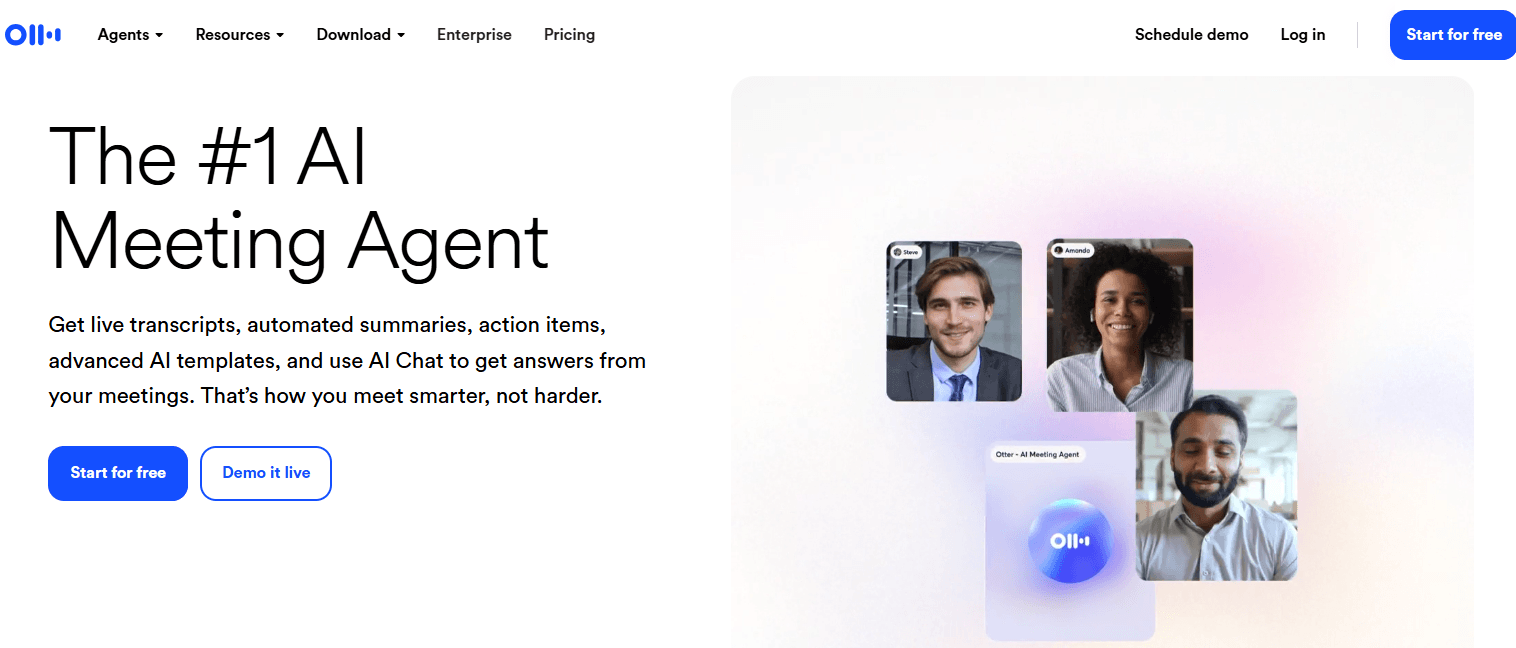
Otter.ai is probably one of the most recognizable names out there, and for good reason! This AI-powered tool is a superhero for meetings. It transcribes in real-time, smartly identifies who is speaking, drops in timestamps, and even helps you generate shareable, summarized notes.
5. Descript
Descript is one of the most exciting tools on this list because it flips the whole editing process on its head. It treats your audio and video like a text document, you literally edit your media by cutting and pasting the transcribed text! The free plan lets you experience a bit of this magic.
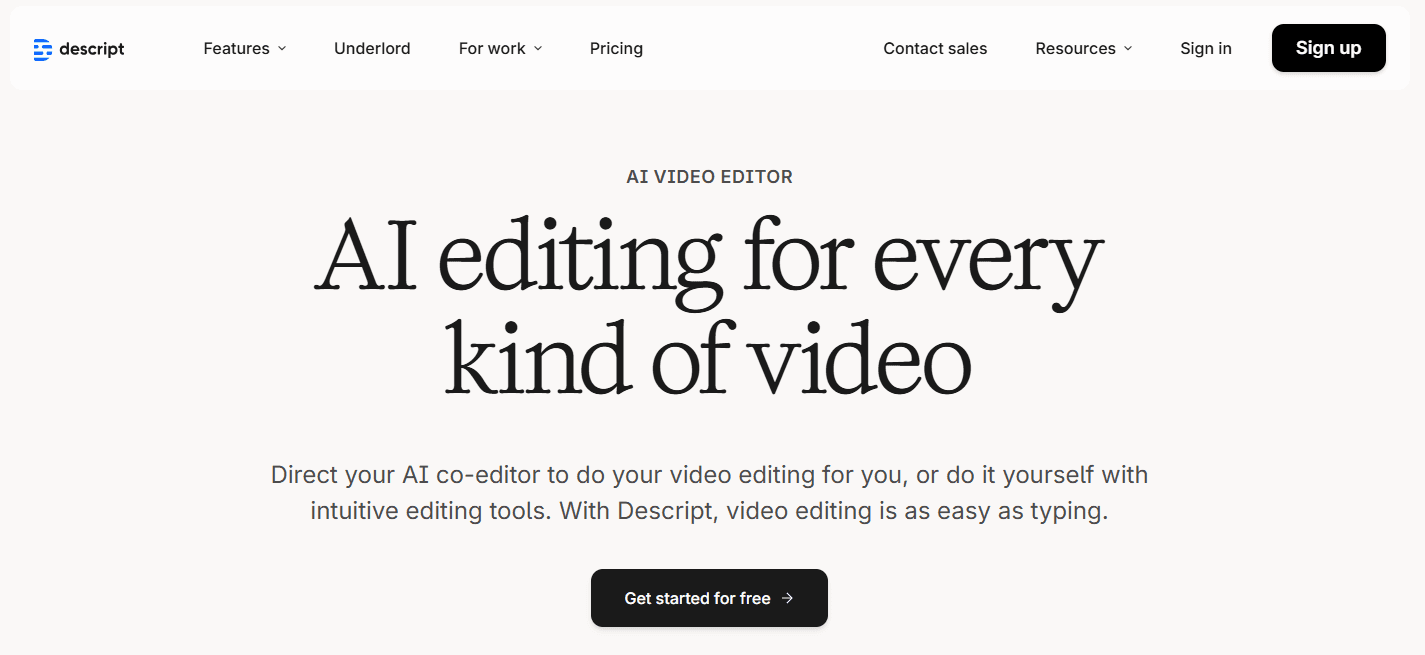
This tool is a game-changer for podcasters, YouTubers, and anyone doing audio/video post-production. You can use it to transcribe, but the real power is how you edit: delete a sentence from the transcript, and it instantly deletes that clip from your audio or video file.
Descript's audience is primarily content creators, video editors, and podcasters who want to dramatically speed up their workflow. If you want transcription and editing combined into one powerful, text-based experience, check this out.
- PROS:
- A revolutionary text-based editing workflow for audio and video.
- High-quality transcription that integrates directly with powerful editing tools.
- CONS:
- The free tier is limited in the number of transcription hours you get.
- It has so many features it can feel a bit overwhelming at first.
- Key Differentiating Features:
- The amazing "Overdub" feature allows you to correct audio by just typing.
- It handles both multitrack audio and video editing seamlessly.
- Transcription and editing are two sides of the same coin here.
6. YouTube Studio
If you're already a video creator on YouTube, you have a completely free transcription tool built right in: YouTube Studio. It automatically processes your uploaded videos and generates a caption track, saving you a huge amount of effort.
Its main job is to create automatic captions and subtitles for your YouTube content, which is fantastic for accessibility and a huge boost for search engine optimization (SEO) on the platform. Plus, you can download these transcripts to repurpose your video content into blog posts!
This transcription feature is laser-focused on YouTube content creators. If you publish videos there, this is your free, built-in tool to ensure your content is accessible and performs well in search.
- PROS:
- Totally free and perfectly integrated for all YouTube creators.
- Automatically generates captions, which is vital for accessibility.
- CONS:
- The accuracy can sometimes be hit-or-miss, so manual cleanup is often necessary.
- It only works with videos that you upload to the YouTube platform.
- Key Differentiating Features:
- It's a direct, seamless part of the YouTube ecosystem.
- Includes automatic translation options for captions.
- Provides easy-to-use tools for editing and syncing your captions.
7. Google Docs Voice Typing
Here's an oldie but a goodie that people often forget about! Google Docs Voice Typing is a wonderfully simple and completely free dictation tool baked right into Google Docs. You literally just click the mic icon and start talking; the words appear on the screen in real-time.
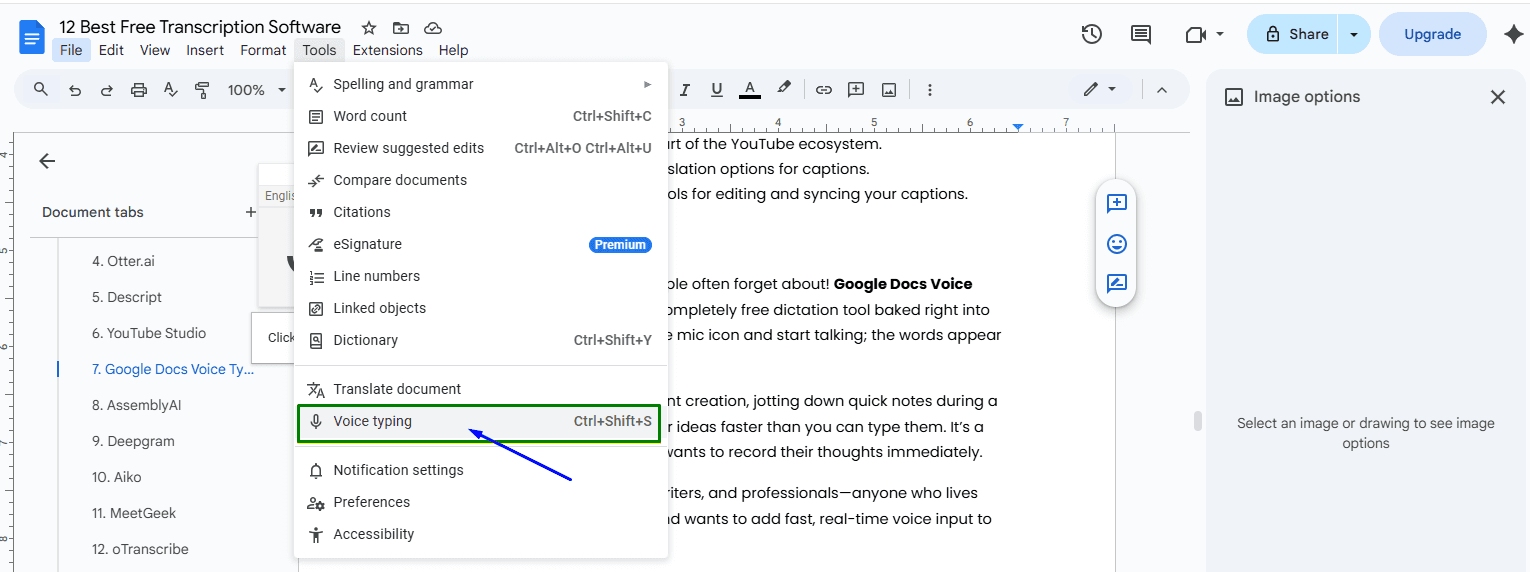
It’s best used for hands-free document creation, jotting down quick notes during a long meeting, or simply dictating your ideas faster than you can type them. It’s a huge help for writers or anyone who wants to record their thoughts immediately.
This is the perfect tool for students, writers, and professionals—anyone who lives inside the Google Docs ecosystem and wants to add fast, real-time voice input to their workflow.
- PROS:
- It’s completely free and integrated right into Google Docs.
- Real-time dictation is fantastic for speedy, hands-free input.
- CONS:
- Requires a solid, stable internet connection to function.
- Accuracy can drop significantly if your mic quality is poor or there is background noise.
- Key Differentiating Features:
- Seamless integration with the entire Google Docs/Drive suite.
- Supports a surprising number of dictation languages.
- Simple, zero-frills voice-to-text with no setup required.
8. AssemblyAI
AssemblyAI is a powerhouse API that delivers super-accurate transcriptions along with advanced features like identifying speakers, summarizing content, and even moderating sensitive material. While it’s mainly a developer tool, their free Playground is awesome for testing and transcribing short files.
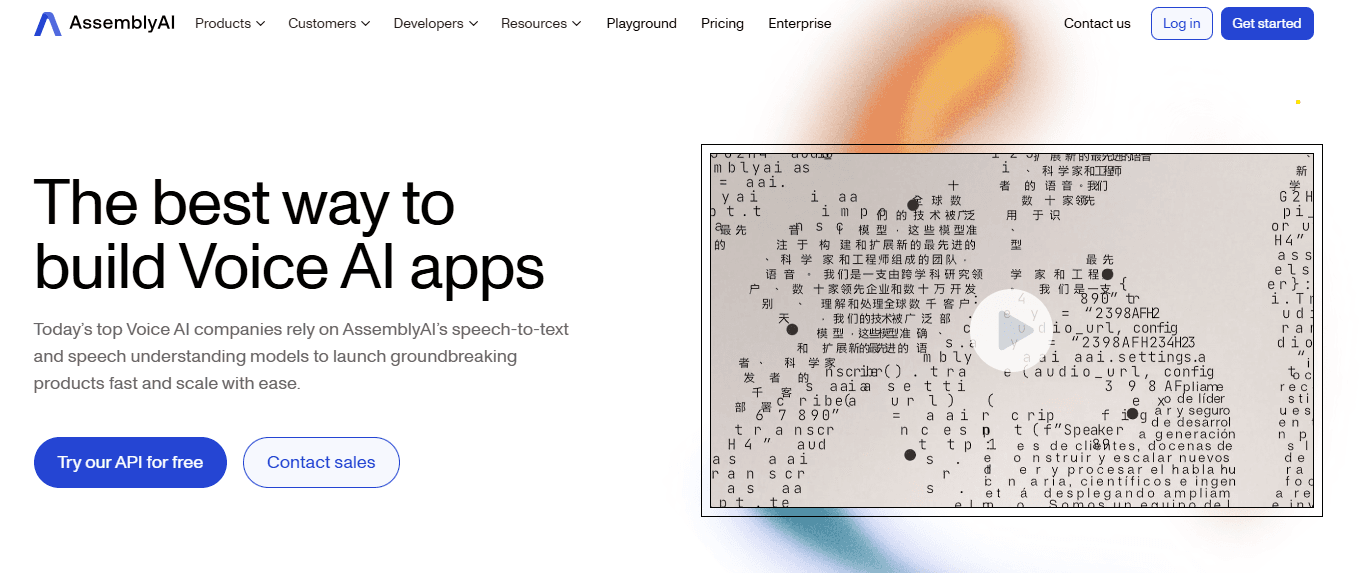
The main reasons companies use this are to integrate sophisticated speech-to-text into customer service analytics, voice bots, or media analysis. For you, the Playground is an excellent way to get extremely high-quality, free transcription for a quick audio file.
AssemblyAI primarily targets developers and businesses that need scalable, advanced AI for their audio analysis. However, individuals should use the free Playground when they need the absolute highest-quality transcription for a quick, short recording.
- PROS:
- Extremely high accuracy with advanced AI features.
- Includes valuable features like speaker separation and content analysis.
- CONS:
- Free access is quite limited; it's a paid API service at its core.
- Using the full features requires development and coding skills.
- Key Differentiating Features:
- Advanced features like sentiment analysis and automatic summarization.
- Excellent speaker diarization to tell who said what.
- Allows for custom vocabulary to handle industry-specific jargon.
9. Deepgram
Deepgram is another leader in the AI transcription space, but it’s famous for its focus on sheer speed and accuracy, especially in real-time scenarios. Just like AssemblyAI, it’s primarily an API, but they offer very generous free tiers or trial minutes that let you transcribe a substantial amount of audio without paying.
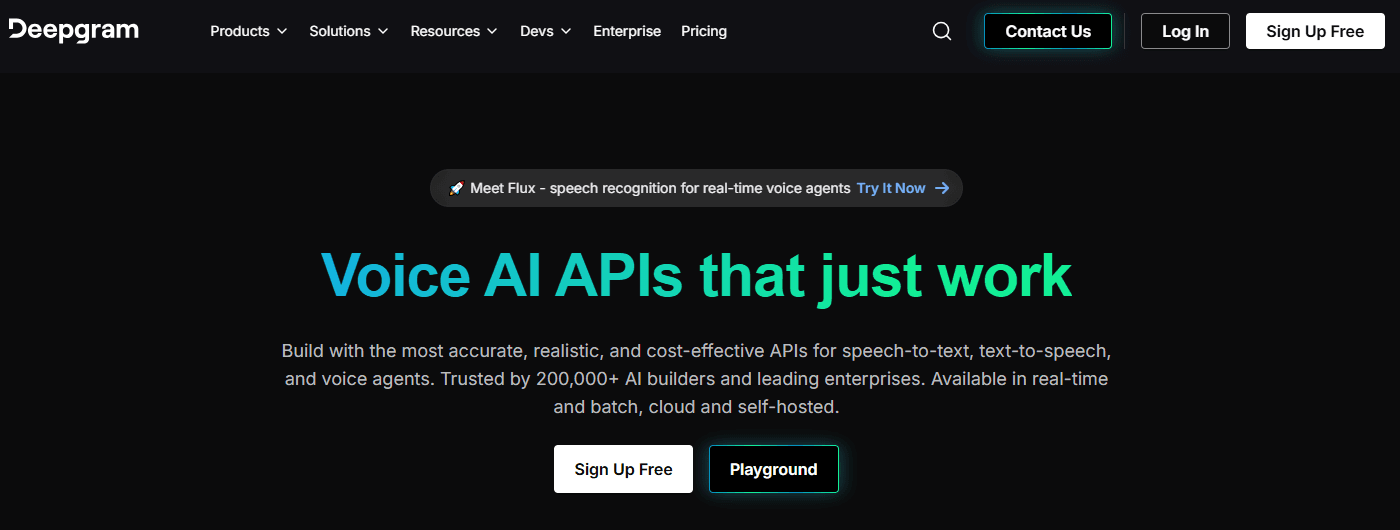
The core uses for Deepgram involve real-time transcription for customer support call centers, live event captioning, and voice applications where milliseconds matter. They are known for handling even the toughest, noise-filled audio remarkably well and delivering results incredibly fast.
This tool is for developers, large enterprises, and innovators who need a high-performance, lightning-fast speech engine for critical applications where a tiny delay is unacceptable.
- PROS:
- Blazing-fast speed and phenomenal accuracy, especially for live audio.
- Highly customizable to understand domain-specific terms.
- CONS:
- It's an API, so you need development knowledge to fully utilize it.
- Free usage is subject to the platform's trial limits.
- Key Differentiating Features:
- Often cited as the fastest real-time transcription solution available.
- Deep customization for unique or domain-specific vocabularies.
- Handles a vast array of audio types and quality levels.
10. Aiko
Aiko is a straightforward, no-fuss option in the transcription world that often provides a very generous amount of free transcription time. It focuses on being accessible and simple, giving you good, solid accuracy for most of your typical, everyday transcription needs.
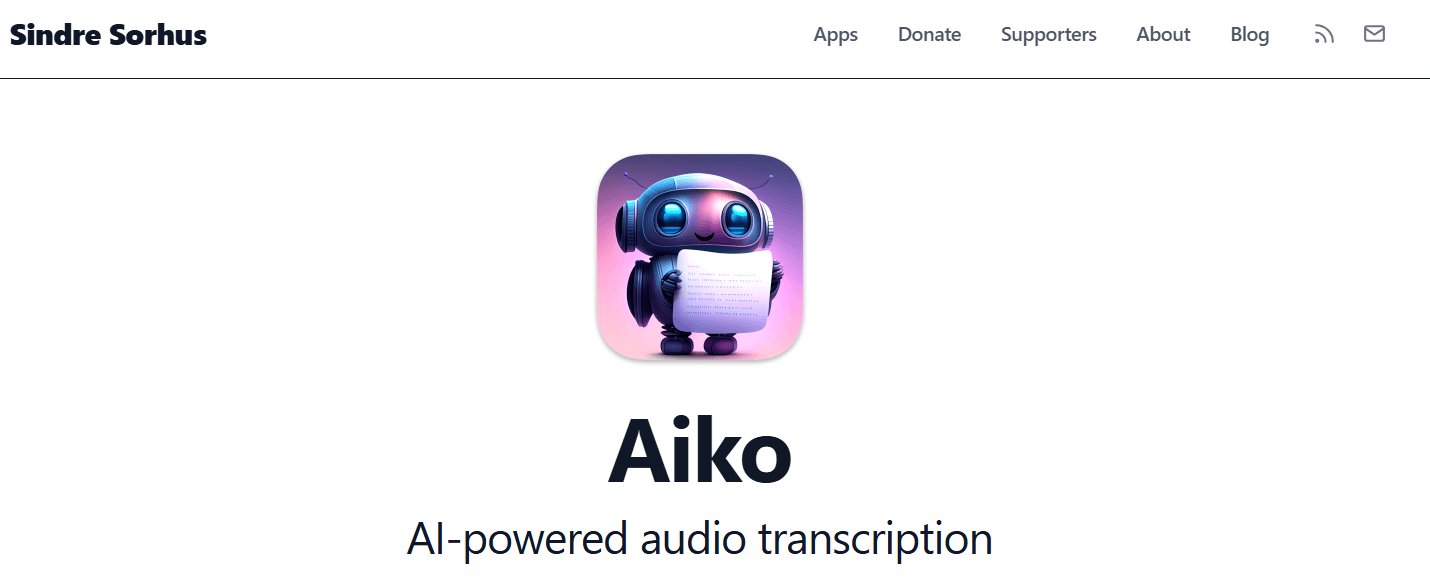
You’d use this for transcribing your meeting notes, casual interviews, long lectures, or any personal audio recordings you have. If you're looking for an easy, web-based tool that just gets the job done without overwhelming you with advanced features, Aiko is a great choice.
Aiko is ideal for small business owners, students, and everyday individuals who need a reliable, free, and accessible solution for occasional transcription without wanting to deal with complex AI models or developer setups.
- PROS:
- Super user-friendly interface that makes transcription easy.
- Often features a very generous free tier for the average user.
- CONS:
- It may not have the deep, advanced analysis features of the API services.
- Accuracy can be less consistent with very poor-quality audio recordings.
- Key Differentiating Features:
- Emphasis on a clean, simple interface and ease of use.
- Completely web-based for access from any browser.
- A reliable option for general, daily transcription needs.
11. MeetGeek
MeetGeek is a brilliant AI assistant designed specifically for virtual meetings. It doesn't just transcribe; it summarizes the discussion, identifies action items, and highlights key moments. The free tier usually includes basic transcription for a limited number of meetings.
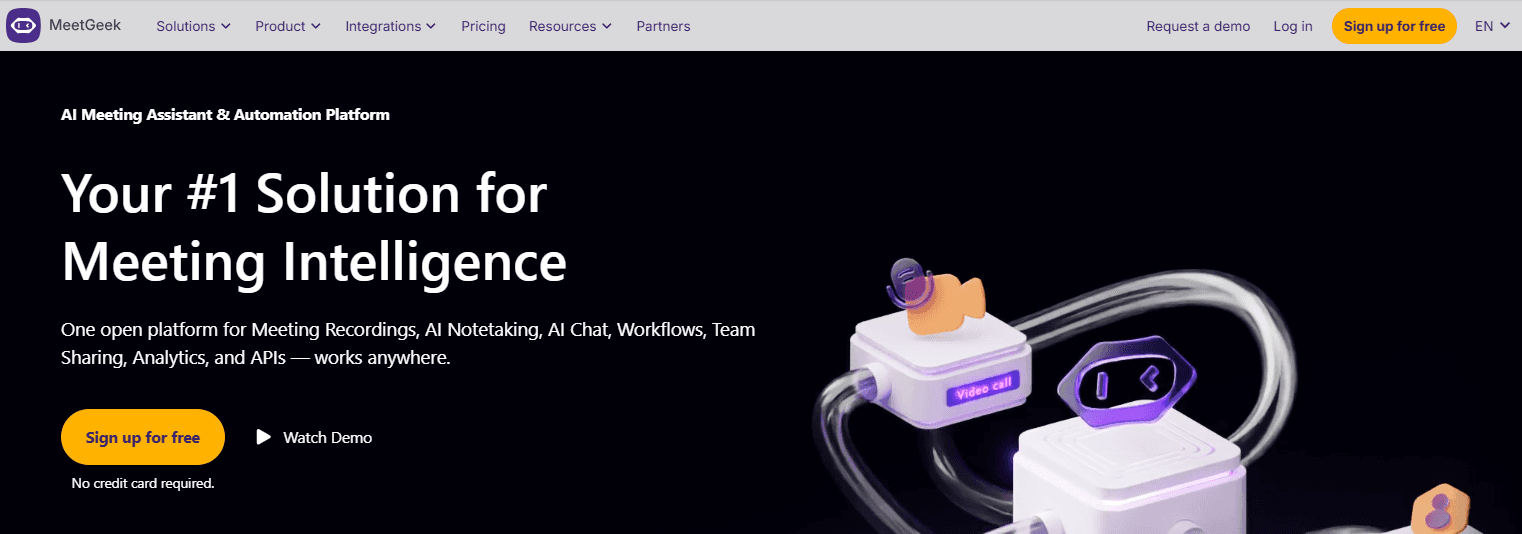
The main way people use this is to boost their productivity in online meetings. It ensures you never miss a decision, automatically creates shareable notes, and integrates perfectly with all the popular video call apps you already use.
This tool is a must-have for professionals, remote teams, and anyone who spends a lot of time in virtual meetings and needs an automatic way to document discussions and keep track of follow-up tasks.
- PROS:
- Automatically transcribes and summarizes your meetings beautifully.
- Seamless integration with major video conferencing platforms.
- CONS:
- The free tier has strict limits on the number and length of meetings you can record.
- It is focused primarily on virtual meeting environments, not general audio files.
- Key Differentiating Features:
- AI-powered detection of meeting summaries and follow-up action items.
- Highlights and speaker ID features for easy review of the discussion.
- Integration with your calendar for automatic joining and recording.
12. oTranscribe
oTranscribe is a fantastic, completely free, and open-source tool built for one thing: making manual transcription easier. It’s a simple web app that lets you play your audio or video file right next to an editor, with brilliant keyboard shortcuts to control playback without ever taking your hands off the keyboard.
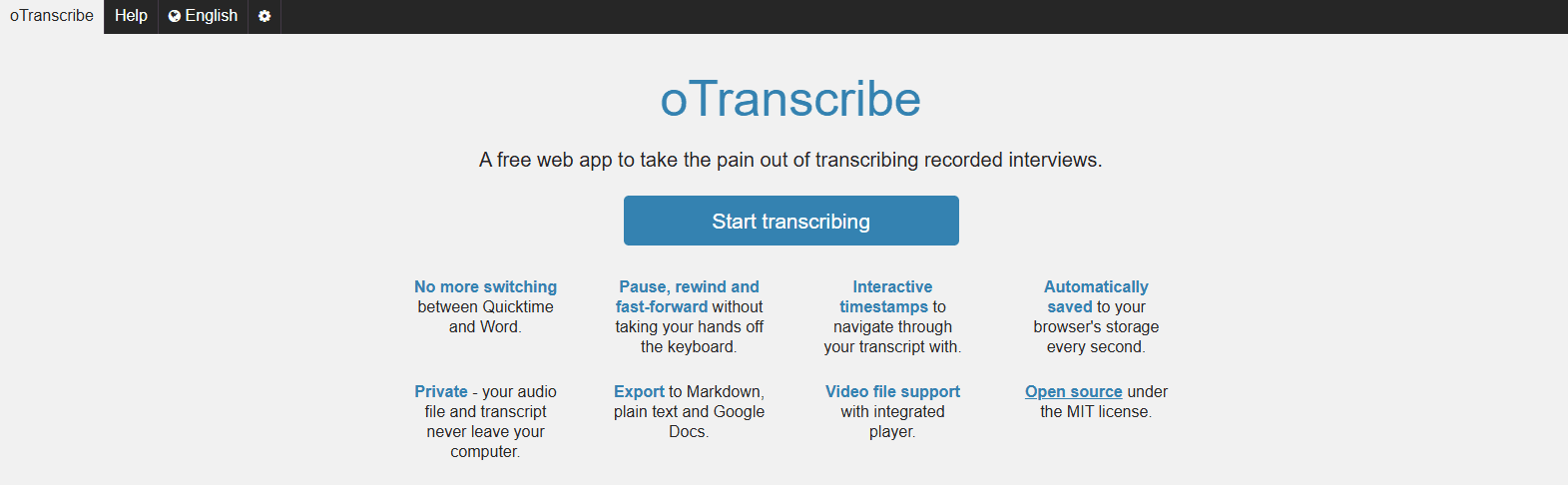
This is the perfect solution for old-school manual transcriptionists, or when your audio is so garbled that no AI can figure it out. It provides a super-efficient workspace for transcribing by hand and is also great for language learning!
oTranscribe is aimed squarely at professional transcribers, researchers, and students who prefer or require a manual approach. It’s also the ideal choice for anyone who wants an offline, privacy-guaranteed tool for this specific task.
- PROS:
- Totally free, open-source, and guarantees your privacy (audio never leaves your browser).
- Optimized workflow with intuitive keyboard shortcuts for media control.
- CONS:
- It is purely a manual tool—it doesn't have any automated transcription.
- Requires a significant time investment to transcribe your files.
- Key Differentiating Features:
- Functions completely offline right in your web browser.
- Focuses entirely on making the manual transcription process fast and comfortable.
- Extremely high privacy since no data is ever uploaded to a server.
Top 12 Free Transcription Software Comparison
| Tool / Resource | Core Features / Characteristics | User Experience / Quality ★★★★☆ | Value Proposition 💰 | Target Audience 👥 | Unique Selling Points ✨ | Price Points 💰 |
|---|---|---|---|---|---|---|
| OpenAI Whisper | Multilingual ASR, translation, local/cloud use | High accuracy, requires technical skill | Free, no vendor lock-in | Tech-savvy, privacy-focused | Open-source, great accuracy across accents ✨ | Free |
| whisper.cpp | CPU-first, quantized, multi-platform binaries | Efficient on Apple Silicon, no Python needed | Fully local transcription | Developers wanting offline, private ∙ | Fast, low footprint, no dependencies ✨ | Free |
| Vosk | Offline, 20+ languages, lightweight models | Moderate accuracy, low latency | Free, permissive license | Embedded/device devs | Broad device compatibility, offline use ✨ | Free |
| Otter.ai | Live transcription, speaker ID, AI chat | Intuitive UI, reliable, good free tier | Good free tier with room to upgrade | Small teams, casual users | Speaker ID, collaboration tools 🏆 | Free & Paid tiers |
| Descript | Text-based audio/video editing, recording | User-friendly, limited free access | Free plan limited, great for content creators | Podcasters, video editors | Combined editing+transcription workflow ✨ | Free & Paid tiers |
| YouTube Studio | Auto captions, multi-language, downloadable | Sufficient accuracy, requires video upload | Free, integrated with video hosting | YouTube content creators | Free captioning with editing tools ✨ | Free |
| Google Docs Voice Typing | Browser dictation, 100+ languages, easy access | Good accuracy for short sessions | Free, no install needed | Casual users, quick dictation | Built-in free dictation on Chrome ✨ | Free |
| AssemblyAI | Cloud API, diarization, summarization | High accuracy, advanced features | Free tier credits, pay-as-you-go | Developers, enterprises | Advanced API with summarization 🏆 | Free tier + usage pricing |
| Deepgram | Real-time/batch, 30+ languages, keyword boosting | Fast, robust docs | Free credits then pay per minute | Developers, businesses | Keyword boosting, smart formatting ✨ | Free tier + pay per use |
| Aiko | On-device Whisper, no data upload, multi-lang | Accurate on lectures/interviews | Privacy focused, device-based | iOS/mac users, privacy-conscious | Local transcription, no data upload ✨ | Paid app |
| MeetGeek | Live transcription, speaker ID, AI chat | Intuitive UI, reliable, good free tier | Flexible subscription options | Small teams, casual users | connecting with meeting platforms | Free + Subscriptions |
| oTranscribe | Transcribing recorded interviews. | simple, free | opensource | Casual users, Small teams | free and secure | Free |
A Practical Framework for Your Decision
To make a confident choice, assess your needs against the tools we've explored. Ask yourself these questions:
- Who is the user? Are you a developer comfortable with command-line interfaces, or a sales professional who needs a simple point-and-click solution?
- What is the use case? Is it for transcribing internal team meetings, creating video subtitles, or building a custom application with a transcription API like AssemblyAI or Deepgram?
- What are your priorities? Do you value speed, the highest possible accuracy, collaboration features, or absolute data privacy above all else?