Think of a meeting cadence as the heartbeat of your team. It’s the regular, predictable rhythm of when and why you get together, turning random, chaotic check-ins into a steady, reliable flow of communication that builds momentum.
Understanding the Hidden Rhythm of Productive Teams
Have you ever been on a team that felt like a band where everyone was playing to a different beat? That's what work feels like without a consistent meeting cadence. Instead of everyone working in sync, you end up with a mess of last-minute calls, repetitive updates, and a calendar that looks like a game of Tetris gone horribly wrong.
This isn't just frustrating; it's a fast track to burnout. The truth is, many teams are drowning in "meeting overload," which is often a direct symptom of a broken or non-existent rhythm. When there’s no structure, communication becomes purely reactive, forcing you to schedule even more meetings to put out fires that a predictable cadence could have prevented in the first place.
The True Cost of a Broken Cadence
The fallout from a poor meeting rhythm is huge. Research shows that managers can spend a staggering 23 hours per week in meetings. On top of that, nearly 46% of employees feel they attend too many. This constant churn pushes actual, focused work into evenings and weekends, draining team energy and killing productivity.
Without a set cadence, teams almost always suffer from:
- Constant interruptions: Random, ad-hoc meetings shatter concentration and kill deep work.
- Information silos: When regular touchpoints are missing, crucial information gets trapped within small groups or individuals.
- Lost momentum: Projects grind to a halt because decisions and approvals happen way too slowly.
On the flip side, a thoughtfully designed cadence can completely transform a team's dynamic from chaotic to coordinated. It’s the backbone that supports better team collaboration and operational efficiency. This guide will give you a practical way to figure out what’s broken in your current system and build a new rhythm that actually works for your team.
To get started, it's helpful to see what these cadences look like in practice. Here's a quick rundown of some common meeting rhythms and what they're designed to accomplish.
Quick Guide to Common Meeting Cadences
| Cadence | Frequency | Primary Goal |
|---|---|---|
| Daily Stand-up | Daily | Quick sync on progress, plans, and blockers. |
| Weekly Team Meeting | Weekly | Review weekly goals, solve tactical issues, and align on priorities. |
| Bi-weekly Sprint Planning | Every 2 weeks | Plan work for the upcoming sprint or project cycle. |
| Monthly Review | Monthly | Assess progress against monthly goals and adjust strategy. |
| Quarterly All-Hands | Quarterly | Share high-level company updates and celebrate wins. |
| Annual Strategy Session | Annually | Set long-term vision and define key objectives for the year. |
This table is just a starting point. The key is to find the right mix that keeps your team aligned and moving forward without bogging them down in unnecessary meetings.
Why Your Meeting Cadence Matters More Than You Think
In a world filled with distributed teams and endless digital collaboration tools, a steady meeting cadence isn't just a nice-to-have. It's the very heartbeat of a high-performing, resilient team. Without that predictable rhythm, communication quickly devolves into chaos, sparking confusion, anxiety, and a general sense of being disconnected.
Think of it as the operating system for your team's collaboration. It creates a powerful sense of psychological safety because everyone shares an understanding of when and where important conversations are supposed to happen. No one has to guess about when they can bring up a problem, ask for help, or share a critical piece of information.
This simple predictability cuts down on the mental drain for everyone. Instead of constantly asking, "Should I schedule another meeting for this?" they know a dedicated time is already on the calendar—whether it's the daily stand-up for quick blockers or a weekly tactical meeting for digging into bigger challenges.
The New Reality of Meeting Overload
The move to hybrid and remote work has made a thoughtful meeting cadence more crucial than ever. Without the spontaneous conversations that happen in an office, we've tried to fill the void with scheduled meetings, and our calendars are paying the price.
Recent data is pretty staggering: the average employee now spends 11.3 hours per week in meetings. The total number of meetings we attend has actually tripled since 2020. With almost half of all professionals sitting in three or more meetings every single day, a structured cadence is our best defense against complete calendar chaos. You can discover more about these meeting statistics and what they mean for how we work today.
Ad-Hoc Chaos vs. Strategic Rhythm
Let's paint a picture of two very different teams to see why this matters so much. Team A runs on an ad-hoc meeting culture. Their calendars are a mess of last-minute invites, which leads to non-stop context-switching and that nagging feeling that the "real work" can only happen after 5 PM. Progress is sluggish because big decisions get stuck in limbo until someone finally finds a time for everyone to jump on a call.
Now, let's look at Team B. They have a clear, established meeting cadence: a quick daily sync for updates, a weekly tactical meeting for problem-solving, and a monthly review to zoom out and look at the bigger picture. Everyone knows exactly why they're showing up to each meeting and comes ready to contribute.
The difference in their results is night and day. Team B enjoys:
- Increased Project Velocity: Roadblocks are cleared out faster and decisions are made on a predictable schedule.
- Higher Team Morale: Having a reliable schedule lowers stress and gives people the confidence to block off and protect their deep work time.
- Greater Operational Resilience: The team can handle unexpected changes much more smoothly because their fundamental communication lines are stable and dependable.
At the end of the day, your meeting cadence is so much more than just a schedule. It's a strategic choice that actively shapes your team's culture, efficiency, and ultimately, its ability to succeed.
Choosing the Right Cadence for Your Team's Mission
Let’s be honest: there’s no such thing as a “perfect” meeting cadence. The ideal rhythm for a sales team chasing weekly targets is going to be worlds apart from what an engineering squad needs for a two-month project sprint. The secret isn't copying some template you found online; it’s about understanding how your team actually gets work done.
Think of it as building a support system for your team's unique workflow. You have to consider things like project phases, what the team actually does, and even whether you’re remote, hybrid, or all in one office. Getting this wrong is a surefire recipe for wasted time and checked-out employees. A one-size-fits-all approach just creates chaos.
If it feels like your calendar is more packed than ever, you’re not wrong. The sheer volume of meetings has exploded for most teams, which makes being intentional about scheduling more critical than ever.
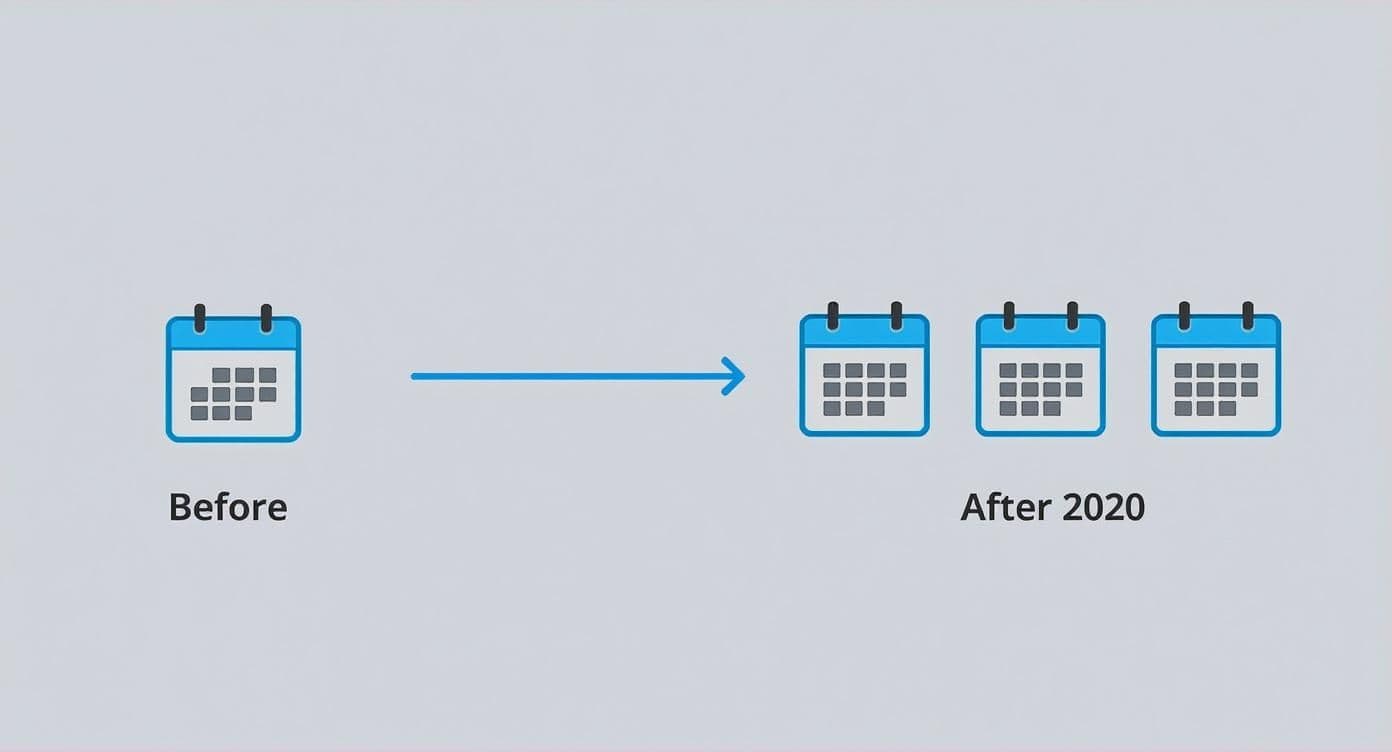
This jump in meeting frequency is exactly why a structured cadence is no longer a nice-to-have. It’s an essential tool for protecting your team’s focus and preventing burnout.
Step 1: Start with a Meeting Audit
Before you add a single new meeting, you need to take a hard look at what’s already clogging up the calendar. A meeting audit is a surprisingly powerful exercise. Just list every recurring meeting and start asking some tough questions. Be ruthless.
For every single meeting, ask your team:
- What is the specific point of this meeting? If nobody can give you a crisp, clear answer, that’s a huge red flag.
- Could this be handled without a meeting? So many "status updates" are better off as a quick message in a chat channel or a comment in a shared doc.
- Does every single person on this invite really need to be here? Over-inviting is one of the biggest time-wasters in the modern workplace.
This process almost always uncovers what I call "ghost meetings"—those recurring calendar blocks that lost their purpose long ago but keep happening out of habit. Getting rid of them is the fastest way to give everyone back hours of their week.
Step 2: Define Your Communication Goals
Okay, now that you’ve cleared out the clutter, you can start building something better. The next step is to figure out what your team actually needs to communicate, and how often. You have to map out the different ways information needs to flow to keep everyone aligned and moving forward.
To get started, just identify your core communication needs. Do you need a quick daily huddle to unblock work? A weekly forum to dig into tactical problems? Or maybe a monthly review to see how you’re tracking against bigger goals? Nailing these down is the foundation of a cadence that actually works.
Step 3: Match Goals to Meeting Types
With your goals clearly defined, you can now start matching them to specific types of meetings and setting a frequency. This is where you actually design the rhythm of your team’s week. For instance, a daily stand-up is perfect for quick tactical updates, while a bi-weekly sprint review serves a completely different, more strategic purpose.
Here's a quick guide to help you connect your team's needs to a logical cadence.
Matching Team Needs to Meeting Cadence
| Team Need or Goal | Recommended Cadence | Example Meeting Type |
|---|---|---|
| High-Paced Tactical Alignment | Daily | 15-minute Stand-Up |
| Problem-Solving & Project Tracking | Weekly | Team Sync / Tactical Meeting |
| In-Depth Progress Review | Bi-Weekly or Monthly | Sprint Review / Project Check-in |
| Long-Term Strategic Planning | Quarterly | Quarterly Planning / Offsite |
| Relationship & Trust Building | Monthly or Ad Hoc | Team Lunch / Social Hour |
This table is a starting point, not a rigid set of rules. The key is to consciously choose a format that serves a specific goal.
Every single meeting in your new cadence must have a documented purpose and a clear agenda. If you need some inspiration, check out these powerful meeting agenda template examples to make sure every session stays on track. This one step is what keeps your shiny new meetings from becoming just as useless as the ones you just deleted.
Finally, treat this new cadence like an experiment. Tell the team you’re trying this new rhythm for a set period—say, one month—and that you’ll be asking for feedback. A meeting cadence should be a living system that changes as your team and projects evolve. Be ready to listen, tweak, and adjust until you find the perfect beat.
Best Practices for Maintaining a Healthy Meeting Rhythm

Designing a great meeting cadence is one thing, but keeping it from going stale is the real challenge. The work lies in maintaining that rhythm so it stays healthy and productive. Without clear ground rules and good habits, even the most well-planned schedule can turn into a source of dread and burnout. You want your meeting rhythm to give energy, not take it away.
This is where good "meeting hygiene" comes into play. It’s all about building a culture where everyone's time is valued and every meeting has a clear, undeniable purpose. This discipline is what separates an effective meeting cadence from just another string of calendar invites.
Create and Share Agendas for Every Meeting
Think of an agenda as a contract with your attendees. It's not just a list of topics—it tells people why they need to show up, what you’ll be talking about, and what you hope to achieve together. A meeting without an agenda is practically set up to fail.
Try to share the agenda at least 24 hours in advance. This gives everyone a chance to prepare. It should clearly outline:
- The primary goal or objective.
- The specific topics on the docket.
- Who is leading the discussion for each point.
- A time estimate for each item.
This one simple step ensures everyone walks in ready to contribute, which keeps the conversation focused right from the start.
Master the Art of Starting and Ending on Time
Punctuality is a huge part of a healthy meeting culture. When you consistently start and end on time, you're sending a powerful message: we respect each other's schedules. That simple act builds trust and encourages people to be present and engaged.
Don't wait around for latecomers; kick things off right on schedule. And when time's up, wrap it up—even if you have to table a discussion for later. This discipline prevents "meeting creep," where one meeting bleeds into the next and throws the whole day off course.
Defend Your Team's Focus Time
Your meeting rhythm should support work, not get in the way of it. One of the best ways to keep things in balance is to actively guard your team’s deep work time. That’s when the real, focused progress is made.
Consider trying a few of these strategies:
- No-Meeting Days: Block off one or two days a week (Wednesdays are popular) where no internal meetings are allowed. This frees up an entire day for uninterrupted work.
- Meeting Blocks: Cluster your meetings into specific time blocks, like Tuesday and Thursday afternoons. This opens up bigger chunks of focus time on other days.
- Asynchronous First: Before you hit "schedule," ask yourself: "Could this be an email, a chat message, or a comment in a shared doc?" Save meetings for when you truly need to collaborate and make decisions.
For example, structured formats like Level 10 Meetings are great for making sure weekly syncs are all about solving problems, pushing status updates to async channels where they belong. When you treat your team's focus time like the precious resource it is, your meeting cadence will always be an asset, not a liability.
Scaling Your Meeting Cadence Across the Organization
A great meeting rhythm isn't just a team-level habit; it's the heartbeat of a healthy organization. As a company gets bigger, that simple beat of a daily stand-up has to scale into a much more complex symphony of strategic events that keep everyone moving in the same direction.
Think about the Annual Operating Planning (AOP) process. This is the ultimate long-term meeting cadence, where huge companies work to get thousands of employees aligned on the big financial and operational goals for the next year.
It sounds straightforward, but getting it right is another story. One survey of global companies revealed that 100% of them struggled with their AOP process, and a whopping 85% were already trying to fix it. This shows just how difficult—and important—it is to manage this rhythm at scale.
The AOP isn't just about booking rooms and sending invites; it's the mechanism that translates high-level strategy into real-world execution. It’s about creating clarity from the executive suite all the way to the front lines.
Of course, you don't have to be a massive corporation to benefit from a good rhythm. For tips on a smaller scale, check out our guide on morning meeting questions for daily stand-ups.
Common Questions About Meeting Cadence
Even with the best-laid plans, questions always pop up when you start putting a new meeting rhythm into practice. Let's tackle some of the most common hurdles leaders run into.
How Should You Adjust for a New Team?
When you’re working with a brand-new team, your meeting cadence is all about building connection and getting everyone on the same page. You'll want to start with more frequent check-ins to build trust and set clear expectations from day one.
A daily 15-minute stand-up is a must for a new crew. It keeps everyone in the loop and helps you spot misunderstandings before they snowball. I'd also recommend weekly one-on-ones for at least the first month to really get to know each team member. Once everyone starts to gel, you can pull back and find a rhythm that feels more natural.
What Are Red Flags of a Broken Rhythm?
So, how do you know if your current meeting schedule is actually working? A broken cadence leaves some pretty obvious clues if you know what you're looking for.
Keep an eye out for these warning signs:
- Low Engagement: Are people zoning out, multitasking, or just plain silent during calls?
- Déjà Vu Conversations: The same issues keep popping up in different meetings, but nothing ever gets solved.
- Calendar Clutter: Your team’s calendar is packed with last-minute "syncs" just to keep everyone aligned.