Improving team communication isn't about some secret formula. It's about being intentional with three things: setting up clear channels, making sure people feel safe to speak up, and using technology as a tool, not a crutch. This isn't just theory—it’s about creating a practical framework where everyone knows how, when, and where to share what they’re working on.
Why Better Team Communication Matters Now More Than Ever
Let's be honest, poor communication is more than a small frustration. It's a silent killer of productivity, morale, and ultimately, your bottom line. When messages get buried, feedback is dreaded, and your communication channels are a chaotic mess, the result is predictable: missed deadlines, disengaged employees, and burnout.
This guide is your roadmap out of that chaos. We'll skip the vague advice and give you real, actionable strategies to get your team truly in sync.
The Real Cost of Disconnected Teams
When communication breaks down, the fallout is felt everywhere. Projects grind to a halt because critical information is lost in a noisy Slack channel. Innovation fizzles out because team members are too hesitant to voice a different opinion or a new idea. Morale takes a nosedive when feedback is unclear or inconsistent, leaving people feeling confused and unappreciated.
This isn't just a hunch; solid communication is a massive driver of business success.
At the end of the day, fixing communication is about more than just avoiding mistakes. It’s about building an environment where people can collaborate without friction. This is especially critical when you're trying to get different departments to work together. For more on that, check out our guide on how to enhance your business with cross-functional communication.
Key Pillars of Effective Team Communication
Before diving into the "how," it helps to understand the foundational elements that hold everything together. Think of these as the support beams for every single interaction your team has, from a quick chat message to a major project update.
Here’s a quick breakdown of what those pillars look like in practice.
Key Pillars of Effective Team Communication
| Pillar | Core Principle | Primary Benefit |
|---|---|---|
| Clarity | Information is shared in a simple, unambiguous way. | Reduces misunderstandings and ensures everyone is on the same page. |
| Consistency | The same channels are used for the same purposes every time. | Eliminates confusion about where to find information or post updates. |
| Openness | Team members feel safe to share ideas and feedback without fear. | Fosters trust, encourages innovation, and solves problems faster. |
| Timeliness | Information is shared when it's needed, respecting everyone's time. | Prevents bottlenecks and keeps projects moving forward smoothly. |
When these four pillars are strong, you have a solid foundation. If any one of them is weak, you'll start to see cracks appear in your team's ability to work together effectively.
Define Your Communication Channels to Cut Through the Noise
Ever feel like you're drowning in notifications? A ping from Slack, a new email chain, a project update in Asana, and a text message—all about the same task. This digital chaos isn't just annoying; it's a massive roadblock to getting anything done. When there are no ground rules, important information gets lost, and team members spend more time digging for updates than actually working.
The answer is to stop letting communication happen by chance and start being deliberate. It’s all about creating a clear, shared understanding of which tool to use for which purpose. Think of it as creating dedicated lanes on a highway for each type of conversation. Urgent messages get a clear path, and project updates don't get stuck in a traffic jam of memes and chit-chat.
This graphic breaks down the key moves for setting up clear channels and quieting the workplace chatter.
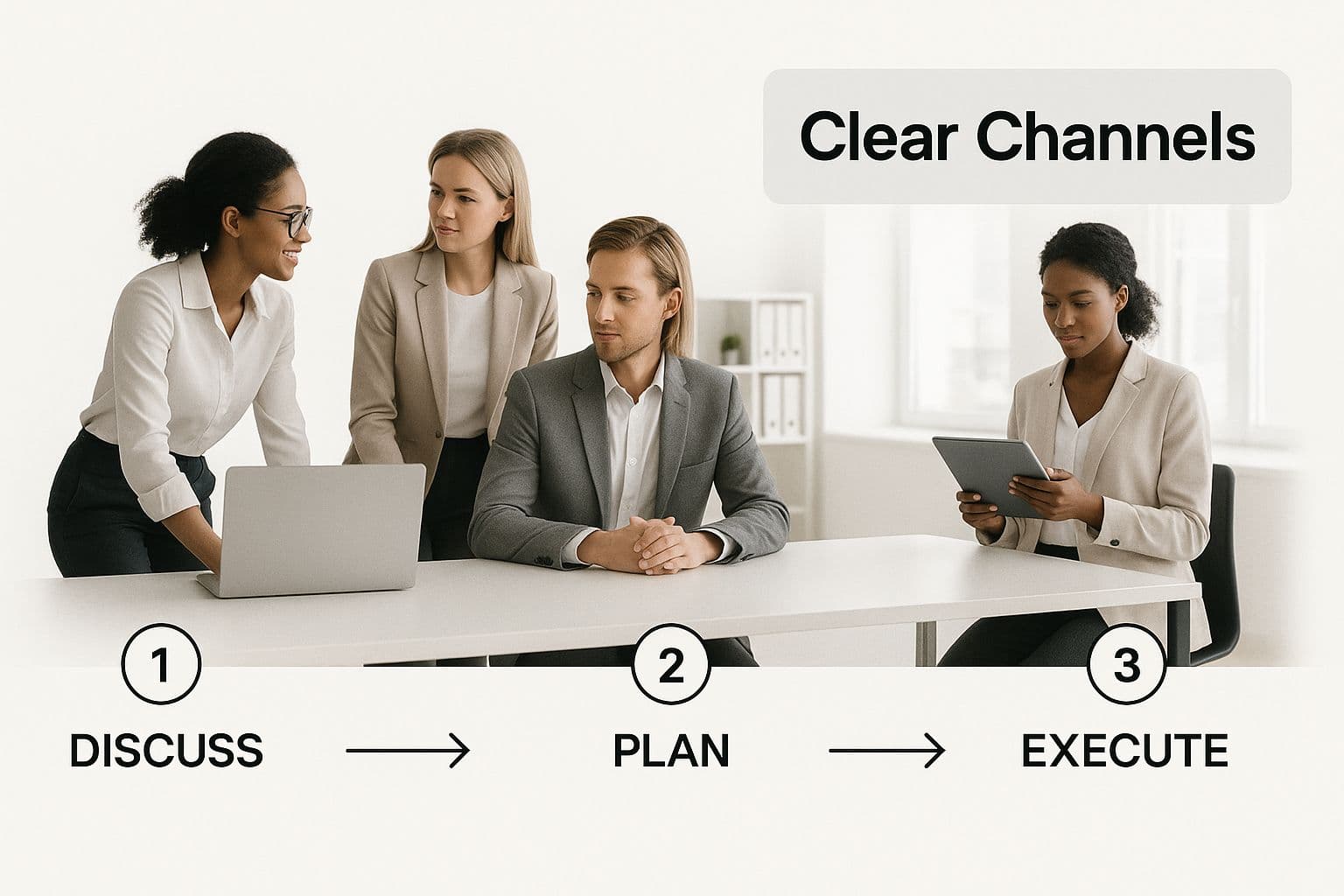
By auditing your tools, defining their purpose, documenting the plan, and revisiting it, you can build a communication system that actually helps people focus.
First, Audit Your Current Tools and Habits
Before you can build a better system, you have to get a handle on the one you've got now. Just start by listing every single communication tool your team uses. And I mean everything. Don't just list the official platforms; include text messages, phone calls, and even those one-off Slack channels that popped up for a project last year.
Next to each tool, be brutally honest about what it's really being used for today. Is the main project channel in Slack also the go-to spot for weekend plans and funny videos? Are critical feedback conversations happening in scattered email threads that are impossible to track down later? This simple exercise will quickly show you where all the overlap and confusion is happening.
Then, talk to your team. Ask them what drives them crazy about how you all communicate now. You’ll probably hear things like, "I never know if I should email John or just Slack him for a quick question." These little moments of friction add up, creating a surprising amount of drag on the entire team.
Define a Clear Purpose for Each Channel
With your audit done, it's time to give each tool a specific job. This is the single most important thing you can do to cut down on the digital noise. The goal is to create a system so intuitive that people don't have to think twice about where to post something or where to find information.
A great way to do this is by creating a simple "Communication Charter." It doesn't need to be some stuffy, formal document. It's just a straightforward guide that matches the type of conversation to the right channel.
Here’s a real-world example of what this could look like:
- Slack/Teams (#general-updates): Perfect for quick, informal questions and company-wide announcements that don't need a big discussion. Expected Response: Within a few hours.
- Asana/Project Management Tool: This is home base for all task-specific updates, questions, and feedback. It keeps all project conversations tied directly to the work itself. Expected Response: Within the business day.
- Email: Use this for more formal, external communication with clients or partners. It’s also great for detailed internal updates that you need to document and find later. Expected Response: Within 24 hours.
- Phone/Video Call: Save this for urgent issues that need an immediate, real-time conversation or for complex discussions that would be a nightmare to hash out over text.
This isn't about creating rigid, bureaucratic rules. It’s about building shared expectations so that when everyone agrees project feedback lives in Asana, no one wastes 20 minutes hunting through Slack DMs to find that one critical comment.
Document and Share Your New Framework
Once you’ve defined the purpose for each channel, write it all down in a central, easy-to-find place. A page in your company wiki, a pinned post in your main chat channel, or a shared Google Doc all work great. The format is less important than making sure everyone can get to it easily.
Your Communication Charter should clearly lay out:
- The Channel: (e.g., Slack #project-alpha channel)
- Its Purpose: (e.g., "For all daily stand-ups and quick blockers related to Project Alpha.")
- When to Use It: (e.g., "Post your morning update here by 10 AM local time.")
- When NOT to Use It: (e.g., "Do not use for formal feedback or long-term planning.")
After you've got it documented, pull the team together for a quick meeting to walk them through it. This isn't just about announcing a new policy; it’s about getting everyone on board. Explain the why behind the changes—to reduce stress, save time, and make everyone’s workday a little less chaotic. Encourage questions and be open to making small tweaks based on their feedback. When you approach it as a team, it feels like a shared improvement, not a top-down mandate.
Build Psychological Safety for Honest Conversations
Even with the best tools and cleanest communication channels, your team will never reach its full potential if people don't feel safe enough to be honest. Real collaboration isn't just about sharing status updates in Slack. It’s about creating an environment where your team members feel they can voice concerns, challenge ideas, and even admit mistakes without getting thrown under the bus.
This foundation of trust is what we call psychological safety.
Without it, you end up with a culture of silence. Great ideas die before they're ever spoken. Small problems fester and blow up because nobody wants to be the one to deliver bad news. Feedback becomes a watered-down, unhelpful exercise in corporate politeness. If you want to improve team communication, you have to start by making it safe to have the real conversations.

This isn't just some feel-good HR initiative; it has a direct impact on the bottom line. A detailed study on employee communication found that poor communication, especially among non-desk workers, tanks employee satisfaction, which in turn hurts retention and makes it nearly impossible to manage change effectively.
Model Vulnerability from the Top
Psychological safety doesn't just magically appear—it has to be built. And it always starts with leadership.
When managers act like they have all the answers, it sends a powerful signal to the team: mistakes are not okay here. The single most effective way to flip that script is for leaders to model a little vulnerability themselves.
This can be as simple as saying, "I'm not sure what the right move is here, what does everyone else think?" in a meeting. It could also mean openly sharing a challenge you're wrestling with or admitting a decision you made didn't pan out.
You're not showing weakness; you're showing strength. You’re proving it’s okay to be human and that the team’s collective brainpower is more valuable than any one person's authority. That small shift gives everyone else permission to be open and honest, too.
Run Blameless Post-Mortems
When a project goes sideways or a major mistake is made, the gut reaction is to find out who screwed up. But that blame game is the fastest way to kill trust. People will start hiding problems just to avoid being the next target, which is the exact opposite of what you need.
A far better approach is the blameless post-mortem. The entire focus is on understanding the "what" and the "why," not the "who."
Instead of asking, "Why did Mark miss the deadline?" you ask, "What communication gaps led to the deadline being missed?" This pivot from personal blame to process improvement creates a safe space to dissect failures and actually learn from them. It ensures the same mistake doesn't happen again.
Implement Structured Feedback Sessions
Honest feedback is the lifeblood of a high-performing team, but it almost never happens organically. Most people are hesitant to offer constructive criticism because they don't want to hurt someone's feelings or make things awkward. So, you have to create a dedicated time and place where feedback isn't just allowed, it's expected.
Team retrospectives are a perfect example. They're a staple in agile development, but any team can benefit from them. These are simply regularly scheduled meetings with a clear agenda:
- What went well? This is where the team gets to recognize and celebrate wins.
- What didn't go so well? This creates a safe container to talk about challenges.
- What will we do differently next time? This is the most important part—turning discussion into action.
By making these sessions a non-negotiable part of your team's rhythm, you completely normalize the act of giving and receiving feedback. It stops being a scary, one-off event and becomes just another part of how the team works together to get better.
2. Get Your Tech Stack Right
Your tech should make communication easier, not harder. I’ve seen so many teams just pile on more and more apps, hoping to fix their communication issues. All it does is create more digital noise and confusion.
The secret isn't having more tools; it's about having the right ones and, more importantly, a shared understanding of how and when to use them. Instead of just adding another app to the mix, think about where the friction is. A well-chosen tool can turn a chaotic email thread into a crisp summary or replace a long, confusing meeting with a quick video walkthrough. The goal is clarity, not clutter.
Pick Tools That Actually Fit Your Workflow
The best tools are the ones that feel like a natural extension of how your team already works. A flashy platform loaded with features is completely useless if it’s a pain to use. When you’re looking at new software, prioritize simplicity and function over all the bells and whistles.
For instance, most modern teams need a central hub for real-time chats and quick updates.
This is a classic Slack setup. By creating dedicated channels for specific projects, teams, or even just social chatter, you keep conversations focused. It drastically cuts down on the chances of important information getting buried.
Think about tools that cater to different needs and work styles:
- Asynchronous Video: Something like Loom is a game-changer for quick demos, design feedback, or updates that don't need a live meeting. A five-minute video can explain a complex idea way more effectively than a wall of text.
- Collaborative Whiteboards: For remote or hybrid teams, a shared space like Miro is invaluable for brainstorming. It gives everyone, no matter where they are, a chance to contribute ideas visually.
- Project Hubs: Tools like Asana or Trello are fantastic because they keep all the conversations about a task attached to the task. No more hunting through emails or chat logs to figure out what's going on.
Choosing the right software is a big decision. If you need a hand, our guide on choosing remote team collaboration software walks you through the whole process.
Use AI to Get Ahead of Misunderstandings
AI isn't just a buzzword anymore; it's a practical tool that can seriously cut down on miscommunication. Modern AI assistants can analyze conversations, pull out key points, and even help you write clearer messages. Imagine an AI that automatically summarizes a two-hour meeting for people who couldn't be there. That’s powerful stuff.
And teams are catching on fast because it actually works.
This tech is also great for bridging language and cultural gaps. Some tools can translate in real time or analyze text for its tone, flagging a phrase that might come across as harsh or confusing. It’s a proactive way to catch potential problems before they turn into real ones.
Ultimately, using technology the right way is about being intentional. Take a look at the tools you have, ask your team what’s working and what isn’t, and don't be afraid to try something new if it solves a real problem. A thoughtful tech stack empowers your team to connect more effectively and get back to focusing on what really matters—doing great work together.
Develop Core Communication Skills in Your Team

Setting up the right channels and fostering psychological safety are crucial first steps. But even the best systems will fail if your team members don't have the fundamental skills to communicate well. This is where you shift from managing processes to actively developing people.
Investing in these skills isn't just a nice-to-have; it's a necessity. In fact, 57% of employers globally say communication is the number one skill they look for. If you truly want to improve team communication for the long haul, skill development is where the real work begins. You can dig deeper into these highly-valued competencies in the modern workplace to see just how critical they are.
Let’s get practical and focus on three game-changing skills: active listening, giving better feedback, and running meetings that actually get things done.
Master Active Listening
Let's be honest—most of us don't really listen. We just wait for our turn to speak. This common habit is a recipe for misunderstandings, missed details, and colleagues feeling completely unheard. The antidote is active listening, which means being fully present and engaged with what someone is saying.
A simple but powerful technique to build this skill is reflective listening. It’s a two-step move. After someone has spoken, you paraphrase what you heard and then ask for confirmation.
For example:
- Paraphrase: "Okay, so if I'm hearing you right, the biggest blocker is the delay in getting the assets from the design team."
- Confirm: "Is that accurate?"
This simple act forces your brain to process the information, not just passively receive it. It also gives the speaker a chance to clarify their point, ensuring everyone is on the same page before the conversation moves on.
Give Feedback That Actually Helps
The word "feedback" can make people cringe. That's because it's often delivered poorly—either too vague to be useful or so harsh it feels like an attack. To transform feedback from a source of dread into a catalyst for growth, you need a reliable framework.
The Situation-Behavior-Impact (SBI) model is a fantastic way to structure constructive feedback. It strips away personal judgment and focuses on observable facts, turning a potentially tense conversation into a productive one.