Effective norms for meetings are essentially your team's agreed-upon rules of engagement. Think of them as a shared playbook that guides how everyone prepares for, participates in, and follows up on meetings. It’s what separates a structured, collaborative session from a chaotic, unproductive one.
Why Most Team Meetings Fail and How Norms Can Fix Them
Let's be real—most meetings are a mess. They start late, go off the rails, and end without anyone knowing what was decided or who's supposed to do what next. This isn't just a minor annoyance; it’s a massive drain on company resources, morale, and momentum. The real cost of bad meetings shows up in frustrated employees, stalled projects, and a culture where "collaboration" feels more like a punishment.
When a team just wings it without any established norms, it's like a sports team hitting the field without a game plan. Every conversation is improvised, and you end up with the same old problems:
- The "Loudest Voice" Problem: A couple of people dominate the entire conversation, while quieter folks with great ideas never get a word in.
- The "Scope Creep" Session: What was supposed to be a focused 30-minute check-in on a project milestone somehow turns into a free-for-all brainstorming session on ten different topics.
- The "Decision Déjà Vu": You spend an entire hour debating an issue, only to have the exact same conversation next week because nobody wrote down the final decision.
The Real Cost of Unstructured Meetings
This lack of structure isn't just a feeling; it has a real impact. Research shows that professionals waste a shocking amount of time in bad meetings. While 71% agree that meetings are critical for problem-solving, a dismal 30% of those meetings are seen as actually productive.
What's a huge part of the problem? A mere 37% of meetings use a structured agenda. That’s a massive, glaring opportunity for improvement right there. You can dig into more eye-opening stats on meeting efficiency over at Notta.ai.
Establishing clear norms for meetings is the direct antidote to these issues. They create a predictable and psychologically safe environment. When everyone knows the rules—like an agenda being mandatory 24 hours in advance or all decisions being recapped at the end—it lowers anxiety and lets people focus on contributing. To really get to the root of the problem, you have to understand the core strategies for running effective meetings.
The table below paints a clear picture of the shift you can expect. It contrasts the all-too-common reality of meetings without rules against the focused, productive environment that norms create.
Meeting Dynamics Before and After Implementing Norms
| Meeting Aspect | Without Norms (The Common Reality) | With Norms (The Productive Goal) |
|---|---|---|
| Preparation | People show up unprepared, seeing the agenda for the first time. | Attendees arrive ready to contribute, having reviewed the agenda and pre-read materials. |
| Participation | A few dominant voices control the conversation; others stay silent. | Everyone has an opportunity to speak, with balanced and inclusive discussions. |
| Focus | The meeting easily derails into off-topic tangents. | The conversation stays on track, guided by the agenda and a facilitator. |
| Decision-Making | Discussions circle endlessly with no clear resolution. | Clear decisions are made, documented, and assigned owners before the meeting ends. |
| Time Management | Meetings consistently start late and run over the scheduled time. | Meetings start and end on time, respecting everyone's schedule. |
| Follow-Up | Action items are vague or forgotten, leading to stalled progress. | Everyone leaves with clear, actionable next steps and deadlines. |
As you can see, the difference isn't small. It's a fundamental change in how the team operates, moving from chaos to clarity.
This transformation doesn't require some massive, complicated overhaul. It starts with simple, co-created guidelines that turn frustrating obligations into valuable moments where real work gets done. When everyone feels their time is respected, you get decisions, progress, and momentum.
How to Co-Create Your Team's Meeting Playbook
A generic list of rules you downloaded from the internet? It’s not going to stick. For meeting norms to actually become part of your team's DNA, they have to be co-created. Real buy-in happens when everyone feels a sense of ownership, and that starts with a collaborative session to build your unique playbook from the ground up.
This isn't about management handing down rules from on high. It’s about the team getting together to solve its own problems. The first step is to dedicate a meeting specifically to this process. The goal here is to get all the biggest frustrations out on the table and brainstorm practical, agreed-upon solutions together.
Think of it as a journey from unstructured chaos to structured collaboration, a path that your co-created norms will help you pave.
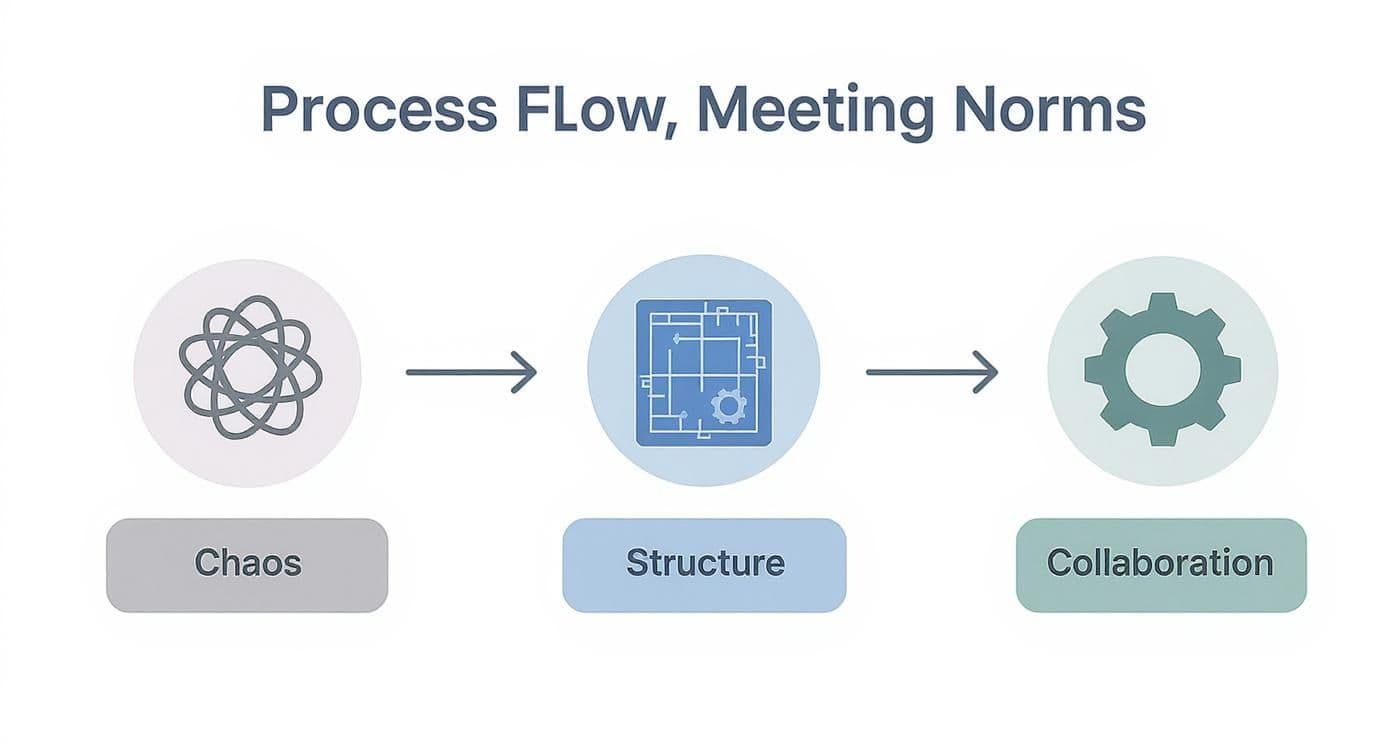
This visual journey shows that building a framework isn't just about creating order. It's the critical step that makes real, effective teamwork possible.
Structure Norms Around Three Core Pillars
To keep the conversation from spiraling, it helps to frame the brainstorming session around the entire lifecycle of a meeting. This structure ensures you cover all the common pain points without getting lost in the weeds.
- Preparation (Before the Meeting): This is where so many meetings fail before they even start. Ask your team questions like, "What do we need to do before a meeting to guarantee it's a success?" or "What’s the single biggest frustration you feel when a meeting invite pops up?"
- Participation (During the Meeting): This pillar is all about how you interact with each other in the room (or on the video call). Try prompts like, "How can we make sure everyone’s voice is heard, not just the loudest ones?" and "What's our game plan for getting back on track when a discussion goes off the rails?"
- Follow-Through (After the Meeting): A meeting's value evaporates if nothing happens afterward. Spark the discussion with questions like, "How are we tracking action items right now, and what’s a better way to do it?" or "What absolutely must be included in every meeting recap?"
Facilitate a Productive Brainstorming Session
As the facilitator, your job is to guide the conversation, not control it. A great way to start is by asking everyone to silently write down their top three meeting frustrations on sticky notes. Then, start grouping similar themes on a whiteboard. This trick visually highlights the most common issues, depersonalizes the complaints, and focuses the team on solving shared problems.
From there, you can tackle each theme one by one, brainstorming a specific, actionable norm to address it.
This isn't just a feel-good exercise; it's a significant business issue. Consider this: in the United States, there are somewhere between 36 to 56 million meetings every single day, and about half of them start late. All those ineffective meetings cost the U.S. economy an estimated $37 billion annually.
When it comes to finalizing which norms to adopt, you need a way to build consensus without getting bogged down in endless debate. A quick, effective method is the fist-to-five voting technique. It allows everyone to show their level of agreement visually and instantly. You can learn exactly how to use the fist to five consensus-building tool in our detailed guide. Using a method like this ensures your final playbook is something everyone genuinely supports and feels motivated to uphold.
Adapting Meeting Norms for Different Teams
Trying to apply the same meeting rules to every team is a recipe for disaster. The high-energy, free-flowing rules that make a creative brainstorm sing would absolutely crush a data-heavy quarterly business review. For meeting norms to actually work, they have to be shaped by the team’s specific goals, culture, and day-to-day realities.
Think about it: what works for a product team sitting side-by-side in an office won't translate perfectly to a sales team spread across three continents. The trick is to start with a solid foundation—like always having a clear purpose—and then customize the details to fit how your team operates.

This really comes down to being thoughtful about the unique rhythm and purpose of each department. A sales team’s weekly forecast call has entirely different needs than an engineering team’s sprint planning session.
Norms for Remote and Hybrid Teams
With distributed work being the new normal, creating inclusive meeting rules has never been more critical. It’s no surprise that 86% of global workers now find themselves in meetings with at least one person dialing in remotely. This has pushed 42% of larger companies to invest in better meeting tech to keep everyone connected, a trend highlighted by recent stats from Archie.
To close the distance between those in the office and those at home, try establishing these ground rules:
- Cameras on by Default: This one is simple but powerful. Having cameras on helps everyone pick up on non-verbal cues and fosters a real sense of connection.
- Use Chat for Questions Only: Let's be honest, the chat can quickly become a distracting side conversation. Designate it for questions and have a facilitator monitor it, ensuring every voice is heard.
- Adopt a "Speak Up" Signal: The "raise hand" feature is a game-changer. It creates an orderly queue and prevents remote folks from getting talked over by their in-person colleagues.
Figuring out how to manage communication in a distributed environment is a common growing pain. We dive deeper into this in our guide on how to manage remote teams effectively.
Norms for Sales Teams
Sales meetings need to be quick, sharp, and focused on what’s next. They’re all about the numbers, the pipeline, and the strategy, so the norms should be built around efficiency and accountability.
- Data First, Talk Second: All pipeline updates must be in the CRM before the meeting starts. Meeting time is for talking strategy and clearing roadblocks, not for live data entry.
- The 5-Minute Rule: Give each rep a strict five-minute slot to run through their forecast and flag key deals. This keeps the energy high and forces everyone to be concise.
- No Surprises, Ever: Any major risks or big news about a deal needs to be shared with leadership before the meeting. This prevents the agenda from getting derailed by sudden fire drills.
Norms for Engineering Teams
For engineers, the most precious resource is uninterrupted time for deep work. Meeting norms, therefore, should act as a shield, protecting focus while still allowing for critical alignment and problem-solving.
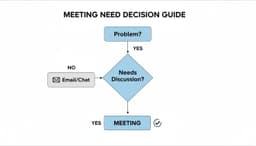
- The "Does This Need to Be a Meeting?" Check: Before anyone can schedule a meeting, they have to answer a simple question in a public Slack channel: "Could this be a doc, an email, or a quick DM instead?" This simple gut check eliminates so many unnecessary calls.
- Declare No-Meeting Zones: Block out sacred time. For example, make Tuesday and Thursday afternoons official "no-meeting" blocks for the entire department to guarantee heads-down time.
- Frame Agendas as Questions: Every single item on the agenda should be a question to answer or a decision to make. This stops meetings from turning into vague, rambling discussions with no clear point.
Making Your New Meeting Norms Stick
So, you've created a brilliant new set of meeting norms. That’s a fantastic first step, but a document sitting in a shared drive won't change a thing on its own. The real work begins now: weaving these new habits into the very fabric of your team's culture.
Success here comes down to a smart rollout and consistent, gentle reinforcement. The goal is for these new behaviors to become second nature.
First things first, you need a clear announcement. Don't just fire off an email with a link and hope for the best. Carve out 10 minutes in your next team meeting to walk everyone through the "why" behind the change. Frame it as a team effort to get our time back and make our work together more impactful.
After that initial launch, your job is to make the norms impossible to forget. Weave them into your daily workflow.
- Calendar Invites: Pop a few key norms—maybe the top 3 or 4—into your standard meeting invitation template.
- Meeting Agendas: A simple one-liner at the top of every agenda works wonders. Something like, "Friendly reminder: We follow our team norms to keep this meeting focused."
- Your Spaces: Put up a visually clean summary of the norms. If you're in an office, post it in the main conference room. For remote teams, pin it to the top of your primary Slack or Teams channel.
Getting the Team to Own It
Ultimately, you want the team—not just the manager—to uphold these new standards. This isn't about policing each other; it's about creating a culture of gentle, in-the-moment course correction.
For instance, if a discussion starts to drift, anyone should feel comfortable jumping in with, "That's an interesting point, but it feels a bit off-topic. Can we 'park' it for now to stay on track?" This isn't about shaming someone; it's a respectful way to guide the conversation back.
One great way to put this into practice is by introducing a rotating "Meeting DRI" (Directly Responsible Individual). This person's job for the week isn't to be the boss, but simply the friendly guardian of the norms. They're the one who gently reminds everyone to stick to the agenda, ensures all voices are heard, and helps recap the decisions made.
When everyone knows the rules and shares the responsibility for keeping them, your norms stop being a checklist and start becoming "just how we do things." This leads to more than just better meetings; it builds a more accountable and respectful team. And a natural side effect of that is clearer decisions and follow-through. For teams looking to sharpen this specific skill, our guide on mastering action item tracking for teams offers some great practical strategies.
How to Measure and Improve Your Meeting Culture
You’ve done the hard work of setting up new meeting norms. That's a huge win, but the job isn't over. How do you actually know if they're working? Are your meetings genuinely better, or have you just added more rules?
The idea isn't to get bogged down in complex analytics. It's about finding simple, direct ways to see if your changes are making a real difference. We need to get past just "feeling" more productive and start tracking tangible results.

Gathering Simple, Actionable Feedback
One of the easiest and most powerful things you can do is ask for feedback right after a meeting ends. Don't wait. A quick, one-question pulse survey can capture people's immediate reactions before they get pulled into their next task.
Keep the question dead simple:
"On a scale of 1-5, was this meeting a valuable use of your time?"
If you're consistently seeing scores below a 4, that’s your red flag. It’s a clear signal that something isn’t landing right and needs a second look. You can even run a quick poll in your team's Slack or Teams channel to get an instant vibe check.
But numbers are only half the story. Look for the qualitative shifts, too. Are action items getting done more often? Are decisions being made faster? Those are the real signs that your new norms are paying off.
Creating a Continuous Improvement Loop
To keep the momentum going, you need to build a review process right into your team's regular routine. I’ve found that a quarterly "Norms Check-in" works wonders. It’s just a short, dedicated meeting to talk openly about what’s working and what’s not.
A simple agenda for this check-in could look like this:
- Look at the feedback: What are the pulse survey scores telling us from the last 90 days?
- Celebrate the wins: Which norms have made the biggest difference? Why?
- Pinpoint the problems: Are there any norms that feel awkward or are being ignored?
- Suggest some tweaks: How can we adjust our approach to fix what's broken?
This whole process is really about creating a feedback loop. A fantastic way to structure these conversations is by running regular agile retrospectives focused specifically on meeting effectiveness. By constantly checking in and adapting, you turn your meeting culture from a productivity drain into a true competitive advantage.
Answering the Tough Questions About Meeting Norms
Let’s be real. Even with the best intentions, rolling out new meeting habits isn't always a walk in the park. Old habits die hard, and you’re bound to hit a few bumps.
Anticipating the tricky "what if" scenarios is half the battle. When you have a plan for the awkward moments, you can navigate them with confidence and keep the whole process on track.
What If a Senior Leader Breaks the Norms?
This is the big one, isn't it? A senior manager shows up late, talks over everyone, or takes the agenda completely off-road. It’s a delicate situation, and nobody wants to publicly call out their boss.
The trick is to correct the process, not the person. Frame your intervention as a way to help the entire group.
- For derailing: Try saying something like, "That's a really important point, Sarah. To make sure we give it the attention it deserves and respect everyone's time, let's add it to the 'parking lot' and circle back after we've covered today's main goals."
- For late arrivals: A simple norm can solve this. Agree that meetings start on time, and anyone joining late can catch up by reading the agenda. This keeps things moving without putting anyone on the spot.