In a world of automated replies and digital distance, the ability to connect with clients on a human level is more than just a skill; it’s a superpower. Strong communication is the bedrock of every successful project, turning one-off transactions into lasting partnerships. It’s the single most effective way to prevent costly misunderstandings, build unbreakable trust, and transform satisfied customers into your most vocal advocates.
But what separates standard communication from a truly exceptional client experience? It comes down to a deliberate, strategic approach. This guide cuts through the noise to deliver 8 specific, actionable client communication best practices that go far beyond generic advice. We will explore proven strategies, from setting crystal-clear expectations from day one to mastering the art of transparency when things go wrong.
You will learn how to actively listen, document key decisions, and choose the right channel for every conversation. Each tip is designed to be immediately implemented, equipping you with the practical tools needed to not only meet but consistently exceed client expectations. Get ready to transform your client interactions and build a more resilient, profitable business founded on clear, effective communication.
1. Active Listening and Acknowledging Client Concerns
Effective client communication begins not with speaking, but with listening. Active listening is the practice of fully concentrating on what a client is saying, understanding their complete message, and responding thoughtfully. It’s about absorbing the words, the tone, and the underlying emotions to grasp their true needs and concerns.
This foundational practice builds immediate trust and ensures you understand client expectations from the very start. By giving your undivided attention, you avoid misunderstandings and show the client they are your top priority, a key differentiator in any professional relationship.

Why It’s a Top Best Practice
Pioneered by thinkers like Stephen Covey and Dale Carnegie, active listening is more than a technique; it’s a mindset. It shifts the focus from "what I want to say next" to "what is the client truly telling me?" When clients feel heard and understood, they are more likely to be collaborative, transparent, and loyal.
Companies like Zappos built their legendary customer service model on this principle, training representatives to listen without time limits. Similarly, IBM’s high client retention rates in consulting are partly attributed to extensive active listening training. These examples prove that this is one of the most powerful client communication best practices for fostering strong, long-term partnerships.
How to Implement Active Listening
Here are simple, actionable steps to become a more active listener:
- Follow the 80/20 Rule: Aim to listen 80% of the time and speak only 20%. This ensures the client has ample space to share their thoughts.
- Paraphrase and Clarify: Repeat key points back to the client. Phrases like, "So, what I'm hearing is..." or "To confirm, you’re looking for a solution that addresses X and Y?" demonstrate comprehension and give them a chance to correct you.
- Embrace the Pause: After a client finishes speaking, wait 2-3 seconds before responding. This prevents interruptions and allows you to formulate a more considered reply.
- Create a "Client Concerns Log": Use a simple document or CRM field to track recurring issues or questions. This helps identify patterns and proactively address common pain points in future conversations.
Active listening is a skill that benefits not only client-facing roles but also internal team dynamics. You can explore these essential communication skills to improve collaboration across your entire organization.
2. Setting Clear Expectations and Boundaries
Ambiguity is the enemy of a successful client relationship. Setting clear expectations and boundaries involves explicitly defining the project scope, deliverables, timelines, and communication protocols right from the start. It’s about creating a shared understanding of what will be delivered, when, and how.
This proactive approach prevents the dreaded "scope creep," minimizes misunderstandings, and builds a framework for mutual accountability. By establishing a clear roadmap, you ensure both you and your client are working from the same playbook, fostering a partnership built on clarity and trust rather than assumptions.
Why It’s a Top Best Practice
Pioneered by management experts like David Maister and practiced by modern companies like Basecamp, setting clear boundaries transforms a project from a reactive process into a predictable one. It shifts the dynamic from "I hope we get what we need" to "I know exactly what to expect." When expectations are aligned, conflicts decrease and satisfaction soars.
For instance, Deloitte utilizes detailed 'Statement of Work' documents to specify exact deliverables and exclusions, reportedly reducing contract disputes by over 60%. Similarly, design agency Pentagram provides a 'What to Expect' document covering their entire process. These examples underscore how this is one of the most crucial client communication best practices for project success and client retention.
How to Implement Clear Expectations
Here are actionable steps to establish firm and fair boundaries from day one:
- Create a Client Welcome Packet: Develop a standard document outlining communication norms, response times (e.g., "We respond to emails within 24 business hours"), and key contacts.
- Host a Formal Kickoff Meeting: Use this meeting to verbally review all expectations laid out in your proposal or contract. Document the key takeaways and share them afterward.
- Define "Out of Scope" Explicitly: Include a "What's Not Included" section in your proposals to prevent incorrect assumptions about deliverables.
- Use Visual Timelines: Employ tools like Gantt charts or simple roadmaps to make project schedules concrete and easy for clients to understand.
- Reconfirm at Milestones: Briefly revisit and reconfirm expectations at major project milestones to ensure everyone remains aligned as the project evolves.
3. Regular and Proactive Communication
Effective client relationships are built on consistency, not just occasional brilliance. Regular and proactive communication means establishing a reliable rhythm of updates and check-ins, rather than only reaching out when problems arise or when a client contacts you first. It's about anticipating a client’s need for information and providing it before they have to ask.
This approach transforms the client experience from one of uncertainty to one of confidence. By maintaining visibility and keeping clients informed about progress, potential hurdles, and next steps, you prevent them from feeling neglected and significantly reduce their anxiety about a project’s status.

Why It’s a Top Best Practice
Business leaders like Marcus Lemonis and customer success pioneers like Brian Halligan champion this method because it shifts the relationship from reactive to strategic. When clients don't have to chase you for updates, they trust you are in control and managing their interests effectively.
For example, HubSpot’s customer success teams schedule monthly business reviews with clients, which has contributed to their impressive 90% retention rates. Similarly, web development agency 10up sends automated project summaries every Friday, reducing their incoming status inquiry emails by 70%. These examples show that proactive updates are one of the most impactful client communication best practices for building trust and efficiency.
How to Implement Regular and Proactive Communication
Here are actionable steps to make your communication more consistent and forward-thinking:
- Set a Clear Cadence: At the start of a project, agree on a communication frequency with the client (e.g., weekly email, bi-weekly call) and stick to it.
- Embrace the "No Surprises" Rule: Bad news should never come out of the blue. Share potential risks or delays as soon as you identify them, along with a plan to address them.
- Share Small Wins: Don't wait for major milestones. Send brief updates about small progress points to show continuous momentum and keep the client engaged.
- Use Templates and Tools: Create email templates for standard status reports and use project management tools with client-facing dashboards to automate transparency.
To kickstart this proactive approach, a strong initial follow-up is key. By perfecting your follow-up emails after an initial consultation, you can set a positive precedent and clearly outline the communication plan from day one.
4. Choosing the Right Communication Channels
Effective communication isn't just about what you say; it's also about where you say it. Choosing the right communication channel involves strategically selecting the best method (email, phone, video, etc.) based on the message's urgency, complexity, and the client's preferences. A quick question doesn't require a formal meeting, and a complex strategy discussion shouldn't happen over instant message.
This practice prevents misunderstandings, boosts efficiency, and ensures your message is received with the appropriate context and attention. By aligning the channel with the message, you show respect for your client's time and workflow, which is a cornerstone of modern professional relationships.
Why It’s a Top Best Practice
Pioneers like Stewart Butterfield of Slack and authors like Cal Newport have highlighted the immense productivity drain caused by using the wrong channels. When communication is mismatched, urgent messages get lost in overflowing inboxes, and simple questions unnecessarily block calendars. Aligning the medium with the message is a critical component of successful client communication best practices.
Leading organizations demonstrate this principle's value. Accenture developed a 'communication preference profile' for clients to specify their preferred channels for different interactions. Similarly, law firm Baker McKenzie established formal 'communication protocols' with major clients, reportedly reducing miscommunication incidents by 45%. These examples prove that a strategic approach to channel selection directly improves client satisfaction and operational efficiency.
How to Implement This Practice
Here are actionable steps for choosing the right communication channels:
- Establish a Communication Plan: Early in the relationship, create a simple document outlining which channels to use for specific types of communication (e.g., email for approvals, a project tool for updates, Slack for quick questions).
- Ask Clients Directly: Don't assume preferences. Ask them, "What's the best way to reach you for urgent matters versus non-urgent updates?" This simple question prevents friction later.
- Default to Richer Media for Complex Topics: For sensitive feedback, strategic planning, or resolving conflicts, use video or in-person meetings. Non-verbal cues are essential for avoiding misinterpretation.
- Use a Decision Tree: Create a simple flowchart for your team to quickly determine the best channel based on the situation's urgency and complexity.
This decision tree offers a clear guide to help your team select the most appropriate communication channel for any given scenario.
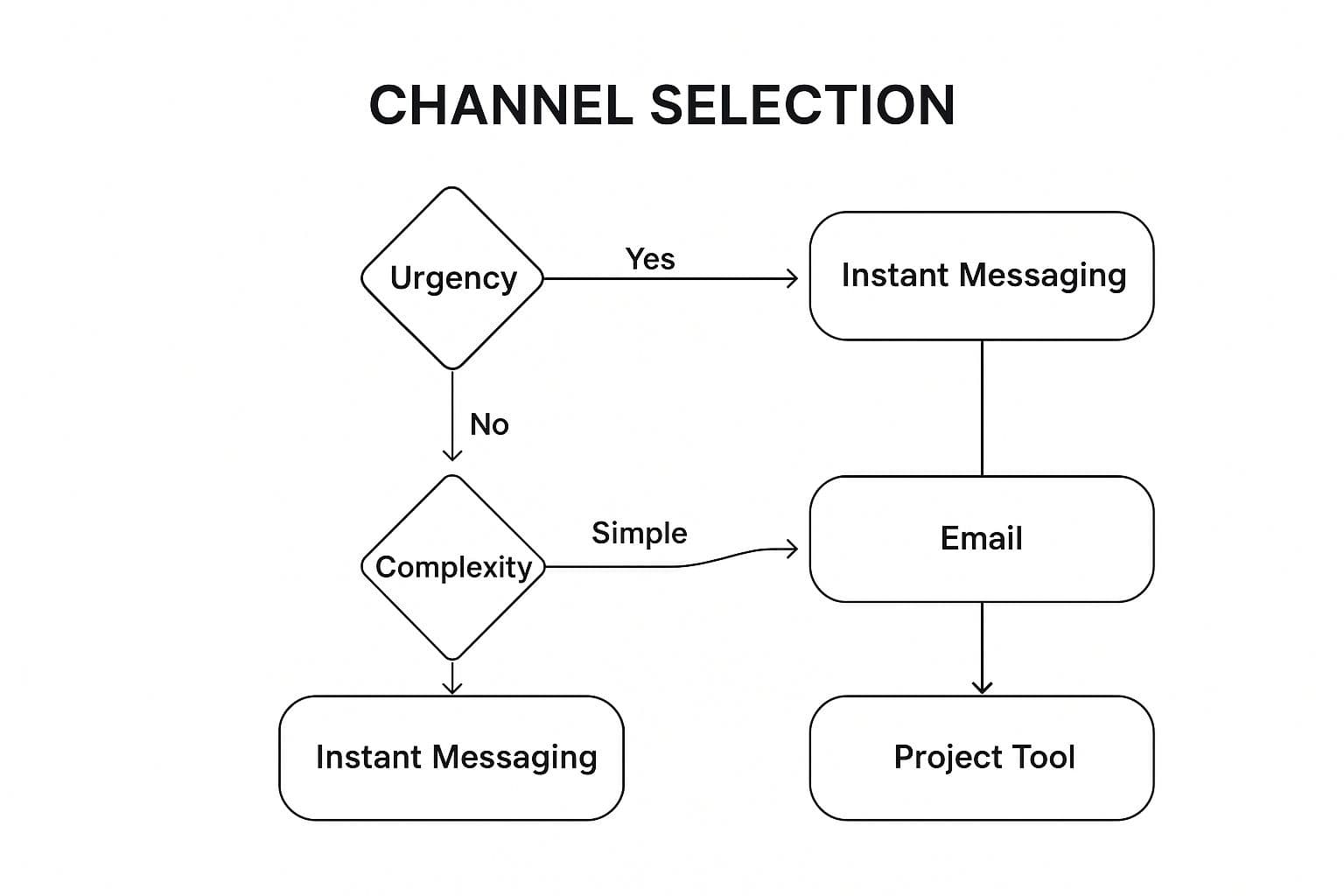
By following a logical flow from urgency to complexity, the infographic clearly maps out when to use instant messaging versus when a video call is necessary, eliminating guesswork for your team.
5. Transparency and Honesty (Especially About Problems)
True partnerships are built on trust, and trust is forged through honesty, especially when things go wrong. This practice is about maintaining open communication with clients about challenges, delays, or mistakes. It means proactively disclosing problems, taking ownership, and presenting solutions rather than hiding issues or sugarcoating reality.
This approach treats clients as valued partners who deserve to know the truth about project status, limitations, and potential setbacks. It involves being realistic about timelines, upfront about costs, and honest about your capabilities from the start.

Why It’s a Top Best Practice
Pioneered by leaders like Ray Dalio and Brené Brown, the principle of radical transparency demonstrates that vulnerability builds more credibility than perfection. When you are honest about a problem, you control the narrative and show integrity, which clients remember far longer than the mistake itself.
Buffer's radical transparency policy, which includes publicly sharing revenue and even internal missteps, has built unprecedented customer loyalty. Similarly, when Basecamp experienced a major security incident, they immediately disclosed it with full details, retaining an astonishing 98% of their customer base. These examples prove that transparency is one of the most vital client communication best practices for turning potential disasters into opportunities to strengthen relationships.
How to Implement Transparency and Honesty
Here are actionable steps to communicate honestly, even with bad news:
- Don't Wait, Inform First: Always tell the client about a problem before they discover it themselves. This proactive approach maintains trust and control over the situation.
- Use the P-S-P Formula: Clearly state the Problem, explain the Solution you are implementing, and detail the Prevention steps you will take to ensure it doesn't happen again.
- Take Full Ownership: Use phrases like "We made a mistake" instead of "mistakes were made." Direct ownership is crucial for demonstrating accountability.
- Deliver Bad News Personally: When possible, discuss significant issues over a phone or video call. This personal touch shows you are taking the matter seriously and allows for a more nuanced conversation.
6. Personalization and Relationship Building
In a world of automated responses and generic interactions, personalization is what separates a transactional vendor from a trusted partner. This practice involves treating each client as an individual with unique needs, preferences, and personal circumstances, rather than just another account number. It’s about building a genuine human connection that transcends business.
This approach transforms client relationships from purely professional exchanges into authentic partnerships built on mutual respect and understanding. When clients feel seen and valued as people, they become advocates for your brand, leading to greater loyalty, trust, and long-term success.
Why It’s a Top Best Practice
Pioneered by leaders like Horst Schulze of The Ritz-Carlton and championed by modern entrepreneurs like Gary Vaynerchuk, personalization is a cornerstone of exceptional service. It shifts the focus from "what can I sell?" to "how can I serve this person's specific needs?" This mindset is crucial for creating memorable client experiences.
The Ritz-Carlton, for example, maintains detailed preference profiles for guests, while accounting firm Withum creates 'client passion profiles' to inform personalized conversations and gifts. These strategies demonstrate how personalization is one of the most effective client communication best practices for building unbreakable relationships and fostering exceptional retention rates.
How to Implement Personalization
Here are simple, actionable steps to build stronger, more personal client relationships:
- Create a "Personal Notes" Log: Use a dedicated section in your CRM or a simple document to note birthdays, hobbies, family details, and professional milestones for each client.
- Reference Past Conversations: Start calls with a personal touch. A simple, "Last time we spoke, you mentioned your daughter's graduation. How did it go?" shows you listen and care.
- Adapt Your Communication Style: Pay attention to how your clients communicate. Some prefer formal emails, while others are comfortable with quick, casual messages. Mirror their style to build rapport.
- Celebrate Their Wins: Acknowledge client achievements, both professional and personal. A quick email congratulating them on a company award or a successful project launch goes a long way.
Personalization strengthens external relationships and can be applied internally to foster better teamwork. You can enhance your business with cross-functional communication by applying these same principles across departments.
7. Documenting Everything in Writing
Verbal agreements are built on memory, which is notoriously fallible. Documenting everything in writing is the practice of creating a clear, permanent record of all significant client communications, decisions, and agreements. This includes sending follow-up emails after calls, keeping detailed meeting notes, and formally recording any changes to project scope.
This discipline transforms ambiguous conversations into concrete, agreed-upon facts. It acts as a safety net that prevents misunderstandings, protects both parties, and ensures accountability. When everything is documented, "he said, she said" scenarios are eliminated, creating a foundation of clarity and trust.
Why It’s a Top Best Practice
Pioneered in high-stakes environments like law and project management, this practice is championed by figures like Amazon's Jeff Bezos, who mandated written memos to enforce clear thinking. The core idea is that writing forces clarity and exposes gaps in logic that speech can hide. It creates a single source of truth that everyone can refer back to.
For example, architecture firm Gensler maintains comprehensive project documentation, which has been instrumental in preventing legal disputes. Similarly, many software agencies find that documenting sprint reviews and change requests drastically reduces scope creep and client disagreements. This makes written documentation one of the most critical client communication best practices for risk management and project success.
How to Implement Written Documentation
Here are actionable steps to make documentation a seamless part of your workflow:
- Send Follow-Up Summaries: After every important call or meeting, send a brief email starting with, "To confirm our conversation..." This locks in understanding and gives the client a chance to correct any misinterpretations.
- Use Meeting Note Templates: Create standardized templates with sections for attendees, key discussion points, decisions made, and action items. This ensures consistency and makes information easy to find.
- Implement a "Same-Day" Rule: Make it a team policy to document and share notes from any client interaction before the end of the business day. This keeps information fresh and relevant.
- Get Client Sign-Off: For major decisions or scope changes, ask the client to reply with a simple "Looks good" or "Confirmed." This creates a clear, agreed-upon record of consent.
Mastering this skill is essential for clear communication and project alignment. You can learn more about how to take better meeting notes to build a robust documentation system for your team.