A good basic meeting agenda template isn't just a to-do list for your meeting. Think of it as a strategic tool that transforms rambling, unproductive gatherings into sharp, action-oriented sessions. By simply outlining the goals, topics, and a rough timeline beforehand, you bring clarity to the room and show everyone you respect their time.
Why an Agenda Is Your Secret Weapon for Better Meetings
We’ve all been there—stuck in a meeting that drags on without any real purpose. It’s draining, frustrating, and you walk out wondering what, if anything, was actually accomplished. These aimless get-togethers aren't just an annoyance; they carry a massive price tag.
Ineffective meetings are estimated to cost the U.S. economy a staggering $37 billion every single year. And it's a feeling shared by many in the trenches; recent data shows that 65% of workers feel that time spent in meetings is often time wasted. This isn't just a minor issue—it's a huge, costly problem that a simple document can start to fix.
What a Simple Plan Actually Delivers
A well-thought-out agenda is your roadmap. It lays out a clear path from the start of the meeting to its intended destination, making sure every conversation serves a purpose. Here’s what it really brings to the table:
- Crystal Clear Purpose: Everyone walks in knowing exactly why they're there and what's on the docket. This simple act cuts through the confusion and sets a productive tone right away.
- Built-in Accountability: When you assign people to lead specific topics, you build ownership directly into the meeting’s DNA. It’s immediately clear who needs to come prepared to speak on certain points.
- A Sign of Respect: Putting time estimates next to each item is a powerful way to show you value your team's time. It keeps conversations from wandering off-topic and ensures the most important issues get the focus they need.
To really nail this, it helps to see the core components laid out. Think of these as the non-negotiables for any agenda that’s meant to get results.
The Anatomy of a High-Impact Agenda
| Component | What It Achieves | Example in Action |
|---|---|---|
| Clear Objective | Sets the "why" for the meeting | "Decide on the Q3 marketing budget allocation for the new product launch." |
| Discussion Topics | Lays out the specific points to cover | "1. Review Q2 Performance (5 min) 2. Propose Budget Scenarios (15 min)" |
| Topic Owners | Assigns responsibility and preparation | "Topic 2: Presented by Sarah K." |
| Time Allotments | Keeps the meeting on track and paced | "Topic 3: Final Budget Vote (10 min)" |
| Action Items | Captures next steps and ensures follow-through | "AI: Alex to send final budget to finance by EOD Friday." |
This structure isn't just about creating a document; it’s about architecting a more effective conversation from the ground up.
In the end, starting with a basic meeting agenda template is the first step to getting your team’s focus and energy back. Of course, a great agenda is just one piece of the puzzle. Knowing how to run effective meetings as a whole will make an even bigger difference.
Crafting Your Agenda From the Ground Up
Building a great agenda is less about filling out a form and more about architecting a conversation. I always start the process by asking one simple, but critical, question: What is the single most important thing we need to achieve in this meeting?
Answering that question gives you the meeting’s core objective. Every single item you add to your agenda from here on out must directly support that goal. If it doesn't, it probably belongs in an email or a different meeting. For example, an objective like "Decide on the Q4 marketing tagline" is crystal clear and gives the meeting a finish line.
From Objective to Actionable Topics
Once your objective is set, it's time to break it down into smaller, logical discussion topics. These are the stepping stones that will guide your team toward the finish line. A common trap is using vague labels like "Marketing Update." Instead, try framing your topics as questions or action items to spark real engagement.
- Vague Topic: "Budget Discussion"
- Actionable Topic: "Review and approve the proposed Q3 event budget"
See the difference? That small tweak shifts the energy from a passive report-out to an active decision-making session. Everyone knows exactly what's expected of them before they even walk in the room.
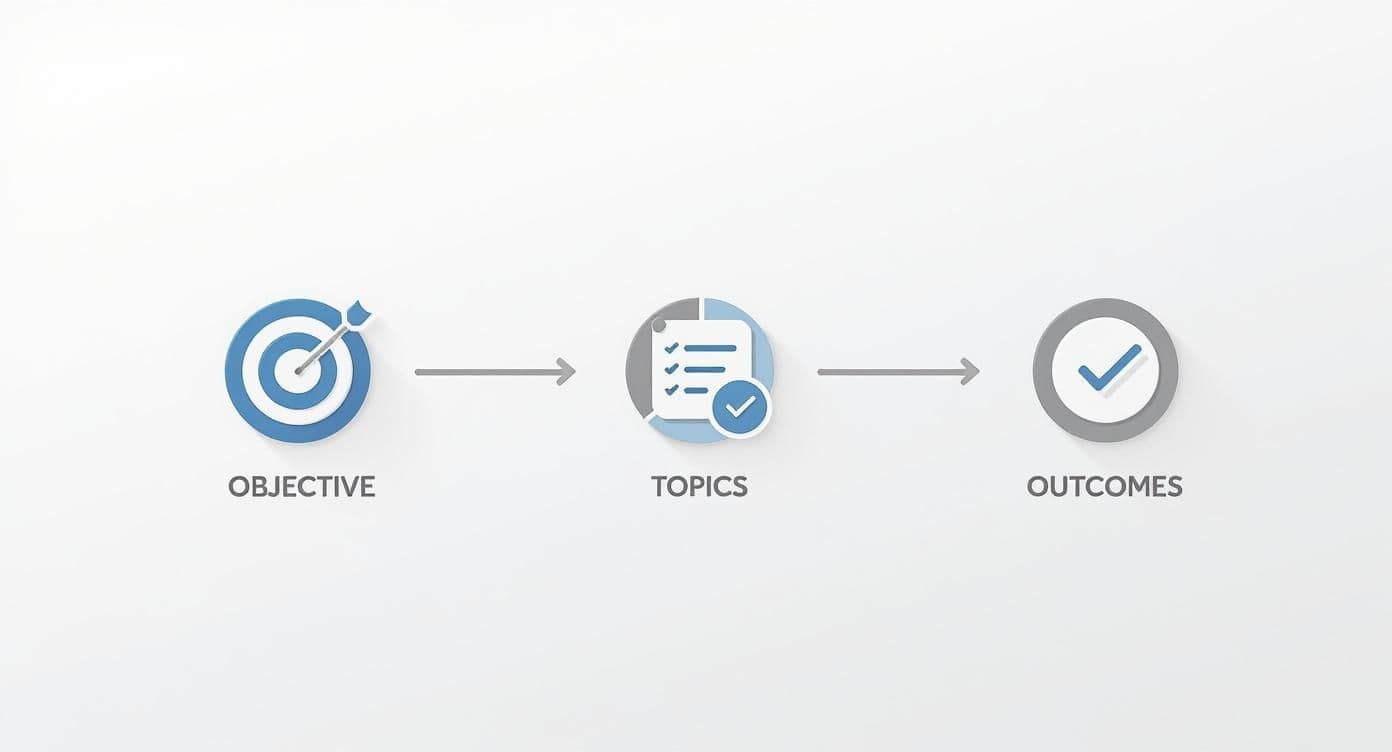
This simple flow shows how a clear objective leads to focused topics, which then drive the outcomes you're looking for. As the visual makes clear, without that solid objective, your topics will drift, and your goals will likely stay just out of reach.
Assigning Time and Ownership
Now that you have your topics, let’s get real about timing. The most common mistake I see is trying to cram a two-hour meeting into a 30-minute slot. With some executives spending nearly 23 hours a week in meetings, every minute has to count.
Go through your list and assign a specific time limit to each item. This disciplines you to prioritize what truly matters and keeps the conversation from derailing. Give more time to the heavy-lifting decisions and less to quick updates.
This small step introduces a huge amount of accountability. When people see their name next to a topic, they show up prepared to lead that discussion, which instantly elevates the quality of the entire meeting.
The Small Details That Make a Big Difference
A solid agenda gets everyone in the same room, but a great one ensures they show up ready to contribute. It’s the small, thoughtful details that transform your agenda from a simple list into a powerful tool for a productive meeting.
One of the biggest game-changers I've seen is adding a "Preparation Needed" section. Don't just assume people will know what to do. Spell it out for them. Ask attendees to review a specific report, watch a short product demo, or come prepared with three ideas for the brainstorming session. This simple step means you spend your valuable time together discussing and deciding, not just catching people up.
Similarly, every single agenda item should have a clearly defined outcome. Think of it as creating a finish line for each conversation.
Define What Success Looks Like
Vague topics are a recipe for rambling, unproductive discussions. When you clearly state the goal for each point, you're steering the conversation toward a tangible result. You shift the focus from just talking about a topic to actively achieving something with that time.
Here’s a real-world example:
- Weak Agenda Item: "Q3 Marketing Campaign"
- Strong Agenda Item: "Decide on the final tagline for the Q3 marketing campaign."
See the difference? That small change makes it crystal clear that a decision needs to be made, focusing everyone's energy on that goal. Your basic meeting agenda template should absolutely have a spot for these crucial details.
Logistics and Flow
Don't make people scramble for the meeting details. Put the video conference link, room number, or dial-in info right there in the agenda. It’s a simple courtesy that prevents those frustrating last-minute technical delays.
The order of your topics also matters more than you might think. Tackle the most critical decisions right at the start of the meeting, when everyone’s energy and focus are at their peak.
For longer, multi-day events, this structure is even more vital. Research shows that three-day meetings are the most common for international associations, making up 27.4% of all events. You can find more data on meeting lengths in this report, and it really highlights the need for agendas that can keep people engaged over the long haul.
Ultimately, a well-structured agenda serves as the perfect foundation for a meeting summary. It makes it much easier to learn how to take better meeting notes and ensure every action item gets tracked and completed.
Real-World Agenda Examples for Any Situation
Theory is one thing, but seeing how a basic meeting agenda template bends and adapts to different situations is where the magic really happens. The agenda for a quick weekly check-in should look nothing like the one for a major project kickoff. Each serves a totally different purpose.
Let's walk through a few common scenarios. You'll see how a simple structure can be tweaked to drive specific outcomes, whether that's speed, alignment, or creativity. And if you want more inspiration, you can always grab a simple meeting agenda template to use as a starting point.
The Weekly Team Sync
This meeting is all about momentum. The goal is to get in, get aligned, and get out. It needs to be fast and focused, designed purely to unblock your team for the week ahead. Your agenda is the key to keeping it brief.
- Objective: Find and demolish any roadblocks for the coming week.
- Key Items:
- Quick Wins (5 mins): Go around the horn and have each person share one solid accomplishment from the past week. It’s a great way to kick things off with positive energy.
- Priorities & Blockers (15 mins): This is the core of the meeting. Each team member states their #1 priority for the week and flags anything standing in their way. This isn't a long status update; it's a direct call for help when needed.
- Action Items (5 mins): Before you wrap, quickly confirm who is taking point on solving each blocker that was raised.
The Project Kickoff Meeting
Forget speed; this meeting is about clarity. A successful kickoff ensures everyone walks out of the room knowing exactly what success looks like, what their role is, and what the project’s boundaries are. The agenda here has to create a shared understanding from the get-go.
- Objective: Get everyone aligned on project goals, scope, and individual roles.
- Key Items:
- Project Vision & Goals (15 mins): The project lead needs to paint a clear picture of the "why" behind the project. What are we building, and what does a home run look like?
- Scope & Deliverables (20 mins): This is where you have the critical conversation about what’s in—and just as importantly, what’s out—of scope. Nailing this down now prevents scope creep from derailing you later.
- Roles & Responsibilities (15 mins): Make it crystal clear who owns what. Don't be afraid to use a RACI chart to map it out if there are lots of moving parts.
- Next Steps (10 mins): Define the very first actions required to get the ball rolling.
The Creative Brainstorming Session
For a brainstorm, you need an agenda that’s structured enough to produce actual ideas but loose enough to let creativity flow. Think of it less like a rigid schedule and more like a guided tour of your team's best thinking.
- Objective: Generate at least three solid, viable concepts for the new marketing campaign.
- Key Items:
- Warm-up (5 mins): Start with a quick, fun creative exercise. It helps break the ice and gets people out of their analytical headspace.
- Silent Idea Generation (10 mins): Hand out sticky notes and have everyone quietly jot down as many ideas as they can. This classic technique prevents a few loud voices from dominating the conversation.
- Cluster & Discuss (25 mins): Get all the ideas up on a wall. Start grouping similar concepts together and talk about the themes that are emerging.
- Dot Voting & Next Steps (10 mins): Give everyone three "dot" votes to place on their favorite ideas. It's a super-fast way to see which concepts have the most energy behind them for further exploration.
A quick look at these examples shows just how much an agenda's focus can change. To make this easier to visualize, here’s a simple breakdown.
How to Tailor Your Agenda by Meeting Type
| Meeting Type | Primary Objective | Essential Agenda Items |
|---|---|---|
| Weekly Team Sync | Maintain momentum and clear roadblocks. | Quick Wins, Priorities & Blockers, Action Items |
| Project Kickoff | Create alignment on goals, scope, and roles. | Project Vision, Scope Definition, Roles & Responsibilities |
| Brainstorming Session | Generate new, actionable ideas. | Warm-up Exercise, Silent Idea Generation, Idea Clustering, Dot Voting |
| One-on-One | Build rapport and support individual growth. | Employee's Topics First, Feedback (both ways), Career Development |
| Quarterly Business Review | Analyze past performance and set future strategy. | Performance Metrics Review, Key Learnings & Insights, Strategic Priorities for the Next Quarter |
Ultimately, the best agenda is the one that directly serves the meeting's purpose. By starting with the "why," you can build a framework that keeps everyone engaged, focused, and productive.
Putting Your Agenda Into Practice
Having a great meeting agenda template is a fantastic start, but the real magic happens when you put it to work. Think of it less as a document and more as a game plan.
Your agenda should never be a surprise. Get it into your team's hands at least 24 hours before the meeting. This isn't just a courtesy; it's a strategic move. It gives everyone a chance to show up prepared, ready to contribute thoughtfully instead of being put on the spot.
Before you hit send, quickly ask your team if they have anything to add. This simple step turns your agenda from a top-down directive into a collaborative tool. It also guarantees you're tackling what's truly important to the team, not just what's on your own radar.
During the meeting, the agenda is your North Star. When discussion veers off course—and it always does—you can use it to gently guide the conversation back to the task at hand.
From Discussion to Action
This isn't just about being organized for the sake of it. When you consider that employees can spend around 11.3 hours every week in meetings, making that time productive is critical. That's nearly 28% of the workweek! If you're curious, you can discover more statistics about meeting efficiency that really drive home why a solid agenda matters so much.
When the meeting wraps up, your agenda becomes the perfect foundation for your follow-up. The topics and goals are already laid out, making it so much easier to define clear, actionable next steps.
This creates a seamless bridge from conversation to execution. A great agenda doesn't just run a meeting; it kicks off a cycle of real progress. To take this a step further, check out our guide on a meeting action items template that actually works to see how to turn those takeaways into results.
Common Questions About Meeting Agendas
Even with a great basic meeting agenda template, you're bound to run into a few tricky situations. Let's walk through some of the questions I hear all the time so you can handle your meetings like a pro.
How Far in Advance Should I Send an Agenda?
This is a classic question, and the answer really depends on the type of meeting.
For your regular team syncs or weekly check-ins, sending the agenda 24 hours in advance is perfect. It gives everyone a chance to look it over and get their thoughts in order, but it's not so far ahead that it gets lost in a sea of emails.
But for the bigger, more strategic meetings—think project kickoffs or quarterly planning sessions—you'll want to give people more time to digest. I always aim for 48-72 hours beforehand. These conversations require deeper thought, and that extra lead time makes all the difference.
What Is the Most Important Part of an Agenda?
Hands down, it's the meeting's objective. This is the one sentence at the top that tells everyone why you're meeting in the first place.
Think about the difference. A topic like "Marketing discussion" is vague and can easily lead to a rambling conversation. But an objective like "Decide on the Q3 marketing campaign theme" sets a crystal-clear target. It's specific, it's action-oriented, and it gives the entire meeting a purpose. If you nail the objective, everything else falls into place much more easily.
How Do I Handle Off-Topic Conversations?
It's going to happen. Someone will bring up an interesting but unrelated idea, and suddenly the conversation starts drifting. This is where your agenda becomes your best friend.
You don’t have to be harsh. A gentle, polite redirection is usually all it takes.
Something like, "That's a great point. Let's add it to our 'parking lot' of ideas to make sure we don't lose it, and we can circle back after we've covered today's topics." This simple phrase acknowledges the value of their input without derailing the meeting. It's a key part of good facilitation and aligns perfectly with meeting minutes best practices by keeping the official record focused.
Struggling to find the right AI tool to capture these important meeting details? Summarize Meeting offers a comprehensive guide to over 20 AI meeting summarization tools, helping you choose the perfect solution to transcribe and summarize your conversations. Find your fit at https://summarizemeeting.com.