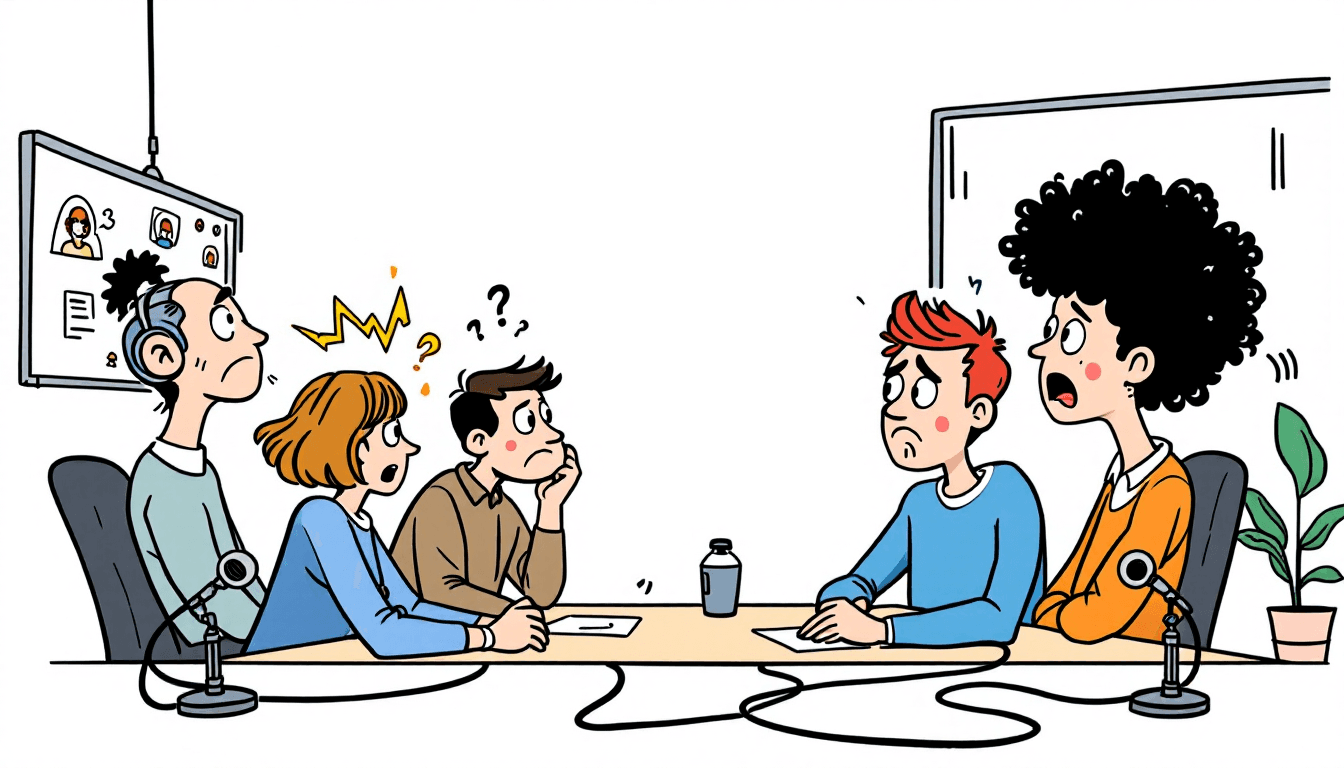
📈 La crise des réunions : en chiffres
Le coût des mauvaises réunions
- • 37 milliards de dollars perdus chaque année à cause de réunions inefficaces
- • Un employé moyen passe 21,5 heures par semaine en réunion
- • 67 % des travailleurs estiment que les réunions les empêchent de faire un travail en profondeur
- • 92 % des personnes font du multitâche pendant les appels vidéo
Points de défaillance courants
- • 32 % - Mauvaise préparation et ordres du jour peu clairs
- • 28 % - Faible engagement et participation
- • 21 % - Problèmes techniques et retards
- • 16 % - Objectifs et résultats peu clairs
Ces statistiques révèlent une épidémie au travail qui dévaste silencieusement la productivité depuis des décennies. Mais qu’est-ce qui ne va pas exactement dans les réunions, et surtout, comment pouvons-nous y remédier ?
🔧 Pannes techniques : quand la technologie devient le problème
Problèmes techniques les plus courants
Problèmes audio (68 %)
- • Écho et retour
- • Participants en sourdine
- • Microphones de mauvaise qualité
- • Bruit de fond
Problèmes de connectivité (45 %)
- • Coupures de connexion Internet
- • Pannes de la plateforme
- • Difficultés de connexion
- • Limitations de bande passante
Partage d’écran (34%)
- • Impossible de partager l’écran
- • Mauvaise fenêtre partagée
- • Faible résolution
- • Lags et blocages
Solutions alimentées par l’IA
Les outils de réunion modernes basés sur l’IA sont spécialement conçus pour éliminer ces difficultés techniques :
Traitement Audio Intelligent
- • Réduction du bruit et suppression de l’écho
- • Équilibrage automatique du volume
- • Transcription en temps réel comme sauvegarde
- • Identification des intervenants
Enregistrement intelligent et sauvegarde
- • Enregistrement automatique dans le cloud
- • Synchronisation multi-appareils
- • Génération de transcription hors ligne
- • Protocoles de reconnexion d'urgence
📋 Mauvaise préparation : la cause principale de l’échec des réunions
Le problème de la préparation
Ce qui ne va pas
- • Pas d'ordre du jour clair : 73 % des réunions n'ont pas d'ordre du jour structuré
- • Participants incorrects : 41 % incluent des participants inutiles
- • Mauvais timing : 56 % planifiées à des moments inopportuns
- • Manque de matériel : 38 % ne partagent pas les ressources avant la réunion
L’effet domino
- • Les réunions dépassent le temps prévu d'une moyenne de 18 minutes
- • 64 % des participants se sentent peu préparés à contribuer
- • Les réunions de suivi augmentent de 43 %
- • Prise de décision retardée de 2,3 semaines en moyenne
Préparation améliorée par l’IA
Les principales plateformes de réunions IA proposent désormais des fonctionnalités de préparation intelligentes qui répondent à ces problèmes :
Génération intelligente d'agenda
Des outils comme Lire AI analyser le contexte de la réunion et suggérer automatiquement des points à l’ordre du jour en fonction des discussions précédentes, des calendriers de projet et des rôles des participants.
Intelligent Participant Suggestions
AI analyzes project involvement and expertise to recommend optimal attendee lists, reducing unnecessary participants by up to 35%.
Automated Pre-Meeting Briefs
Systems automatically compile relevant documents, previous meeting notes, and action items into digestible pre-meeting summaries.
😴 Lack of Engagement: When Meetings Become Energy Drains
Engagement Statistics
- • 92% of people multitask during virtual meetings
- • 67% admit to doing other work during calls
- • Average attention span drops to 8 minutes in long meetings
- • 39% have fallen asleep during virtual meetings
- • 45% feel overwhelmed by meeting frequency
Root Causes
- • Meeting fatigue: Back-to-back scheduling
- • Irrelevant content: One-size-fits-all approach
- • Passive participation: Lecture-style format
- • Poor facilitation: Unclear discussion flow
- • No clear value: Participants don't see benefit
AI Solutions for Better Engagement
Real-Time Engagement Analytics
Advanced AI tools monitor speaking patterns, response times, and participation levels to identify disengaged participants and suggest interventions.
Personalized Content Delivery
AI analyzes individual roles and interests to highlight relevant discussion points and suggest when specific participants should contribute.
Intelligent Break Suggestions
Machine learning algorithms detect optimal break timing based on energy levels, discussion intensity, and meeting length.
📚 Real-World Case Studies: Meeting Transformation Success Stories
Case Study 1: Tech Startup Reduces Meeting Time by 40%
Before AI Implementation
- • 25 hours/week average meeting time per employee
- • 60% of meetings ran over scheduled time
- • Only 34% of action items completed on time
- • High employee burnout from meeting fatigue
After AI Implementation
- • 15 hours/week average meeting time per employee
- • 89% of meetings finish on time
- • 78% of action items completed on schedule
- • 43% improvement in employee satisfaction
Key Tools Used
Implemented Otter.ai for transcription and action item tracking, combined with automated agenda generation and participant optimization algorithms.
Case Study 2: Fortune 500 Company Saves $2.3M Annually
Challenge
15,000 employees across 40 offices, massive meeting coordination overhead
Solution
Enterprise AI meeting platform with intelligent scheduling and automated follow-ups
Result
$2.3M annual savings in productivity gains and reduced meeting overhead
Implementation Details
- • Phase 1: Rolled out AI transcription to 200 pilot teams
- • Phase 2: Added intelligent scheduling and preparation tools
- • Phase 3: Implemented advanced analytics and optimization
- • ROI Timeline: Broke even at 4 months, full benefits realized at 8 months
Case Study 3: Remote-First Company Eliminates Meeting FOMO
The Problem: Timezone Meeting Chaos
Global team across 12 timezones struggled with inclusive meeting scheduling. 67% of employees felt excluded from important decisions due to timezone conflicts.
The AI Solution
Implemented asynchronous AI meeting tools that create comprehensive summaries, action items, and decision logs automatically.
- • Real-time transcription with multiple language support
- • Automated meeting summaries sent within 10 minutes
- • AI-generated follow-up questions for async input
- • Decision tree documentation for transparency
Results After 6 Months
- • 89% feel included in decision-making
- • 52% reduction in follow-up meetings
- • 34% faster project completion times
- • 78% improvement in cross-timezone collaboration
- • 91% employee satisfaction with meeting quality
- • Zero complaints about FOMO since implementation
🛡️ Prevention Strategies: Building a Meeting-Success Culture
The Meeting Success Framework
🎯 Pre-Meeting Phase
- • AI Agenda Generation: Automatic topic prioritization
- • Smart Scheduling: Optimal timing algorithms
- • Participant Optimization: Right people, right roles
- • Resource Preparation: Auto-compiled background materials
⚡ During Meeting
- • Real-time Transcription: Never miss important points
- • Engagement Monitoring: Keep everyone involved
- • Time Management: AI-powered agenda tracking
- • Action Item Capture: Automatic responsibility assignment
📋 Post-Meeting
- • Instant Summaries: Key points delivered in minutes
- • Action Item Tracking: Automated follow-up reminders
- • Progress Monitoring: Decision implementation tracking
- • Feedback Collection: Continuous improvement insights
Essential AI Tools for Meeting Success
Core Meeting AI Tools
Specialized Solutions
Intelligent scheduling optimization
Integrated video platform intelligence
Meeting analytics + productivity metrics
Implementation Roadmap
Phase 1: Assessment & Foundation (Month 1-2)
- • Audit current meeting practices and pain points
- • Conduct employee surveys on meeting satisfaction
- • Select pilot teams for AI tool implementation
- • Establish baseline metrics for comparison
Phase 2: Core Implementation (Month 3-4)
- • Deploy transcription and basic AI tools
- • Train team leads on new meeting protocols
- • Implement automated follow-up systems
- • Begin collecting usage and satisfaction data
Phase 3: Advanced Features (Month 5-6)
- • Add engagement analytics and optimization
- • Implement intelligent scheduling algorithms
- • Deploy advanced reporting and insights
- • Scale successful practices organization-wide
💰 Measuring Success: ROI and Key Metrics
📊 Key Performance Indicators
- • Average meeting duration reduction
- • On-time start/finish percentages
- • Meeting-to-outcome ratio
- • Tasks completed on time
- • Follow-up meeting reduction
- • Decision implementation speed
- • Meeting quality ratings
- • Engagement scores
- • Productivity self-assessment
💵 Typical ROI Calculations
Time Savings
Average 3.5 hours/week per employee
$89,000 annual value per 100 employees
Productivity Gains
23% faster decision-making
$156,000 annual value per 100 employees
Tool Investment
Enterprise AI platform cost
$24,000 annual cost per 100 employees
Net ROI
920% annual return on investment