A check-in meeting is simply a quick, regular get-together to make sure everyone on the team is on the same page. Think of it less like a formal presentation and more like a team huddle before a big play. It's a focused chat to track progress, flag any issues, and ensure everyone's still heading in the same direction.
Done right, these quick syncs are the antidote to those endless, confusing email chains and last-minute project surprises we all dread.
What Is a Check-In Meeting Really For?
Let's be honest, most of us hear the word "meeting" and immediately picture a long, soul-crushing session in a stuffy conference room. We've all been there, watching the clock and thinking, "this definitely could have been an email."
The numbers are pretty staggering—somewhere between 36 and 56 million meetings happen every single day in the US. Worse yet, a massive $37 billion is lost annually to meetings that go nowhere, thanks to fuzzy goals and zero follow-through. If you want to dive deeper, the data on meeting statistics from MyHours paints a pretty clear picture.
But a good check-in meeting is the complete opposite. It’s not a deep-dive strategy session or a line-by-line project review.
These regular touchpoints are essential for keeping the momentum going, especially for remote and hybrid teams who miss out on those spontaneous "water cooler" chats. It's a dedicated time and place to connect, clarify, and coordinate.
The True Value of a Quick Sync
The magic of a great check-in meeting is in its rhythm and brevity. It isn't about listing every single task you checked off a list. It's about creating a predictable pulse of communication that keeps the team aligned and builds trust.
Here's what these meetings actually deliver:
- Catch Problems Early: They create a safe, consistent space for people to say, "Hey, I'm stuck on this," before it grinds the whole project to a halt.
- Keep Everyone Aligned: When everyone briefly shares their focus, it ensures the team is rowing in the same direction, which cuts down on wasted effort.
- Build Momentum: Saying what you plan to do out loud creates a subtle but powerful sense of accountability. It motivates everyone to follow through and keep the ball rolling.
- Create Human Connection: For remote teams, these short interactions are gold. They build the rapport and trust that make people feel like they're part of a real team, not just a list of names in a chat app.
In the end, a solid check-in meeting saves way more time than it takes. It swaps confusion for clarity and helps turn a group of individuals into a connected team that can tackle anything with confidence.
Choosing the Right Meeting Rhythm for Your Team
Trying to force one type of check-in meeting on every team is a classic mistake. It's like using a hammer for every job when sometimes you really need a screwdriver. The secret to a truly effective check-in isn't the meeting itself—it's matching the rhythm and format to how your team actually works. A high-energy sales team operates on a completely different clock than an engineering team deep in a six-month development cycle.
The goal here is to find a cadence that feels like a natural part of the workflow, not another annoying interruption. This means ditching the one-size-fits-all templates and designing a system that delivers the right information, to the right people, at the right time. A good rhythm builds momentum; a bad one just sucks the life out of the room and clogs up everyone's calendar.
Are your current meetings acting as a helpful GPS for your team, or are they just a time-wasting detour? This quick flowchart can help you figure it out.
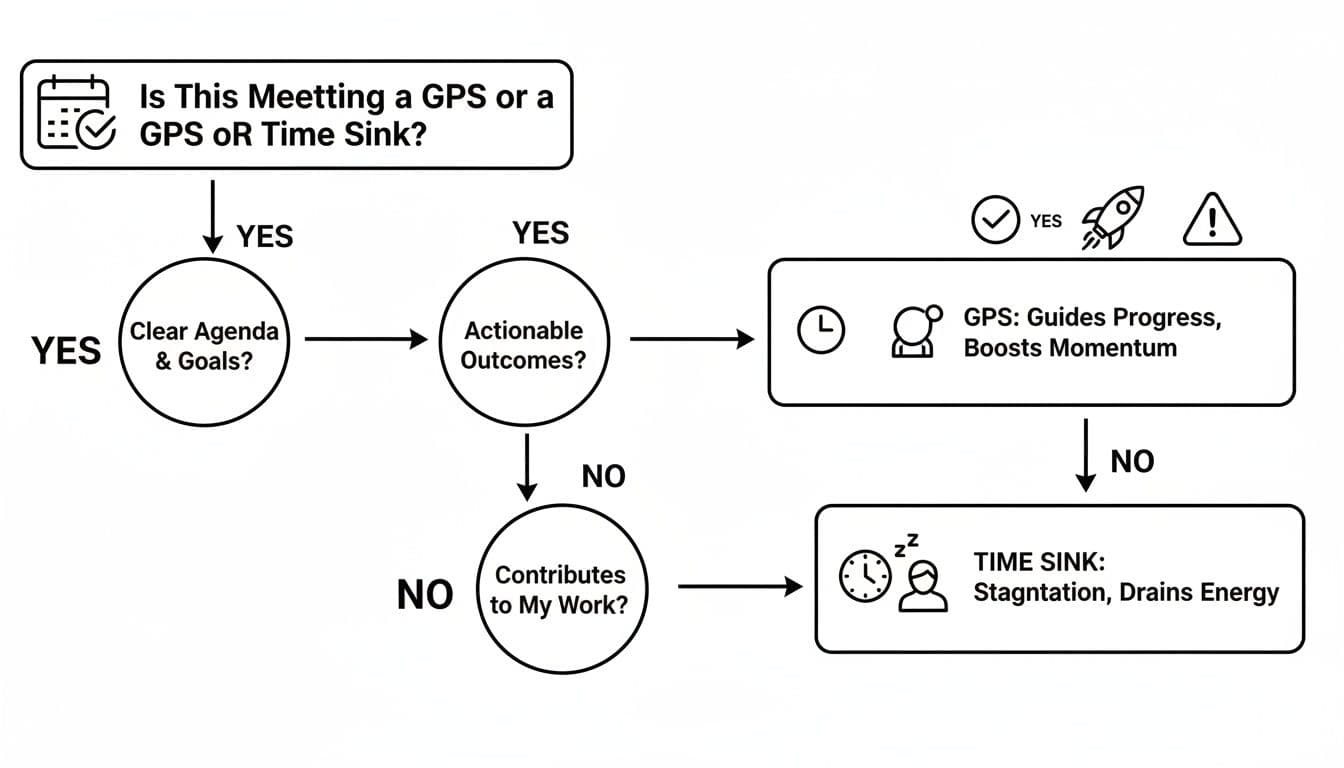
As the visual shows, great meetings always lead to clear actions and measurable progress. Bad ones? They just lead to more meetings.
To get started, let’s break down the three most common types of check-ins.
Daily Stand-Ups: The Tactical Huddle
You've probably heard of the daily stand-up, a staple in the Agile world. Think of it as a quick, tactical huddle before the day's big game. Its only job is to get everyone on the same page about immediate tasks, call out any roadblocks, and coordinate the team’s efforts for the next 24 hours.
These meetings are short by design, usually lasting no more than 10-15 minutes. To keep things moving, each person answers three simple questions:
- What did I get done yesterday?
- What am I working on today?
- What’s getting in my way?
This format is a lifesaver for teams with fast-moving, interconnected tasks. It’s all about micro-level alignment, stopping small hiccups from turning into major problems.
Weekly Team Syncs: The Progress Review
If the daily stand-up is about the "what," the weekly team sync is about the "why" and "how." This meeting zooms out to review progress against the week's goals, discuss bigger challenges, and set priorities for the week ahead. It’s less about individual to-do lists and more about the team's collective momentum.
These usually run for 30 to 45 minutes, which is just enough time for a real conversation without derailing the whole day. This rhythm works for most teams, creating a steady pulse of communication that keeps projects on track.
One-on-One Check-Ins: The Growth Conversation
The one-on-one is the most personal and, honestly, the most important check-in of all. This isn't a status report. It’s a dedicated, private space for a manager and their direct report to talk about coaching, career growth, and building a strong working relationship.
The employee should drive the agenda here, with topics often including:
- Career development and long-term ambitions
- Giving and receiving honest feedback
- Managing workload and personal well-being
- Working through team dynamics or other challenges
Held weekly or bi-weekly for about 30 minutes, these meetings are absolutely essential for keeping people engaged and happy. They make sure everyone feels heard, supported, and clear on their path forward.
Check In Meeting Types Compared
So, which one is right for you? It really depends on what you’re trying to achieve. This table breaks down the key differences to help you decide.
| Meeting Type | Primary Goal | Ideal Cadence | Typical Duration | Best For |
|---|---|---|---|---|
| Daily Stand-Up | Tactical Alignment & Blocker Removal | Daily | 10-15 Minutes | Fast-paced development or project teams with interdependent tasks. |
| Weekly Team Sync | Progress Review & Priority Setting | Weekly | 30-45 Minutes | Most teams to track weekly goals and maintain project momentum. |
| One-on-One | Individual Growth & Support | Weekly or Bi-weekly | 30 Minutes | Fostering employee development, providing feedback, and building trust. |
Ultimately, the best approach often involves a mix of all three. A team might have a daily stand-up for tactical work, a weekly sync to track progress, and regular one-on-ones to support individual growth.
Crafting an Agenda That Drives Results
Ever been in a meeting that felt like a road trip with no map? You might have a few interesting conversations, but you end up getting lost, wasting fuel, and never actually reaching your destination. That's a meeting without an agenda. A well-thought-out agenda is the single best tool you have to turn a meandering chat into a productive check-in meeting.
It gives the meeting structure, sets clear expectations for everyone involved, and shows you respect their time by keeping the conversation focused. When you send an agenda out beforehand, you're also giving people a chance to show up prepared with thoughtful updates and solutions, instead of just reacting on the spot. It's a simple step that turns passive attendees into active participants.
The real goal here is to create a shared roadmap that guides the discussion toward specific, valuable outcomes. It's the difference between asking "So, what's new?" and "What's the biggest obstacle we need to overcome this week to stay on track?"
From Topics to Outcomes
Here’s where most people go wrong: they create a topic-based agenda. It’s just a simple list of things to talk about. A much smarter approach is to build an outcome-oriented agenda, where every single item is framed as a question to answer or a decision to make.
This tiny change makes a huge difference. It forces you, the organizer, to think about the purpose behind each discussion point. You end up ensuring every minute is spent actually moving the team forward.
For instance, instead of an agenda item that says "Project Phoenix Update," try rephrasing it as: "What’s the current status of Project Phoenix, and what support do you need to hit next week’s milestone?" See the difference? The second version immediately kicks off a more productive, solution-focused conversation.
Adaptable Agenda Templates
While every team and project has its own quirks, you don't need to start from scratch every time. Here are a few battle-tested templates you can adapt for the most common check-ins.
1. The Daily Stand-Up Agenda (15 Minutes)
This one is all about speed and clarity. The structure is famously simple, keeping the focus squarely on what needs to happen right now.
- Round Robin Updates (10 mins): Each person takes a turn to quickly answer three questions:
- What did you get done yesterday?
- What are you working on today?
- What's getting in your way?
- Parking Lot (5 mins): Quickly note down any topics that need a deeper dive. Agree to tackle them after the stand-up with only the necessary people involved.
2. The Weekly Team Sync Agenda (45 Minutes)
This meeting zooms out a bit to look at the bigger picture for the week.
- Wins & Recognition (5 mins): Kick things off on a high note. Celebrate a team or individual win from the past week.
- Key Metrics Review (10 mins): A quick look at the dashboard. Are we hitting our most important goals? Are we on track?
- Priorities & Roadblocks (20 mins): This is the core of the meeting. Each person shares their top priority for the week ahead and flags any potential problems or areas where they need help.
- Action Items & Next Steps (10 mins): Before anyone leaves, get crystal clear on who is doing what and by when.
3. The 1-on-1 Check-In Meeting Agenda (30 Minutes)
This agenda should always be driven by the employee, not the manager. It’s their time for support, feedback, and growth.
- Employee's Topics (15 mins): The employee leads the conversation, sharing updates, challenges, or questions about anything from workload to career goals.
- Manager's Topics (10 mins): The manager listens, offers feedback, provides coaching, and shares any relevant company news.
- Future Focus (5 mins): End by aligning on priorities for the next week and confirming action items for both the employee and the manager.
If you need more ideas, you can explore a wide variety of other meeting agenda templates for every situation to find one that fits your team's rhythm. At the end of the day, a great agenda isn't just a document—it's a commitment to making every check-in a worthwhile investment of your team's time.
Running Meetings That People Actually Value
Let's be honest: a great meeting never happens by accident. It’s the result of thoughtful design and skillful guidance. Think of the agenda as your map. As the facilitator, you're the one steering the ship, making sure the crew navigates the conversation efficiently and actually arrives at a worthwhile destination. This means you have to be more than just a timekeeper; you need to be a proactive guide for the discussion.
Your real job is to create a space where everyone feels comfortable enough to contribute their best ideas. It’s about gently nudging the conversation back on track when it starts to wander, encouraging quieter team members to speak up, and, most importantly, ending with total clarity on what happens next.

Setting the Stage for Success
The work of running a solid check-in meeting starts long before anyone even joins the call. Strong preparation is the bedrock of a smooth meeting that respects everyone's time and energy.
Before the meeting, make sure you have a clear process locked in. This isn’t just about sending out an agenda; it’s about setting expectations for how people should participate. This simple act transforms attendees from a passive audience into active, prepared contributors.
Here’s a quick pre-flight checklist to run through:
- Send the agenda 24 hours ahead: This gives everyone time to review the topics, gather their thoughts, and add their own discussion points.
- Assign roles if you need them: For bigger or more formal meetings, think about assigning a notetaker and a timekeeper. This frees you up to focus purely on facilitation.
- Test your tech: Five minutes before go-time, double-check that your video, audio, and screen-sharing tools are working perfectly. No one likes a clumsy start.
Navigating the Conversation
Once the meeting is underway, your role switches to that of a conductor. Your main goal is to keep the conversation flowing productively, inclusively, and on schedule. It’s a delicate dance between letting good ideas breathe and keeping the train on the tracks.
One of the trickiest parts is handling tangents. A fantastic but unrelated idea might pop up. Instead of shutting it down, create a "parking lot." Acknowledge the idea, jot it down in a shared space (like a digital whiteboard), and promise to circle back to it later. This validates the person's contribution without derailing the meeting's purpose.
With hybrid work becoming the norm, effective meetings are more critical—and more challenging—than ever. As teams spread out, the number of check-ins has skyrocketed. Unfortunately, this has led to serious meeting fatigue; 44% of workers now dread them, and the time we lose to meetings has doubled to five hours per week since 2019. This just goes to show how urgent it is to make meetings valuable again. For more insights, you can review Cendyn's 2025 report on the meetings industry.
Ensuring Strong Follow-Through
The real value of a check-in meeting is measured by what happens after it ends. A discussion without clear action items is just talk. Those final few minutes are arguably the most important part of the entire session.
As the facilitator, it's on you to make sure everyone leaves with the exact same understanding of the decisions made and tasks assigned. This one step is your best defense against the classic, "Oh, I thought someone else was handling that" problem.
Follow these simple steps to wrap up like a pro:
- Recap Decisions: Quickly summarize the key decisions the group made.
- Confirm Action Items: Go through each action item out loud. State who owns it and when it's due.
- Send a Summary: Within a few hours, send out a brief follow-up email or message. Include the notes, the decisions, and a clean list of action items with their owners and deadlines.
For a deeper dive, check out our guide on how to run effective meetings. By mastering these skills, you can turn your check-ins from something people dread into valuable touchpoints that they actually appreciate.