A good sample agenda format is what separates a truly productive meeting from an hour you'll never get back. Think of it as a roadmap. It lays out the objectives, the topics you'll cover, and how much time you'll spend on each, keeping everyone focused and on track.
Why Most Meetings Fail (and How an Agenda Is the Fix)
Let’s be real for a second. We’ve all been in that meeting—the one that starts late, meanders aimlessly, and wraps up with zero decisions made. It's a universal frustration.
The problem isn't usually the people in the room. It’s the complete lack of a plan. When you go in without an agenda, you’re practically inviting chaos. Conversations drift, key points are missed, and everyone leaves wondering what the point was.
To put it simply, a structured agenda is the cure for the most common meeting headaches.
Here’s a quick look at how an agenda directly tackles those all-too-familiar problems:
Common Meeting Problems and Agenda Solutions
| Common Problem | How an Agenda Solves It |
|---|---|
| No Clear Purpose | The agenda defines the meeting's goals right at the top. Everyone knows why they are there. |
| Off-Topic Discussions | A timed agenda acts as a guide, making it easy to gently redirect conversations back to the core topics. |
| Unprepared Attendees | Sending the agenda beforehand gives everyone a chance to review topics, gather thoughts, and come ready to contribute. |
| No Actionable Outcomes | The agenda allocates time specifically for defining next steps, ensuring decisions are made and assigned. |
This isn't just about avoiding frustration; it’s about making every minute count.
The Staggering Cost of Bad Meetings
This lack of structure has a very real price tag. In the United States alone, a mind-boggling 36 to 56 million meetings take place every single day. And when they’re run poorly, the financial hit is massive.
Ineffective meetings drain the U.S. economy of an estimated $37 billion every year. In 2022, the average employee spent about 91 minutes a day on meetings and tasks that went nowhere. That’s time, money, and momentum down the drain.
A well-thought-out agenda is your best tool for reclaiming that lost time. It turns a potential time-suck into a focused session that actually moves the needle.
This simple shift from an unplanned chat to a structured discussion makes all the difference. For a deeper look at this philosophy, check out our guide on how to run effective team meetings that drive results. By clearly defining the "why" and the "what" from the start, a simple sample agenda format ensures every minute is spent making progress.
The Anatomy of a Meeting Agenda That Actually Works
Ever walked out of a meeting wondering what it was even for? You’re not alone. The difference between a productive session and a total time-waster often comes down to a simple, powerful document: the agenda. A great agenda isn't just a list; it’s a roadmap that guides the conversation from start to finish.
Without that roadmap, meetings tend to follow a predictable, frustrating path. It usually starts with a vague goal and ends with a lot of wasted time.
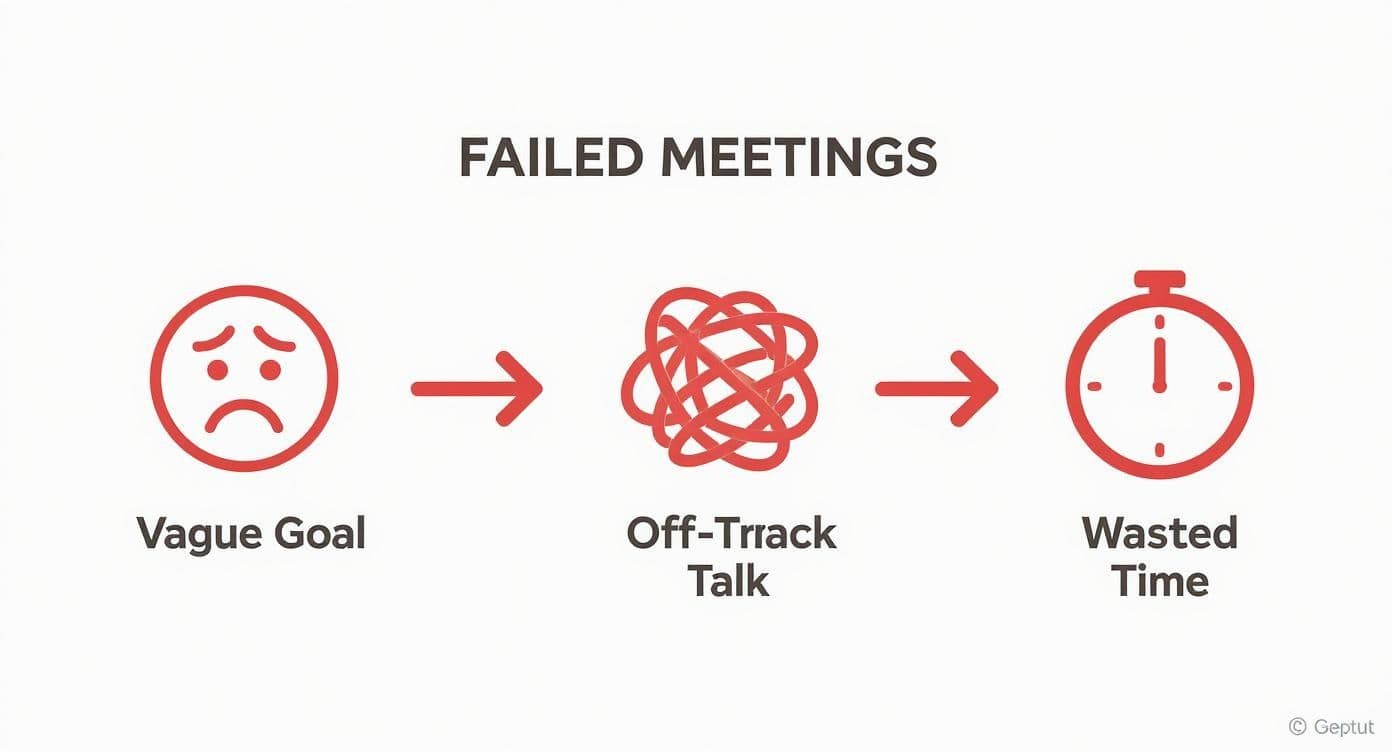
As you can see, a lack of direction is the fastest way to get bogged down in tangents and leave with no clear next steps. Let's break down the core components that prevent this chaos and keep everyone on track.
The Non-Negotiable Building Blocks
No matter what kind of meeting you're running, every effective agenda needs these foundational elements. Think of them as the absolute must-haves for a focused discussion.
- A Super-Clear Goal: What’s the point of this meeting? Write it down in a single, direct sentence. For example, "Decide which vendor we're choosing for the Q4 software upgrade." This one sentence is your north star.
- Key Topics (with Time Limits!): List the main talking points and—this is crucial—assign a realistic amount of time to each one. This simple act keeps the pace lively and stops one topic from hijacking the entire meeting.
- Who Needs to Be There (and Why): Be ruthless about your invite list. Who truly needs to attend? List their names and, just as importantly, their roles. A quick note like "Jane, Marketing Lead (to present campaign data)" sets clear expectations.
- Prep Work for Attendees: Give people a chance to show up prepared. Include links to any reports, documents, or data they need to review before the meeting. This saves a ton of time and leads to much smarter conversations.
Connect Every Topic to an Outcome
Here’s a pro tip: for each item on your list, define what you want to get out of it. Is the goal to inform, brainstorm, or make a decision? Being explicit here is a game-changer.
For example, instead of a vague point like "Discuss Q3 Budget," make it actionable: "Review Q3 Budget and Approve Final Allocation." See the difference?
This small shift has a massive impact. It’s pretty shocking, but surveys show that only 37% of meetings in the U.S. use a formal agenda. That might explain why another study found that just 30% of meetings are seen as productive.
If you want to dig deeper, you can learn how to craft perfect meeting agendas that keep your team focused and efficient. A little planning upfront ensures you walk away with solid decisions, not a fresh set of questions.
A Practical, Reusable Meeting Agenda Format
Okay, enough with the theory. Let's get down to brass tacks with a practical, copy-and-paste agenda format you can steal for your very next meeting. I’ve refined this structure over the years to be clear, actionable, and incredibly easy for anyone to follow.
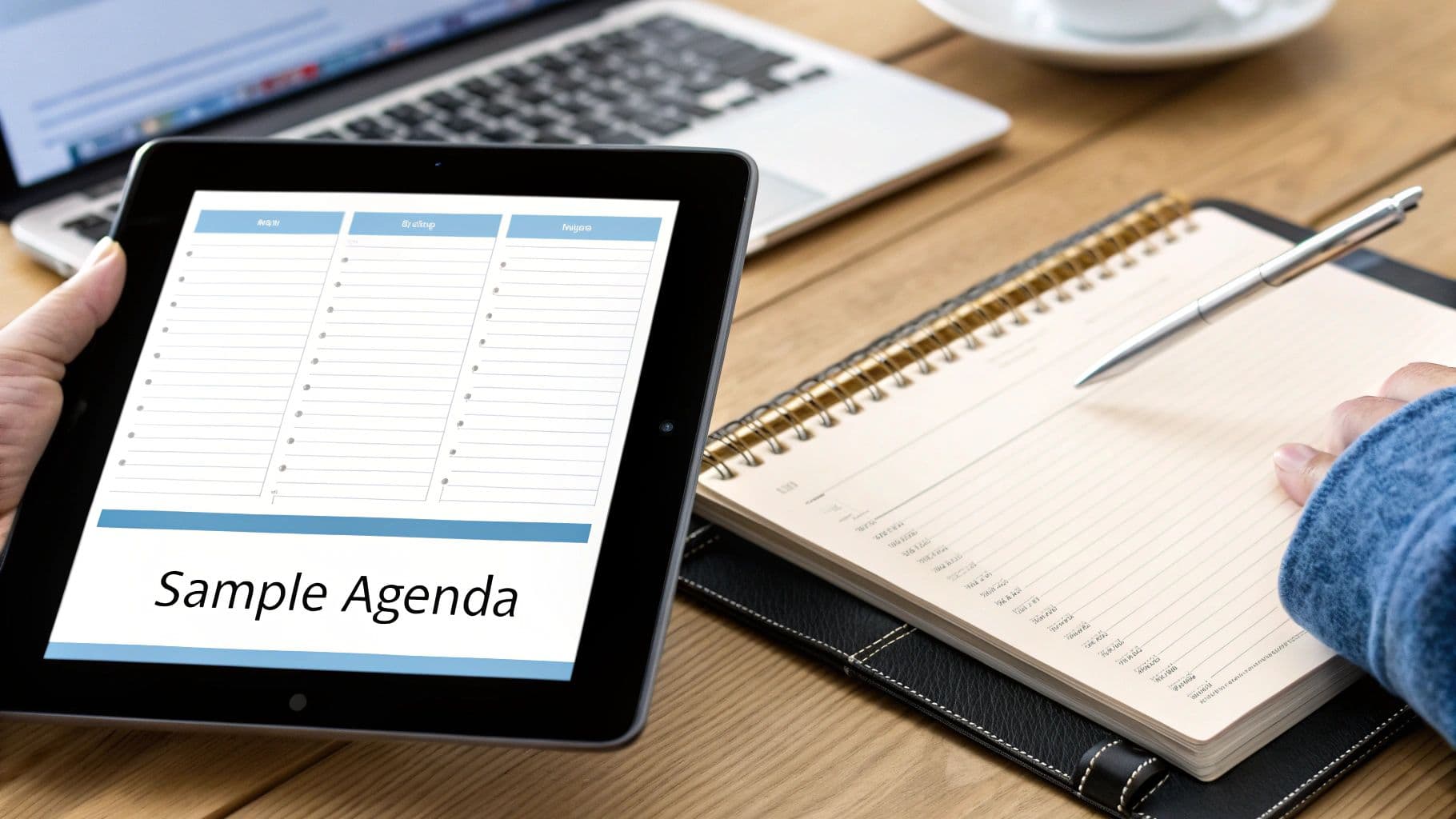
Just copy the text below and plug in your own details. It’s built to cover all the essentials we’ve talked about, from locking down a clear objective to assigning concrete action items that actually get done.
Meeting Title: [Keep it short and descriptive]Date & Time: [Date] at [Time]Attendees: [List names and roles of who needs to be there]Meeting Objective: [What's the one thing we need to accomplish? Be specific.]
1. Quick Wins & Updates (5 minutes)
- Briefly review action items from our last meeting.
- Share any relevant, quick-fire updates.
2. [Main Topic 1] (15 minutes) - Owner: [Name]
- Goal: [Is this to inform, discuss, or decide?]
- Context: [A sentence or two explaining why this is on the agenda, or link to pre-read materials.]
- Key talking points.
3. [Main Topic 2] (20 minutes) - Owner: [Name]
- Goal: [Inform / Discuss / Decide]
- Context: [Brief background or link to a relevant doc.]
- Key talking points.
4. Next Steps & Action Items (10 minutes)
- Recap every decision made.
- Assign clear action items with owners and due dates. No ambiguity!
- Confirm the next meeting if one is needed.
Putting This Format into Action
So, what does this look like in the wild? Imagine your team is gearing up for a big marketing campaign launch next quarter. You need a kickoff meeting to get everyone on the same page.
Here’s how you could fill out that template:
Meeting Title: Q3 Marketing Campaign KickoffDate & Time: June 28, 2024 at 10:00 AMAttendees: Sarah (Marketing Lead), Alex (Content), Ben (Ads), Chloe (Design)Meeting Objective: To finalize the Q3 campaign strategy and assign initial tasks.
See the difference? This simple structure turns a potentially chaotic brainstorm into a focused, decision-making powerhouse. If you want more inspiration, you can always check out other meeting agenda examples and templates built for all sorts of different business needs.
How to Adapt Your Agenda for Any Meeting
A good sample agenda is just your starting block. The real skill lies in knowing how to mold that basic structure to fit the specific meeting you're running. A one-size-fits-all agenda simply doesn't cut it. Your agenda for a quick daily stand-up should look nothing like the one you'd use for a free-wheeling creative brainstorm.
The secret is to always start with the meeting’s main goal. From there, you can adjust the timing, the level of detail, and which sections you include. You wouldn't use a hammer to turn a screw, right? In the same way, you shouldn't force a formal project review agenda onto a casual team check-in.
Making the Agenda Fit the Meeting
Let's walk through a few common meeting types to see how you can tweak your agenda to make it work. This is where an agenda goes from a simple checklist to a powerful productivity tool.
- Daily Stand-Ups: Go minimalist. The entire point is speed and unearthing blockers. Your "agenda" might just be three core prompts: What did you finish yesterday? What's on your plate today? What's getting in your way? This isn't for deep conversation; it's about quick, clear updates.
- Weekly Team Syncs: These need a bit more meat on the bones. You'll want to set aside specific time slots to review key metrics, talk about project progress, and leave room for open discussion or problem-solving. It's the perfect mix of reporting back and working together.
- Creative Brainstorms: Forget rigid timelines. For these sessions, build your agenda around open-ended questions that get people thinking. Instead of an item that says "Discuss marketing campaign," frame it as "How might we create a campaign that our customers will love?" The goal here is divergent thinking, not ticking boxes.
What About Longer and Bigger Events?
This idea of adapting your agenda becomes even more crucial when you're planning multi-day events. According to the Union of International Associations (UIA), a huge chunk of major meetings are long-haul affairs. Their data shows 27.4% last three days, and another 19.7% go on for four. A single, static agenda would be useless for something that complex.
Instead, you have to think dynamically to keep people focused for that long. For an event like a conference, you’ll want to learn how to build a conference agenda with distinct modules for keynotes, workshops, and networking time. This approach keeps attendees engaged because every single part of the event has a clear, well-defined purpose.
Practical Tips to Make Your Agendas Stick
So you've crafted the perfect agenda. That's a great start, but it’s only half the battle. An agenda is useless if it just sits in an inbox, unread. The real trick is to weave it into your team's workflow so it becomes a tool they actually rely on.
It all starts with timing. Sending the agenda five minutes before the meeting is a classic move that guarantees it won't be read. Get it out at least 24 hours in advance. This simple courtesy gives everyone a chance to process the topics, pull together their thoughts, and show up ready to contribute something valuable.
Drive Engagement Before and During the Meeting
Want to make sure people pay attention? Give them a job. Assigning roles directly on the agenda gives people instant ownership and keeps them plugged into the conversation.
- Appoint a Timekeeper: This person gets to be the friendly enforcer. They can gently nudge the group by saying, "Heads up, we have five minutes left on this topic, let's land on a decision." This takes all the pressure off you to play bad cop.
- Designate a Notetaker: Make it crystal clear who’s capturing the key decisions and action items. When one person is officially on the hook for this, you can be sure nothing important gets lost.
- Name Discussion Leads: Put someone’s name next to a specific topic. This tells them their expertise is needed and that they should come prepared to kick off and guide that part of the discussion.
When the conversation inevitably wanders off-topic—and it always does—the agenda is your best friend. A simple, "That's an interesting point for another time, but let's circle back to item two so we stay on track," is an easy way to gently steer everyone back.
Keep the Agenda Alive After the Meeting
The agenda’s work isn’t over when the meeting ends. Link your meeting notes or minutes directly back to the original agenda. This creates a single, complete record of the conversation that anyone can refer back to. No more hunting through email threads.
Most importantly, every decision needs a clear action item tied to it. To keep things organized, try using a dedicated meeting action items template that actually works. This simple step turns your agenda from just a plan into a real accountability tool, ensuring the work actually gets done.
Still Have Questions About Meeting Agendas?
Even with the perfect template, putting it into practice can bring up a few questions. I've been there. Let's walk through some of the common hurdles people face when they start getting serious about their meeting agendas.
When’s the Best Time to Send the Agenda?
You want to hit that sweet spot between giving people enough time to prep and not so much time that it gets buried in their inbox.
For your regular weekly or bi-weekly team meetings, sending the agenda 24 hours in advance usually works best. It gives everyone a chance to look it over and come prepared to contribute.
But if you're gearing up for a bigger deal—like a quarterly business review or a project kickoff with a new client—give them more runway. Aim to send it out 48 to 72 hours beforehand. That extra time is crucial for more in-depth preparation.
What's the One Thing an Agenda Can't Live Without?
If you only get one thing right, make it the Meeting Objective. This is your North Star. It's the one sentence that clearly states, "By the end of this hour, we will have accomplished X."
How Can I Keep the Conversation on Track?
Ah, the dreaded conversational detour. It happens to the best of us. Someone brings up an interesting, but totally unrelated, point and suddenly you're way off course.
The trick is to gently steer the conversation back without shutting the person down.
Try a phrase like, "That's a really good point, and I want to make sure we give it the attention it deserves. Let's put it in the 'parking lot' for now and circle back to it later so we can stick to our original goal." This approach validates their idea while protecting the meeting's focus.
Getting your agenda game on point is a huge step. The next is making sure all those brilliant ideas and action items don't get lost. At Summarize Meeting, we review the best AI tools that can automatically handle note-taking for you. Find the perfect AI meeting assistant for your team on summarizemeeting.com and let your team focus on what matters most—the conversation.