Ever feel like your brain just shuts down by 3 PM? That’s not just you being tired; it's likely decision fatigue. It's what happens when the sheer volume of choices you make all day long wears down your ability to make good ones.
Think of it this way: your brain is a muscle, and just like any other muscle, it gets exhausted from overuse.
Your Brain's Daily "Decision Budget"
You wake up with a finite amount of mental energy for making choices—let's call it your daily "decision budget." Every single decision, no matter how small, makes a withdrawal. What to wear? Which email to tackle first? Coffee or tea? Each one costs a little bit of that precious mental fuel.
These tiny choices pile up. By the time a truly important decision lands on your desk late in the afternoon, your account is nearly empty. This isn't a personal failing; it's a completely normal cognitive limitation. Your brain, desperate to conserve what little energy it has left, starts looking for shortcuts.
This cognitive drain seeps into everything you do. Your willpower to ignore that social media notification craters. Your productivity slows to a crawl. You’re far more likely to agree to a bad idea in a meeting just to move things along or make a purchase you'll regret later.
How To Spot The Signs
The first step to fighting decision fatigue is learning to recognize it in yourself and your team. The signs can be subtle at first, but they have a real impact on morale and output.
Look out for these common red flags:
- Procrastination: You find yourself putting off decisions—even simple ones—because the thought of making another choice feels exhausting.
- Impulsivity: You make snap judgments without thinking through the consequences, mainly to get the decision off your plate.
- Avoidance: You start dodging any situation that requires a firm choice, leading to a state of "analysis paralysis."
- Irritability: Small questions or new options make you feel surprisingly frustrated or annoyed.
Spotting these behaviors is key because they directly tank performance at work. A choice that feels straightforward at 9 AM can feel impossible by the end of the day, causing projects to grind to a halt.
Here's a quick look at how common signs of decision fatigue show up in a professional environment.
Decision Fatigue Symptoms and Workplace Impact
| Symptom | Description | Workplace Impact |
|---|---|---|
| Analysis Paralysis | Overthinking a decision to the point that no action is taken. | Key projects stall because the team cannot move forward on critical choices. |
| Choice Avoidance | Delegating decisions upwards or ignoring them entirely. | Creates bottlenecks and slows down team momentum as tasks get pushed back. |
| Impulsive Choices | Rushing to a conclusion without proper evaluation. | Leads to poor-quality work, costly errors, and the need for rework. |
| Mental Fog | Difficulty concentrating or processing information. | Reduces the quality of creative thinking and strategic planning in meetings. |
Ultimately, when a team is running on empty, they can't produce their best work. Recognizing these patterns is the first step toward building a more sustainable and productive way of working.
The Hidden Causes of Daily Mental Burnout
Think of your brain's ability to make good choices like a muscle. Every time you flex it—whether you're resisting the urge to check your phone, puzzling through a tough problem, or making a thoughtful decision—it gets a little bit weaker. This idea is called ego depletion, and it's the core engine driving that feeling of mental burnout by the end of the day.
Just like you can only do so many reps at the gym before your muscles give out, your brain has a limited supply of energy for hard thinking. The first few decisions of the day might feel easy, but after a hundred of them, that mental muscle is worn out. When that happens, your brain starts looking for shortcuts to conserve whatever energy is left.
This drain isn't just about the huge, life-changing choices. It's the constant drip-drip-drip of small demands that wears down your mental reserves. Every email you have to answer, every task you need to prioritize, and every tiny tweak to a project plan is one more rep that fatigues your decision-making muscle.
The Modern Workplace Overload
The modern workplace is basically a perfect storm for this kind of mental exhaustion. The sheer number of choices we face every day has skyrocketed, putting us under constant cognitive strain. With endless notifications, back-to-back meetings, and a tidal wave of information, our brains never get a chance to rest and recharge.
The digital tools we use have only made it worse. Recent data shows that a staggering 74% of professionals have seen their daily decision-making load increase tenfold in just the last three years. On top of that, 86% of leaders feel that the growing mountain of data makes these decisions far too complex, and 35% of people simply don't trust the information they're working with. If you're curious to learn more, the team at Welcome to the Jungle has some great insights on this.
When you mix more decisions with more complexity and less trust, you get a fast track to mental exhaustion and team burnout.
Silent Productivity Killers
Two major culprits in the modern workplace are silently draining our productivity and fueling decision fatigue. Knowing what they are is the first step to fighting back.
- Information Overload: When you’re buried in data, your brain can’t easily tell what’s important and what’s just noise. This often leads to "analysis paralysis"—you get so overwhelmed that you put off making a choice, or avoid it entirely.
- Constant Context Switching: Every time you jump from one task to another, your brain has to pay a kind of "cognitive tax." Shifting between different apps, projects, or meeting topics forces your mind to drop one set of thoughts and load up a completely new one, which is incredibly draining over a full day.
For example, think about a manager who starts her morning analyzing performance data, then hops into a creative marketing meeting, and immediately after takes a call to solve a customer's problem. By noon, her best decision-making energy is gone—not from making big, strategic moves, but from the mental whiplash of constantly changing gears.
These factors don't just leave you feeling wiped out; they actively sabotage the quality of your work. As your cognitive resources get used up, your ability to think clearly, manage your emotions, and work well with others starts to fade, paving the way for bad decisions and a less productive afternoon.
How Decision Fatigue Silently Sabotages Your Productivity
When your mental battery gets low, you don’t just feel tired—your behavior actually starts to change, and your performance takes a nosedive. The effects of decision fatigue aren't always a dramatic meltdown. More often, it’s a series of small, quiet failures that chip away at your productivity and derail your goals.
This cognitive drain creates predictable patterns that are easy to mistake for laziness or a bad attitude. In reality, they're just symptoms of a mind running on empty.
Today’s work environment, with its constant flood of choices, only makes things worse. The data paints a pretty clear picture of this growing challenge, showing how the sheer volume of decisions, their complexity, and a general lack of trust are creating a perfect storm for mental burnout.
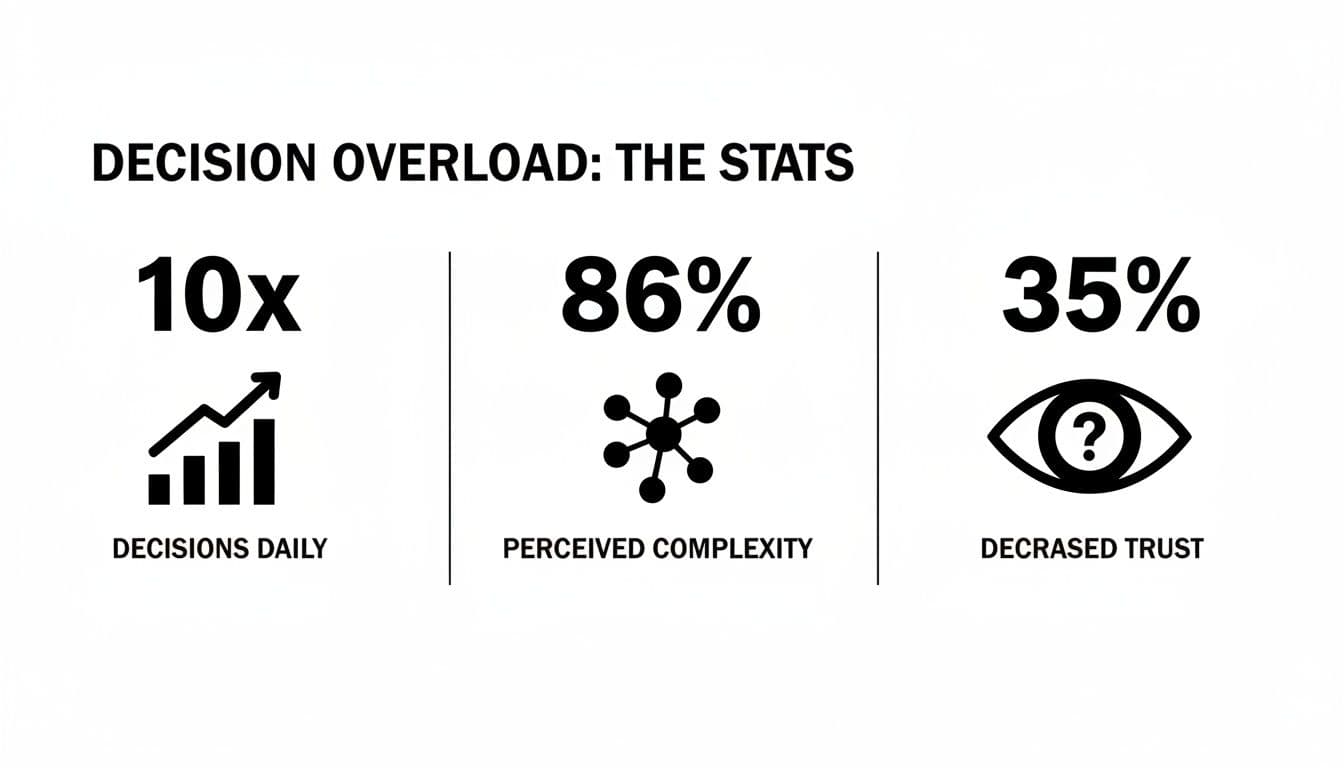
This isn't just about making more choices. It's that the information we're given feels more complicated and less trustworthy, draining our mental gas tank even faster.
The Rise of Analysis Paralysis
One of the most common side effects of decision fatigue is analysis paralysis. This is that frustrating state where you overthink a choice so much that you end up making no choice at all.
Think of a project manager at the end of a very long day. She needs to approve the final budget for a major initiative. At 9 AM, this would have been a simple task. But after a dozen meetings and hundreds of emails, her brain is fried. She just stares at the spreadsheet, totally overwhelmed by the numbers and variables.
Instead of making the call, she tells her team, "Let's just look at this again tomorrow." The decision is postponed, momentum is lost, and the project stalls—not because the choice was hard, but because the manager’s ability to choose was gone.
This is happening everywhere. Studies show that the average worker switches tasks over 300 times a day. All that mental gymnastics is exhausting, and a staggering 57% of employees who feel stressed by it also report feeling completely disengaged from their jobs. You can explore more data on this topic for more insights on how decision fatigue impacts the workplace.
Impulsive Choices and Later Regret
The flip side of analysis paralysis is just as bad: making rash, low-quality decisions on the fly. When your brain is desperate to save energy, it often grabs the easiest, fastest option just to get the task off its plate.
Picture a team member in a late-afternoon meeting. The group is debating a project deadline. A realistic timeline is six weeks, but an important stakeholder is pushing hard for four. Mentally drained from the day, the team member doesn't have the energy to argue or even think through the consequences.
To just end the conversation, they cave: "Yeah, four weeks sounds fine." The meeting wraps up, but the team is now locked into an impossible deadline, setting themselves up for stress, burnout, and probable failure. The bad decision wasn't due to a lack of skill; it came from a lack of mental energy.
Meetings: The Ultimate Hotbeds for Decision Fatigue
Nowhere is this problem more obvious than in poorly run meetings. Meetings are a gauntlet of cognitive tasks. You have to absorb new information, listen to different opinions, weigh various options, and somehow reach a group consensus—all at the same time.
It’s the perfect recipe for decision fatigue. Every single agenda item demands a new round of choices, and as the meeting drags on, the team’s collective brainpower plummets.
Here’s how it usually goes down:
- Early Enthusiasm: At the start, everyone is engaged. People are offering thoughtful ideas and debating points constructively.
- The Mid-Meeting Slump: As mental batteries drain, participation drops off. People get quieter, and the quality of the discussion tanks.
- Late-Meeting Desperation: By the end, the main goal is just to be done. Important decisions are either rushed, ignored, or punted to a future meeting because no one has the bandwidth left to deal with them properly.
This cycle guarantees mediocre outcomes, unresolved problems, and—you guessed it—more follow-up meetings, which just keeps the whole vicious cycle going. When your team consistently leaves meetings feeling drained instead of aligned, decision fatigue is almost always the silent culprit.
Practical Strategies to Reduce Your Cognitive Load
Knowing what decision fatigue is is one thing. Actually fighting back and reclaiming your mental energy is another. The goal isn't to stop making decisions—that's impossible. It's about getting smart about which choices get your prime brainpower and which can be put on autopilot.
When you create systems to cut down on the daily barrage of minor choices, you save your best thinking for the big stuff that really moves the needle. These tactics are simple, they work, and you can start using them today to build a better defense against mental burnout.
Put Recurring Choices on Autopilot
One of the easiest wins against decision fatigue is to simply eliminate the small, repetitive choices that chip away at your energy. This is where routines are your best friend. By turning common tasks into habits, you free up a surprising amount of mental bandwidth.
Think about why some of the most successful people wear the same thing every day. It's not a fashion statement; it's a strategic move. They’ve intentionally removed one tiny decision from their morning to save that energy for things that actually matter. You can do the same.
It could be as simple as creating a "work uniform" or deciding on a rotating menu of healthy lunches for the week. These little automations stack up, preserving your cognitive fuel for the truly complex problems that need your full focus.
Prioritize Your Most Important Decisions
Your brain is at its peak in the morning, before it’s been worn down by a thousand little choices throughout the day. So, use that to your advantage. Tackle your biggest, most brain-intensive tasks first thing. Mark Twain called this "eating the frog."
Don't start your day by diving into an overflowing inbox—that's just a rapid-fire sequence of small decisions (read, reply, delete, ignore). Instead, zero in on your number one priority for the day. Save the deep, strategic thinking for the morning and push the mindless, routine tasks to the afternoon when your energy is naturally lower.
This simple shift ensures your best brainpower goes toward the decisions with the biggest impact. If you're looking for a solid framework, understanding what data-driven decision making is can offer a practical guide for structuring those high-stakes choices.
Use Decision Batching to Stay Focused
Jumping from one type of task to another is a massive energy drain. A much smarter approach is decision batching—grouping similar types of decisions together and knocking them all out in one dedicated block of time.
This method cuts down on the mental whiplash of context switching. Your brain gets to stay in one "gear" instead of constantly shifting, which is far less exhausting.
Here are a few ways to put this into practice:
- Tame Your Inbox: Check and respond to emails in two or three dedicated slots per day, not every time a notification pops up.
- Prep for Meetings: Set aside a single block of time to prepare for all of your meetings for the following day. No more last-minute scrambling.
- Block Creative Time: Carve out a protected window for brainstorming, writing, or deep work, and keep all other administrative tasks out of it.
Set Limits and Embrace "Good Enough"
Sometimes, having too many options is the problem. The pressure to find the absolute "best" choice can be paralyzing. The fix? Intentionally limit your options. Instead of weighing ten different software tools, just research the top three.
And while you're at it, learn to embrace the "good enough" decision. Not every choice needs to be a home run. More often than not, a solid decision made quickly is far more valuable than a "perfect" one you never get around to making. This mindset is a powerful antidote to analysis paralysis and helps you keep things moving.
How Better Meetings Protect Your Team's Mental Energy
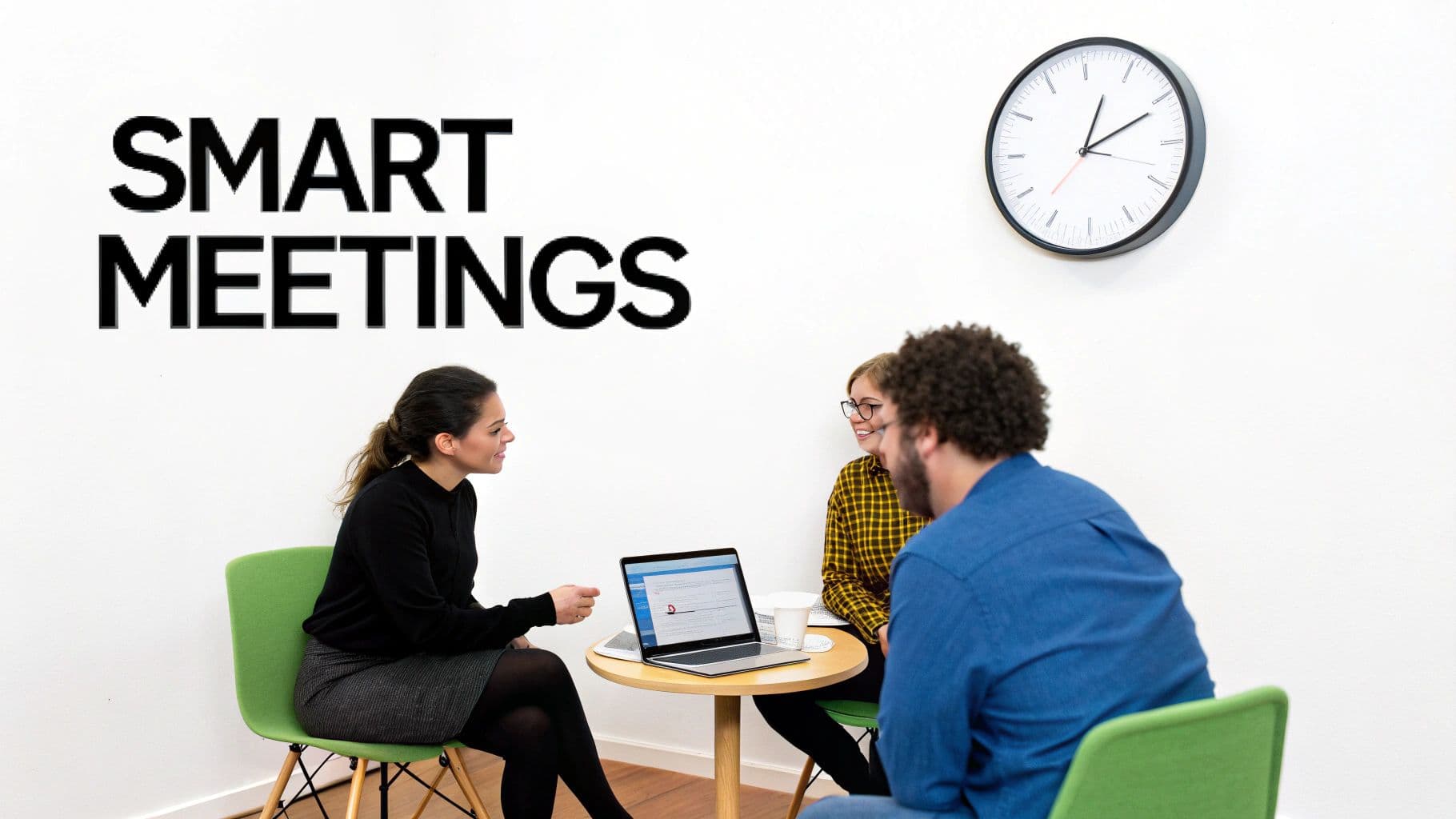
Meetings are where your team's mental energy is either spent wisely or completely squandered. A poorly run meeting is the perfect recipe for decision fatigue, forcing everyone to process a firehose of information, debate options on the fly, and make choice after choice. The outcome? A room full of mentally exhausted people, half-baked decisions, and problems that never get solved.
But it doesn't have to be this way. When you transform meetings from chaotic free-for-alls into focused decision-making sessions, you safeguard your team's most critical asset: their brainpower. A smart meeting doesn't just save time—it preserves the mental clarity needed for truly great work.
Build a Purpose-Driven Agenda
The single best tool you have against meeting fatigue is a clear, outcome-focused agenda. An agenda item like "Discuss Q3 Project" is a surefire invitation to ramble, draining everyone's energy before a single decision is made. A great agenda, on the other hand, is a roadmap. It guides the conversation and cuts out the mental clutter.
For any meeting to actually work, the agenda needs to spell out the purpose of each item. Is the goal to brainstorm? To share an update? To make a specific call? Clarifying this ahead of time lets people show up mentally prepared for the task at hand.
This simple shift helps everyone focus their cognitive resources where they matter most. It’s the difference between a productive conversation and an aimless one. If you want to get this right, our guide on how to run effective meetings has you covered.
Implement Ruthless Timeboxing
Timeboxing is simple: you assign a strict time limit to each agenda item, and you stick to it. This one constraint is incredibly powerful. It shuts down "discussion creep"—that tendency for conversations to meander endlessly, which is a massive contributor to decision fatigue.
When a topic has a ticking clock, the conversation automatically becomes more focused and action-oriented. It forces the group to get to the heart of the matter instead of getting bogged down in trivial details. This structure builds momentum and prevents that all-too-familiar mental slump when a meeting just drags on and on.
Protect the Invite List
One of the quickest ways to drain a team's collective energy is by inviting too many people to a meeting. Every extra person complicates the discussion and slows everything down. More people means more opinions to wade through, which rapidly depletes the group's decision-making bandwidth.
Fight this by following one simple rule: if someone isn't there to actively contribute or make a decision, they probably don't need to be there. You can always send them a summary or a recording later. Keeping the core decision-making group lean and focused is key.
Here are three more practices for smarter, energy-saving meetings:
- Decide Before You Meet: Send out important documents or proposals in advance. This gives people time to absorb the information on their own terms, so they arrive ready to discuss and decide—not to learn from scratch.
- Define the Decision-Maker: For every agenda item that needs a resolution, make it crystal clear who has the final say. This stops endless circular debates and pushes the conversation toward a conclusion.


